
The Honda Cruiser That Kills The Clutch Lever And Undercuts Harley-Davidson By Thousands
Cruisers have a gatekeeping problem, and it has little to do with chrome, loud pipes or how much metal is hanging off the bike. It starts right at a red light. Holding the clutch in and stressing over the bite point while cars stack up behind you is a brutal way to learn. Stall it once, it’s embarrassing. Stall it twice, your confidence is shot. And if you survive that, then there is the other hurdle waiting at the showroom… the price of entry.

Harley-Davidson built its reputation on classic cruiser heritage, but that history comes at a high cost. Even with a 2025 price cut, their entry-level bike sits at $9,999 with a traditional clutch. Honda is flipping the script to make cruisers friendly. They are taking direct aim at the two things that keep people away: clutch anxiety and a big hole in your wallet.
The Real Barrier To Getting Into Cruisers

Managing a clutch is a lot to ask of a beginner. You are coordinating both hands and both feet before handling even becomes muscle memory. Besides, stalling in front of impatient drivers is a nightmare, and stop-and-go traffic quickly exhausts your left hand.

On the other hand, low-speed turns are just as tricky, requiring you to balance three inputs at once on a 481-pound bike like the Nightster. On top of that, you have the financial hurdle. The Nightster costs $9,999 and the Sportster S jumps to $15,999. Throw in high interest rates over a long loan term, and you end up paying thousands extra just in interest. It is a steep price to pay just to test out a new passion, isn’t it?
The Honda Rebel 300 Makes E-Clutch Standard

The 2026 Rebel 300 starts at $5,349 and features a low 27.2-inch seat. The big news is that Honda made the E-Clutch standard, completely dropping the non-assist version in the US.
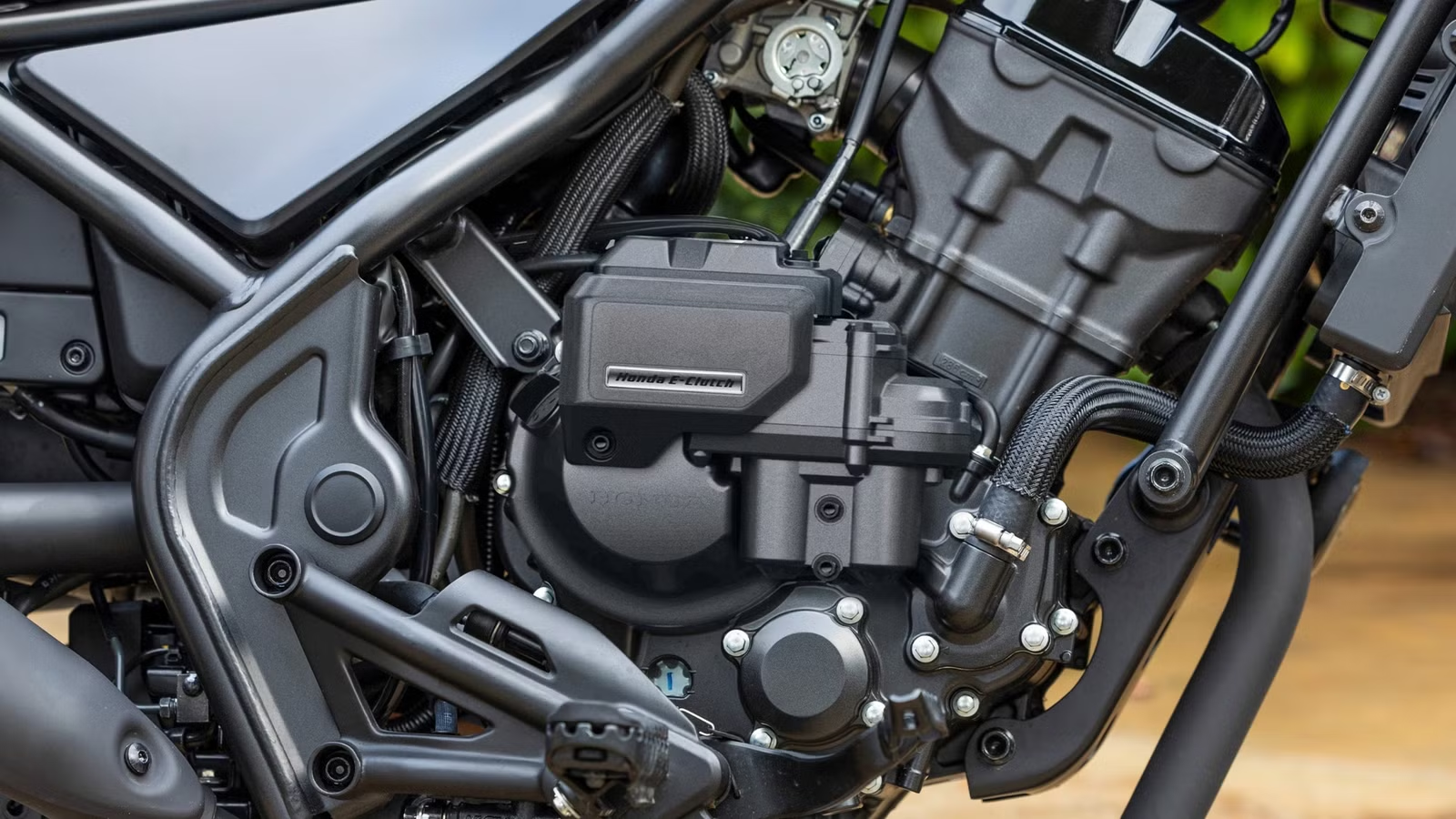
How does it work? The basic idea is pretty simple. Two electric motors control the clutch plates, constantly reading wheel speed, throttle and RPM to keep things in check. You still shift with your foot, but you never have to touch the hand lever to pull away or come to a full stop. Following the likes of CB650R and XL750 Transalp, the Rebel is the first entry-level model to get this tech. For a bike lineage that started back in 1985 as the ultimate MSF trainer, making clutch help compulsory in the US is a total mic drop from Honda. The OEM is ready to change how new people should learn to ride.
Honda Is Coming For Harley’s Entry-Level Buyers

Now let’s put the price tags side by side. The Nightster sits at $9,999 and the Sportster S at $15,999. The Rebel 300 comes in at $5,349, creating a $4,650 gap to Harley’s cheapest bike and over ten grand to the Sportster S. On a standard seven-year loan, the Nightster runs about $156 a month while the Rebel lands around $84. The math says it all.
To be fair, this is not an apples-to-apples fight. Harley’s higher price gets you Brembo brakes, selectable ride modes, and a 975cc V-twin that will effortlessly outrun a 286cc single. But when you are just trying to get through the door, features mean nothing if the bike is intimidating. Both seat heights sit around 27 inches, but the Rebel is over a hundred pounds lighter at 379 pounds. Crucially, while Harley relies on rider-training courses to help you handle a traditional clutch, Honda built the fix straight into the bike.
Let’s think of it this way: Harley buyers arrive later in life when they can afford premium motorcycles. Honda is targeting them right now. If a beginner learns on a $5k cruiser that refuses to stall, that is likely the brand they stick with for the long haul.
The Rebel 1100 Takes The Idea Further

Honda’s other solution sits a size up in the lineup. Its bigger play is the Rebel 1100 DCT. Dual-clutch trickery means one clutch works odd gears, one works evens, and you don’t get a clutch lever or foot shifter at all. It’s essentially a brain on wheels managing your shifts, though you can still click through gears manually with thumb buttons on the left bar.
This isn’t brand-new wizardry. Honda first fielded DCT on the old 2010 VFR1200F sport-tourer, then trickled it into the workhorse NC700 lineup by 2012. By 2021, they dropped it into the Rebel frame alongside that grunt-filled 1,084cc parallel-twin from the Africa Twin. At $10,399, it runs $700 more than the manual version and tips the scales at 528 pounds. That extra money buys you peace of mind with integrated wheelie control, traction aids, and Bluetooth phone connectivity. That is a sharp jump from the bare-bones Rebel 300.
The contrast between the two bikes is intentional. The Rebel 300’s E-Clutch acts like a smart assistant, leaving the foot shifter in place so you stay actively engaged. The 1100 DCT takes over the shifting process completely. Combined, they target two distinct groups: first-timers needing a hand with clutch control, and seasoned riders who just want to cruise without working a lever.
Make no mistake, the 1100 is not a budget play. Sitting $400 higher than a base Nightster and over five grand above the Rebel 300, it leaves the value crown to its smaller sibling. The 300 is Honda’s price play. The 1100 is Honda’s tech flex.
Easier Riding Comes With A Few Trade-Offs

E-Clutch isn’t an automatic. Pick the wrong gear and the bike can bog, though dash arrows nudge you along. Stalling is harder, not impossible. Pull the lever, and you’re in manual mode, so releasing it at a stop while in gear can still kill the engine. Honda says the system retakes control in under a second at higher revs and after five seconds at lower ones.
There’s a cost, too. Claimed weight rose from 364 to 379 lb and the base price climbed from $4,849 to $5,349, even though Honda says the hardware itself weighs under 4.5 lb.
In terms of riding, parking-lot maneuvers are where opinions split. Riders who rely on classic clutch-feathering during tight turns may find the setup takes some getting used to, while others think it handles low speeds effortlessly. Even the bigger DCT setups can feel a little abrupt at crawling speeds. Automation removes the heavy lifting, but it does not replace good riding habits.
Honda Is Playing A Different Game

Everything said, Honda is not trying to out-Harley Harley. Instead, they are going after real-world barriers: cost, stalling, and wrist strain. The Rebel range acts as a step-up path, moving from the affordable E-Clutch 300 up to the fully automated 1100 DCT. Harley’s Nightster still requires a traditional clutch and a larger investment.
Harley recognizes its entry challenge, cutting Nightster prices and offering training discounts. Honda prefers to solve the learning curve using technology, and they are already rolling out updated E-Clutch systems to other models like the CB750 Hornet.
None of this guarantees market dominance just yet. Long-term sales trends are still playing out, and riding schools might stick to old-school manuals for training. Harley’s classic vibe will always find buyers. Still, the brand that makes riding approachable is likely to capture the newest generation of riders.

Related posts

Latest Post


No Comments