
By the Numbers: Can the BMW M240i Match the E46 M3?
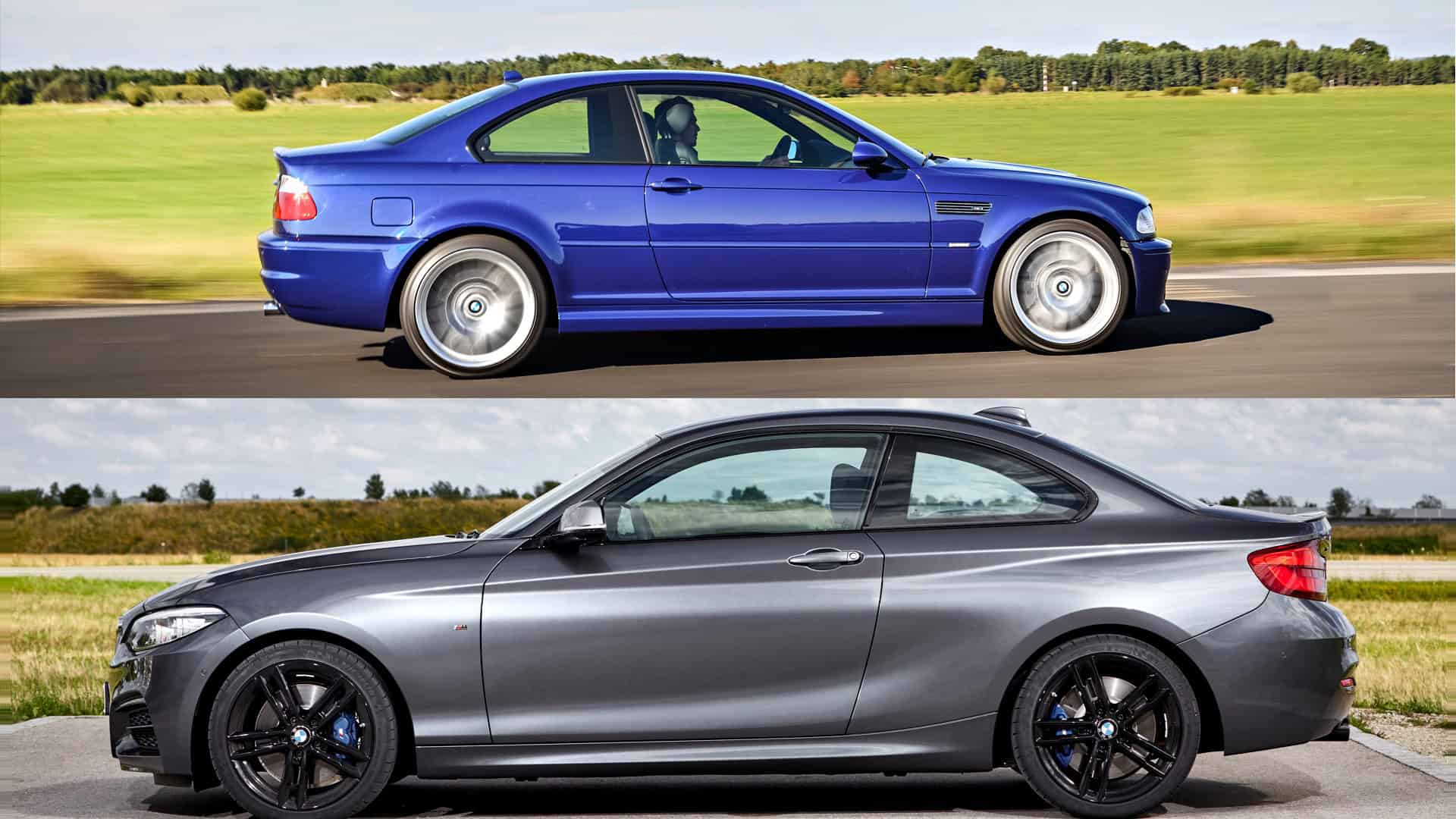
BMW M3
Just two horsepower separate these manual BMW coupes, but torque, weight, and character tell a different story.
Article Summary
- The U.S.-spec E46 M3 and F22 M240i make nearly identical horsepower, but the newer coupe delivers 107 lb-ft more torque.
- The manual M240i posts a quicker BMW-quoted 0–60 time, while the lighter M3 holds a slight horsepower-per-pound advantage.
- The M3’s high-revving S54 and specialized chassis face off against the M240i’s accessible turbocharged performance and everyday conveniences.
Two measly horsepower. That’s all that separates the U.S.-spec E46 M3 from the F22 BMW M240i. One is among the most celebrated cars BMW M ever built; the other sits a rung below the full-fledged M cars. Both put an inline-six up front, send power to the rear wheels, and give the driver three pedals. Does the newer M240i make the M3’s reputation look a little overblown? Or does the E46 offer something its younger challenger can’t quite replicate?
Very Different Engines

The E46 M3’s naturally aspirated S54 produces 333 horsepower and 262 pound-feet of torque. Those numbers come with an important qualifier: peak horsepower arrives at 7,900 rpm, just shy of the engine’s 8,000-rpm limit. Peak torque comes at 4,900 rpm. BMW built an engine that rewards you for exploring the upper reaches of the tachometer. That’s a big part of the appeal, but it also means accessing its best requires some commitment.
The M240i takes a different approach. Its turbocharged B58 delivers 335 horsepower at 5,500 rpm, with 369 pound-feet available from 1,520 through 4,500 rpm. That’s 107 additional pound-feet—a roughly 41 percent advantage—available much earlier. In everyday driving, the numbers favor the M240i’s ability to accelerate without first reaching for a lower gear. The M3 asks you to work for its performance; the M240i makes more of it readily accessible.
Weighing In
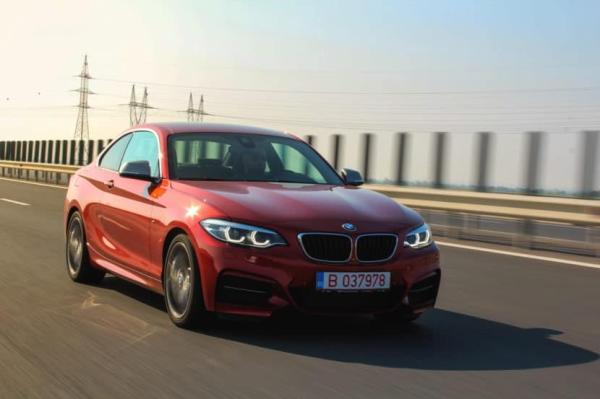

Despite wearing the smaller model designation, the M240i doesn’t have the weight advantage. BMW lists the 2002 M3 coupe at 3,415 pounds, while its specifications for the 2018 manual M240i put that car at 3,499 pounds. Using those published figures, the newer coupe carries an additional 84 pounds. That gives the M3 approximately 0.0975 horsepower per pound, compared with the M240i’s 0.0957. It’s a small advantage, but an interesting one: the M240i’s two extra horsepower don’t entirely compensate for its additional mass.
Nevertheless, BMW quotes a quicker sprint for the newer car. The manual M240i reaches 60 mph in 4.6 seconds, compared with 4.8 seconds for the manual E46 M3. These manufacturer claims illustrate how closely the M Performance car approaches—and, in this measure, exceeds—the older M3.
Beyond the Numbers
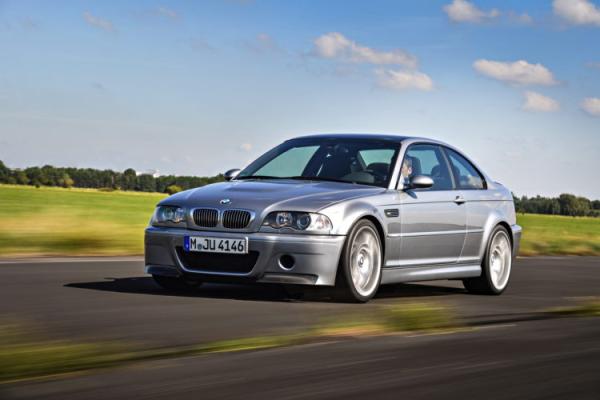
The M3’s case extends beyond its S54 engine’s output. Its six individual throttle bodies, incredibly communicative steering, and simpler cabin layout make driving these cars two very different experiences. The M3 has a true limited-slip differential, whereas the M240i doesn’t. And yes, it’s pretty, too. On the other hand, there’s ownership experience. Things will break often and sometimes expensively on the M3. The M240i…not so much.
The M240i brings a different set of skills. It offers modern amenities that are actually useful, like Apple CarPlay and keyless entry. It’s easier to drive, too, and more enjoyable to shift—the F22 uses the delightful ZF manual, rather than the listless Getrag found in the M3. What’s more, you aren’t terribly likely to find trim pieces or headliner bits falling into your morning coffee.
| Specification | BMW E46 M3 Coupe | BMW F22 M240i Coupe |
|---|---|---|
| Engine | 3.2-liter naturally aspirated inline-six | 3.0-liter turbocharged inline-six |
| Horsepower | 333 hp | 335 hp |
| Torque | 262 lb-ft | 369 lb-ft |
| Transmission | Six-speed manual | Six-speed manual |
| Driven wheels | Rear | Rear |
| Curb weight | 3,415 pounds | 3,499 pounds |
| Power/weight ratio (hp/lb) | 0.0975 | 0.0957 |
| BMW-claimed 0–60 mph | 4.8 seconds | 4.6 seconds |
| Length | 176.9 inches | 175.9 inches |
| Wheelbase | 107.5 inches | 105.9 inches |
| Seats | Four/Five | Four |
Picking winners for these is never easy. Nostalgia and aesthetics aside, for everyday performance, the M240i makes the stronger argument. Its torque advantage is substantial, and its quoted acceleration shows that you don’t need a full M car to match yesterday’s benchmark. It’ll be cheaper to maintain and easier to live with. That would be enough to secure the victory over nearly any rival.
Unfortunately, it’s going up against arguably the best car M ever made. It’s probably more temperamental, and certainly isn’t going to save you any money. But an absolute triumph of an engine, combined with some of the best steering this side of the 2000s—and killer looks—means it’s sadly impossible to give the M240i the win. The M240i makes speed easier to access. The M3 makes chasing it a bigger part of the experience—and that’s enough to keep the old M badge relevant.

Related posts



Latest Post



No Comments