
Dodge Charger Sixpack Sales Jumped Over 1,300% While The Daytona EV Stalls Out
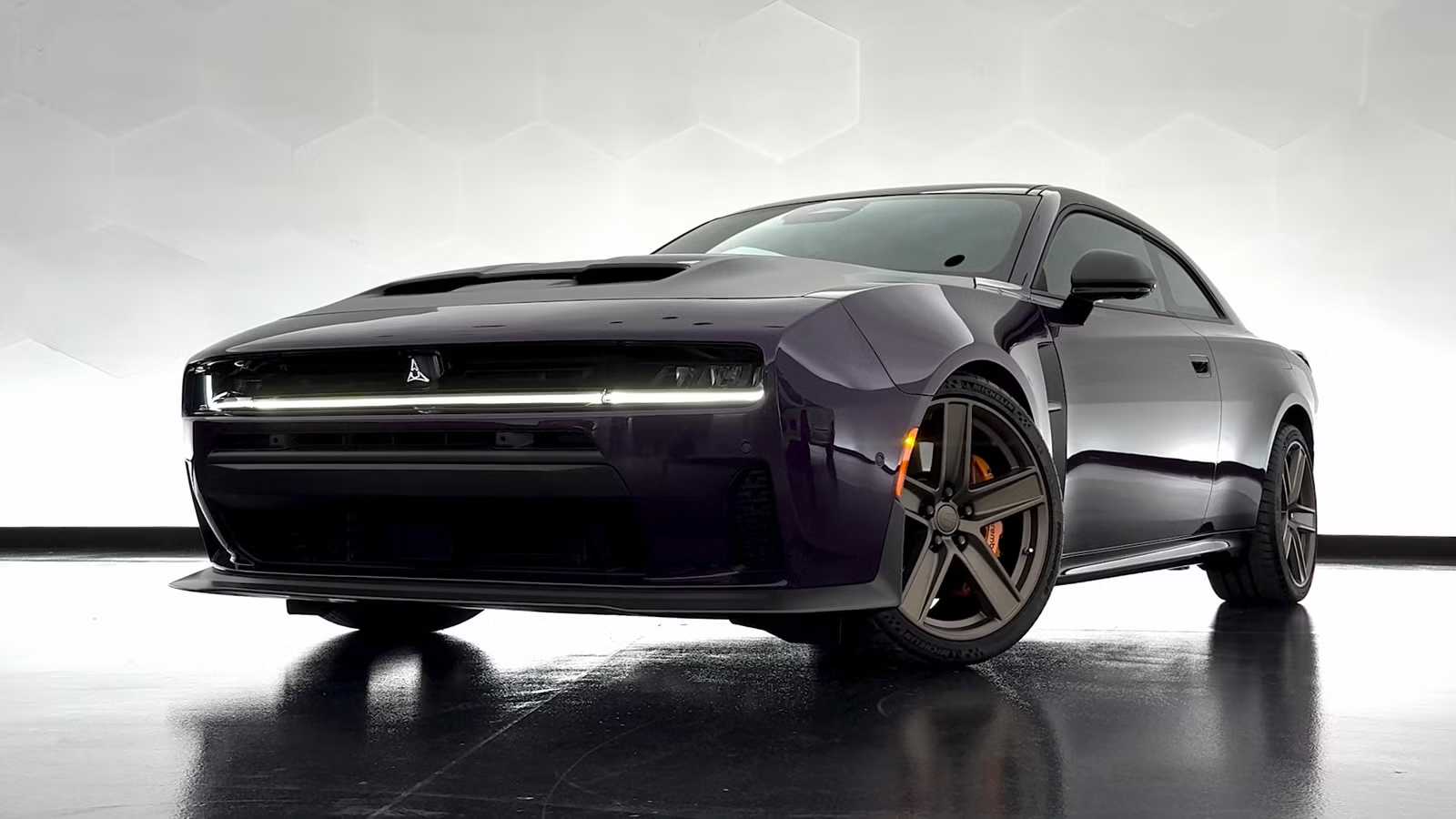
Stellantis released its third-quarter 2026 sales report on October 5, and the numbers settle a debate that’s been simmering since Dodge split the Charger into gas and electric versions. The gas-powered Charger Sixpack sold 3,446 units between July and September, up 1,348% from just 238 a year earlier. The electric Charger Daytona sold 233 units over the same stretch, a 92% drop from 2,776 a year ago.

That’s a roughly 15-to-1 split in favor of the gas car, and it’s the clearest real-world read yet on what happens when a single nameplate offers both. Buyers aren’t being asked to imagine a hypothetical choice between a turbocharged six and a battery-electric muscle car. They’re making that choice at the dealership, and they’re picking gas by a wide margin.
The Numbers Behind The 1,300% Jump
Some context matters here. The Sixpack’s enormous year-over-year gain is partly a function of timing. The 238 gas Chargers sold in Q3 2025 were leftover seventh-generation inventory, since the Hurricane-powered Sixpack didn’t start production at Windsor Assembly until December 2025. Comparing a full quarter of new-car sales against a trickle of old stock clearing dealer lots inflates the percentage. Still, the underlying trend holds: Sixpack sales climbed from 1,672 in Q1 to 2,911 in Q2 to 3,446 in Q3, a steady quarter-over-quarter build that suggests real demand, not just an easy comparison.

The price gap helps explain why. The 2026 Charger Sixpack R/T starts at $51,990 with destination included, about $10,000 less than the cheapest Daytona. For buyers cross-shopping power and practicality, that’s a meaningful gap, especially in a segment where the previous-generation Charger and Challenger started in the mid-$30,000s with the Pentastar V6. Today’s Charger lineup asks for a lot more money than the cars it replaced, which is part of why total Charger volume, 3,679 units in Q3 2026, still trails the 24,201 Chargers Dodge sold in Q3 2022 alone.
Why The Hurricane Six Is Winning The Argument

The Sixpack’s 3.0-liter twin-turbo Hurricane inline-six comes standard with all-wheel drive, making 420 horsepower and 468 lb-ft of torque in the R/T and 550 horsepower and 531 lb-ft in the Scat Pack. It doesn’t replicate the Hemi V8’s sound or character, and nobody’s pretending it does. But it gives the Charger a combustion-engine identity that feels closer to what longtime Dodge buyers expect than a fully electric replacement does.
Dodge also widened the car’s appeal with a new four-door liftback body style, filling a role the old Charger sedan used to serve while keeping the muscle-car styling cues intact. That combination, a familiar powertrain format plus a more practical body, appears to be doing more for sales than raw performance numbers alone. The Daytona Scat Pack makes 670 horsepower and hits 60 mph in 3.3 seconds, numbers that would have sounded absurd in a production Charger a decade ago, yet it’s still getting outsold 15 to 1.
The Daytona Isn’t Dead, But The Signal Is Clear

Dodge hasn’t canceled the Daytona. The 2027 model year has already opened for orders, even as thousands of 2026 Daytonas sit unsold on dealer lots. Some of the EV’s collapse likely traces to the expiration of the federal EV tax credit at the end of September 2025, which coincided almost exactly with the start of the Daytona’s decline. But tax credits alone don’t explain a 92% drop against a gas sibling that’s climbing every quarter.
The takeaway isn’t that Dodge made a mistake building an electric muscle car. It’s that when the same buyer can walk into the same showroom and choose between a Hurricane six and a battery pack under the Charger badge, the overwhelming majority are choosing the engine they can hear. With a V8-powered Charger reportedly still years away, the Sixpack is currently doing the job of convincing skeptical Mopar loyalists that the new Charger is still worth considering.

Related posts


Latest Post


No Comments