
Mazda Built A Carbon-Clad JDM RX-7 With The Best Power-To-Weight Of Any Rotary It Ever Sold
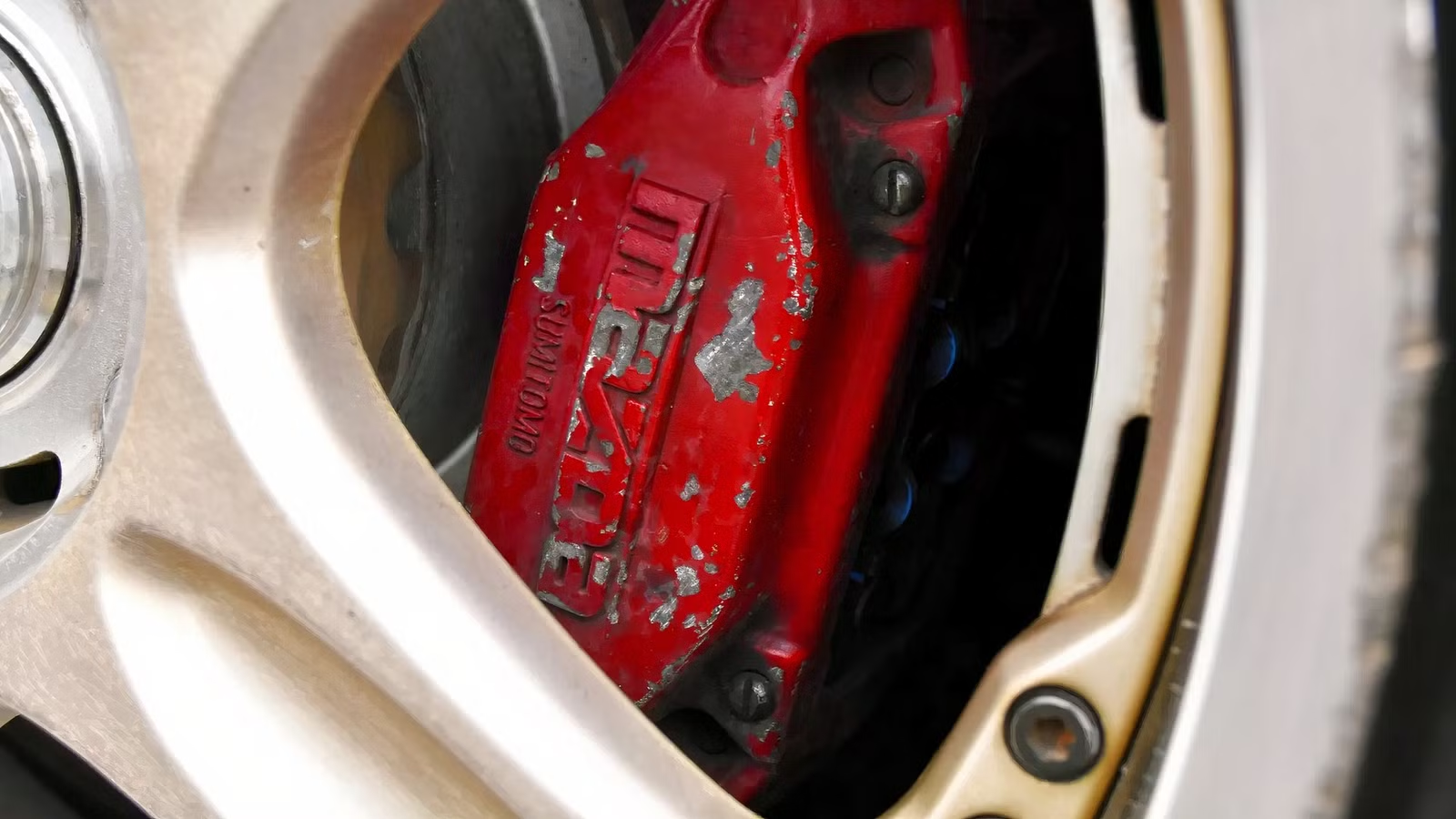
A tiny naming difference can separate an ordinary special edition from a genuine factory unicorn. In this case, one late-production Japanese sports car has spent more than two decades hiding behind a badge that looks almost identical to a much more common version.

It arrived before Mazda’s famous farewell edition and followed a simple formula: keep the weight down, sharpen the chassis, and let the twin-turbo rotary do the rest.
The FD RX-7’s Special-Edition Lineup Gets Confusing
The third-generation Mazda RX-7 already makes enthusiasts earn their trivia points. The FD3S went through several revisions in Japan, and its final years brought an increasingly crowded selection of Type R variants and limited editions. Throw in decades of modifications and imported examples, and identifying an original late-model FD can turn into automotive detective work.

The Spirit R naturally dominates the collector conversation. Mazda introduced it in 2002 as the FD RX-7’s final special edition and built 1,500 examples across its different versions. That farewell status helped turn the Spirit R into shorthand for the ultimate factory Mazda RX-7, especially among American JDM fans who spent years unable to legally import the newest cars.
Mazda had already created something even scarcer several months earlier, though. It started with the lightweight Type R, retained the strongest factory version of the sequential twin-turbo 13B-REW rotary engine, and added several upgrades aimed squarely at drivers. The complication is that another RX-7 with an almost identical name followed soon afterward.

Mazda introduced one Bathurst-themed FD RX-7 in August 2001 and another in December. Both were closely related to the Type R, both used the 276 hp 13B-REW rotary engine, and their names are similar enough to make an online listing worth reading twice before reaching for a checkbook.
Production numbers separate them more clearly. The earlier version was limited to approximately 500 cars, while the later Type R Bathurst reached an estimated 2,174 units. The second model is hardly common, but the first sits in a very different category of rare JDM sports car.
All In The Details

The later Type R Bathurst also borrowed an important idea from its predecessor in the form of ride-height-adjustable suspension. That shared hardware helps explain why the two versions are regularly grouped together even though the earlier car had a more exclusive specification.
Color offers another clue. The first special came in three shades, including Sunburst Yellow, while the later Bathurst used a five-color palette that excluded that bright yellow finish. A factory Sunburst Yellow late-production FD RX-7 therefore deserves a closer inspection before anyone writes it off as another Bathurst.
The Type R Bathurst R Was Mazda’s 500-Car Rotary Special

That earlier model was the Mazda RX-7 Type R Bathurst R, launched in Japan on August 31, 2001, and limited to roughly 500 examples. Its name celebrated Mazda’s three consecutive victories at Australia’s Bathurst 12 Hour from 1992 through 1994, giving the special edition a proper racing connection rather than a convenient excuse for another badge.
Mazda used the lightweight Type R as its starting point and leaned harder into the qualities that made the FD RX-7 such a celebrated Japanese sports car. Under the hood sat the 1.3-liter 13B-REW sequential twin-turbo rotary engine with 276 horsepower and roughly 232 lb-ft of torque, driving the rear wheels through a five-speed manual transmission.
At approximately 2,778 pounds, the Bathurst R worked out to around 10.1 pounds per horsepower. That gave it the best factory power-to-weight ratio of any roadgoing Mazda RX-7. Instead of joining an endless horsepower contest, Mazda simply made sure all 276 horses had less car to drag around.
The pricing was equally unusual. Despite its limited production and upgraded equipment, the Bathurst R originally cost roughly 150,000 yen less than the regular Type R in Japan. Mazda effectively built a lighter and rarer factory RX-7, then asked less money for it. Anyone shopping for a modern limited-edition performance car may need a moment to process that concept.
Carbon Fiber And Less Weight Made The Difference

Inside, the Mazda RX-7 Type R Bathurst R received several Mazdaspeed touches that helped separate it from an ordinary FD. Carbon-look material appeared around the instrument panel and center console, with similar treatment used on the door trim. A carbon-and-aluminum shift knob joined an aluminum parking-brake lever for a little more motorsport flavor.
The more important hardware sat beneath the body. Mazdaspeed height-adjustable dampers formed part of the factory package, giving the already light rear-wheel-drive sports car additional suspension adjustability. Mazda later used a similar setup on the higher-volume Type R Bathurst, which says plenty about how seriously the company regarded the earlier car’s chassis tuning.
Strict Diet

Performance was stout for 2001 and still looks respectable today. Published figures put the 0-to-62-mph run at around 4.9 seconds, while the quarter-mile took approximately 13.6 seconds. That is serious pace from a Japanese sports car with a 1.3-liter rotary engine and a curb weight comfortably below 2,800 pounds.
Straight-line numbers only explain part of the appeal, though. The FD RX-7’s near-50:50 weight distribution was central to its reputation, and the Bathurst R pushed the lightweight philosophy harder than most factory versions. Modern Performance Cars often compensate for extra pounds with huge power figures, but Mazda’s approach here was considerably neater: avoid piling on the pounds in the first place.
America Is Finally Catching Up With This Forgotten RX-7

The Mazda RX-7 Type R Bathurst R becomes much more relevant to North American enthusiasts in 2026 because early examples are reaching the USA’s 25-year import threshold. For years, this Japan-only FD RX-7 sat beyond the legal reach of most American enthusiasts. Now, at least some of those cars can finally begin crossing the Pacific.
Finding the right one won’t be simple, though. A 500-car production run was tiny before overseas demand entered the equation, and more than two decades of modification make factory originality especially important. The correct Mazdaspeed suspension, carbon-look interior trim, production timing, and original colors all help distinguish the genuine article from another late FD wearing a similar badge.
Easy To Miss?

The Spirit R will probably continue attracting more attention because final editions come with an easy story. The Bathurst R offers something different. It arrived first, weighed less than 2,800 pounds, carried 276 hp, and achieved the strongest factory power-to-weight ratio of any roadgoing Mazda RX-7.
For American rotary enthusiasts looking beyond the obvious collectible FD RX-7 models, that makes the Type R Bathurst R one of the most interesting JDM imports entering the conversation. Mazda built around 500 of them, gave the car one of the sharpest factory specifications in RX-7 history, and hid the whole package behind one extra letter that plenty of people still miss.
Sources: Trade Unique Cars, note.com, Mazda

Related posts



Latest Post


No Comments