
The Motorcycle Owners Keep Even After Buying Something Faster
There is a familiar point among bikes when the first motorcycle starts to feel too small. A quicker machine appears, the numbers look tempting, and the old motorcycle seems destined for a classified ad. Except sometimes it never gets there. It stays beside the newer, faster bike, ready for the grocery run, short evening ride, or quick blast when there is barely enough time to suit up. That raises a better question than which motorcycle is faster: what makes a bike worth keeping? Sometimes, the answer has less to do with performance and more to do with how little effort it takes to enjoy, as proven by a certain Honda cruiser.
What A Bike Needs To Never Make It To The Classifieds

The standard script is simple. Ride a starter bike for a season or two, trade it in, and put the money toward something with more power, more speed, and a longer list of electronics. On paper, it makes perfect sense. What it skips is how often you actually reach for each bike. A fast machine tends to demand something from you: the right mood, a favorite road, a free Saturday afternoon. A grocery run doesn’t qualify. Neither does a twenty-minute hop across town.
Spend some time on owner forums and the pattern shows up quickly. Some riders plan to keep their bike after buying something bigger, mostly because it’s too cheap to bother selling. Others sell theirs to move up and still say they’d never regret buying it in the first place. It’s anecdotal, sure, but the sentiment keeps repeating.
What Speed Can’t Buy

Speed is easy to measure. Ease isn’t, yet it’s what decides which bike leaves the garage on a Monday morning. The keepers tend to share a few traits. They’re approachable, so a rough day at work doesn’t turn the ride into homework. They’re cheap to run, so nobody loses sleep leaving one parked outside a coffee shop.


And nobody panics when a buddy asks to borrow it for the afternoon. None of that shows up on a spec sheet. Still, it’s exactly why a bike with modest numbers can stay in constant rotation while its faster neighbor sits under a cover. The keeper is usually the one that asks the least and gives plenty back. And one bike does that better than most.
The Honda Rebel 500 Is A Lifelong Resident Of Many Garages
Base Price: $6,799

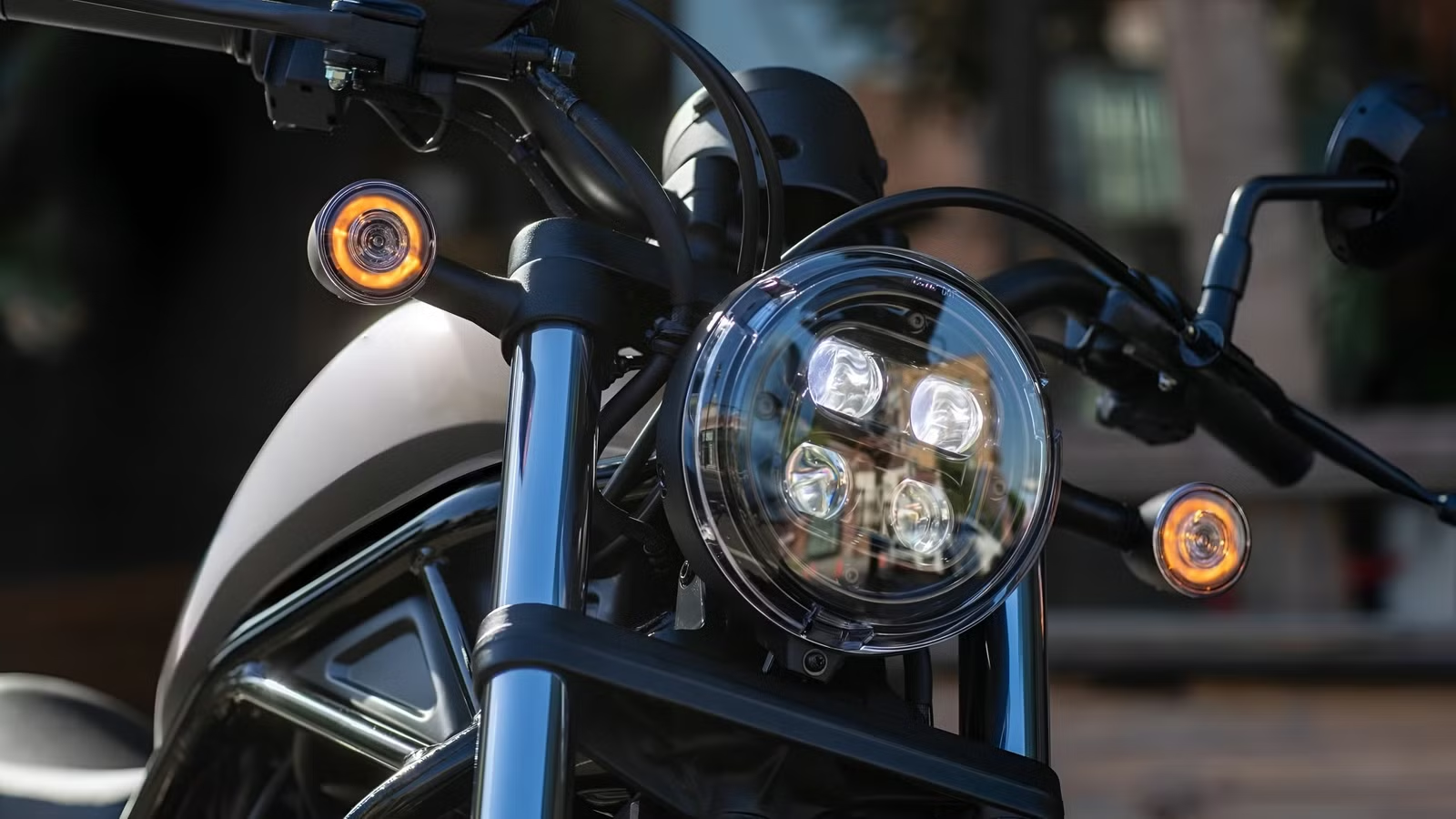
That bike is the Honda Rebel 500. It slots between the 286cc Rebel 300 and the 1,084cc Rebel 1100 as Honda’s middleweight cruiser. The standard Rebel 500 starts at $6,799, while the Special Edition (SE) asks $6,999. Honda adds a $600 destination charge to both, so the totals come to $7,399 and $7,599. ABS is standard on every trim, and the bike carries a one-year, unlimited-mileage limited warranty that transfers to the next owner. Color choices are simple, too. The base bike comes in Pearl Black or Pearl Smoky Gray. The SE wears Pearl Blue and adds a brown diamond-stitch seat, black fork boots, and a color-matched headlight cowl, all installed at the factory.
Powered By A Twin-Cylinder Engine That Rewards Riding

Under the tank sits a 471cc liquid-cooled parallel-twin with a DOHC layout and four valves per cylinder. Fuel arrives through PGM-FI with 1.34-inch throttle bodies, and a six-speed manual gearbox handles the shifting. Honda also fits a slipper clutch, which it says delivers a 30 percent lighter pull at the lever.
Honda’s published specifications for overseas versions put peak output at about 46 hp at 8,500 rpm and roughly 31.9 lb-ft at 6,000 rpm. These are numbers that aren’t intimidating. Fuel economy is the other perk. While Honda’s spec page doesn’t list an mpg figure, owners and reviewers commonly report fuel economy around 63 mpg at 65–75 mph. That makes the Rebel a cheap suburban commuter and a genuinely good errand runner.
Calm And Relaxed Is The Theme

The 471cc twin does not feel like an engine waiting for a tiny sweet spot. Power is said to build smoothly, throttle response is predictable, and there is enough low- and mid-range drive that you can ride without chasing the perfect gear. Multiple automotive journals have highlighted the broad, accessible power delivery in their independent testing of the Rebel 500. That makes it good in most situations that a rider could face in his/her daily commutes. Roll out of the neighborhood, work through traffic, take the long way home, then merge onto the highway. The bike does not demand much ceremony.
A Cruiser That Is Built Low, Light, And Easy To Trust

The seat sits just 27.2 inches off the ground, one of the lowest in the cruiser class by Honda’s own account, and most riders can plant both feet at a light. Curb weight, with a full 3.0-gallon tank, is 414 pounds for the base bike and 419 for the SE. Honda also slimmed the tank-to-seat junction so getting on and off feels easier. The wheelbase measures 58.7 inches, with 28 degrees of rake and 4.3 inches of trail. Those aren’t glamorous numbers, but they’re the ones that count in real life.
Suspension And Brakes Are Adequate

The hardware is straightforward. Up front, a 41mm fork offers 5.5 inches of travel, while dual rear shocks provide 3.7 inches. Honda says those shocks are nitrogen-filled with remote reservoirs, a nice touch at this price. Stopping duty falls to a single 296mm front disc and a 240mm rear disc, with ABS on both ends. The tires are a 130/90-16 front and a 150/80-16 rear, mounted on cast aluminum wheels. There’s no ride-mode menu to scroll through. The digital dash covers the basics: speedometer, gear-position indicator, fuel gauge, clock, and trip meters. You get on, you ride, and the bike does what you ask. That simplicity is a big part of why it’s so easy to live with.

A bike like this is a low-stakes thing to own. Owners on forums often point to Honda’s reputation for easy upkeep, so owners just need to follow this routine: change the oil when the manual says and keep riding. Honda also leans into personalization. It lists more than 23 accessories for the Rebel 500 line, from headlight cowls and passenger seating to luggage solutions and a 12-volt charger. A bolt-on passenger seat and rear foot pegs let you switch between solo and two-up setups with little fuss. Honda calls the blacked-out styling a “canvas of self-expression,” and forum threads full of mod projects suggest plenty of owners agree.
The Second Bike That Becomes The First Choice

Here’s how it tends to play out in a lot of garages. The faster bike arrives and gets the weekend rides and the photos. The Rebel waits near the door with a full tank. Then a regular weekday shows up with errands, a short commute, or a quick spin before dinner, and you can guess which key gets grabbed.
That’s the difference between a bike you admire and a bike you actually use. A quick machine is exciting precisely because it’s an occasion. The Rebel 500 is the opposite: low, light, forgiving and cheap enough that nobody agonizes over taking it out. On paper, the gap is wide, but the paper doesn’t answer which bike you’ll actually ride on an ordinary day. Speed gets bikes bought. Ease is what keeps them in your garage.
Source: Honda Powersports

Related posts
Latest Post


No Comments