
180,000-Mile EcoBoost F-150 Teardown Exposes Oil Change Failures
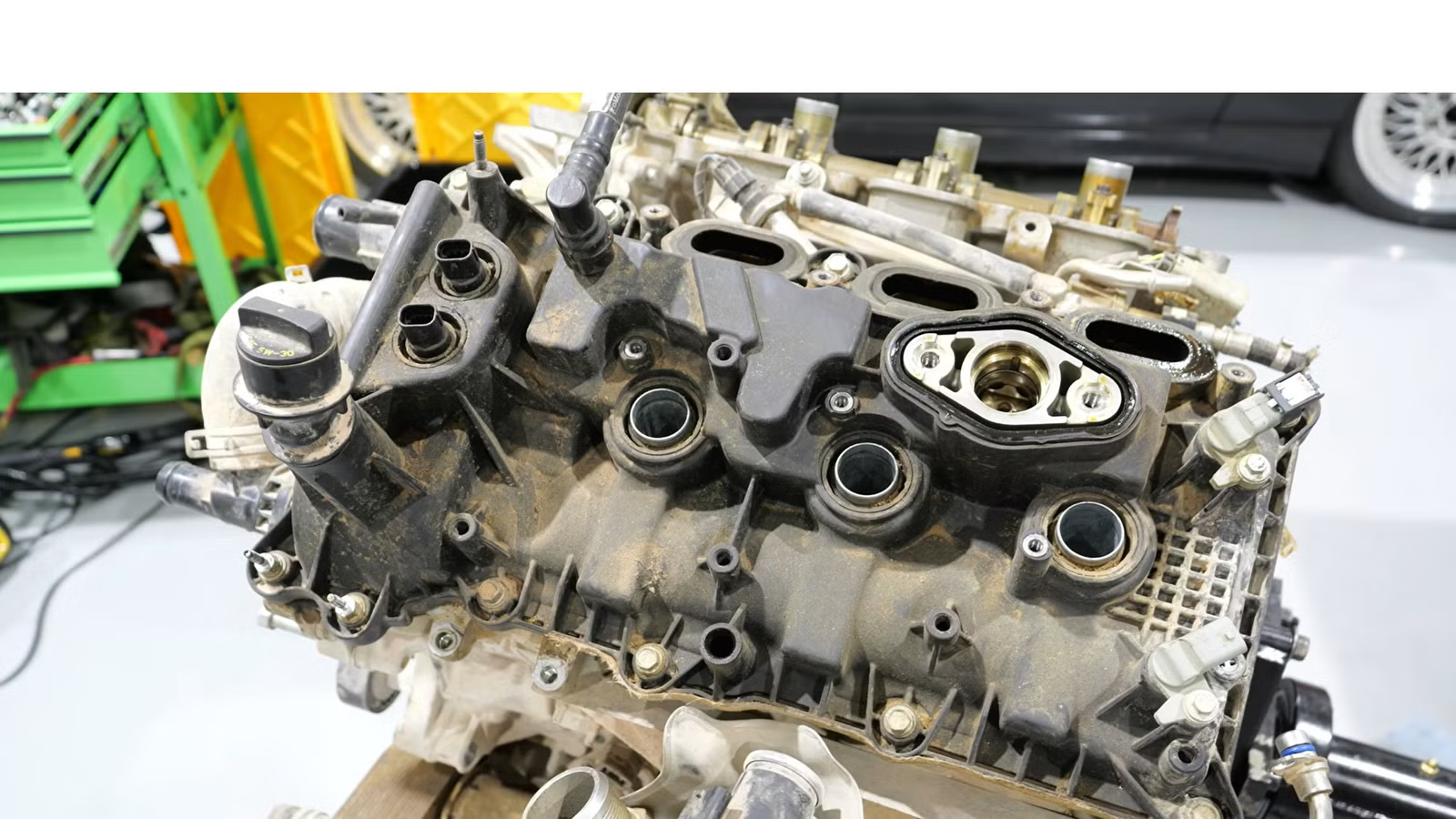
A third-generation 3.5-liter EcoBoost V6 pulled from a 2022 Ford F-150 Lariat just gave the internet a textbook look at what inconsistent oil changes do to a turbocharged engine. The YouTube channel I Do Cars tore the motor down after it racked up more than 180,000 miles in just four years of hard service, much of it on dirt and gravel roads. What they found inside wasn’t a design flaw. It was a maintenance record with gaps, and an engine that paid for every one of them.

The teardown turned up varnishing on the oil pan, heavy piston coking, scored cylinder walls, and one piston that had melted straight through its rings. The rotating assembly itself, the crank, rods, and bearings as a whole, held up fine for the mileage. But the damage pattern around the pistons and turbo-adjacent components lines up almost exactly with what happens when oil is left to degrade past its usable life in a high-heat, forced-induction engine.
A Carfax Full Of Gaps Told The Real Story
Before any wrenches came out, host Eric Berg pulled the truck’s Carfax history, and it read like a cautionary tale in itself. Some oil changes happened roughly 5,000 miles apart, which is reasonable for a turbocharged truck engine under load. Others were separated by far more miles and time than that, with no consistent rhythm to the maintenance. It’s possible some service happened off the books, at a shop or in a driveway that never reported to Carfax, so the record isn’t an airtight conviction. But paired with what the teardown found inside, it lines up as the most likely explanation.

The external inspection actually started out encouraging. The valve covers came off to reveal timing chains and tensioners in solid shape for the mileage, and the block itself, while caked in dust and grime from gravel-road duty, wasn’t swimming in sludge. That changed once Berg got past the camshafts. The variable valve timing solenoids showed wear consistent with debris circulating through the oil, a sign that whatever was lubricating this engine in its later life wasn’t doing the job cleanly.
Why Heat Is The Enemy Of A Turbocharged Engine’s Oil
Pulling the cylinder heads exposed the real damage. The pistons showed extensive coking, carbon buildup baked onto the crowns from repeated exposure to combustion heat that the oil film wasn’t properly managing. The cylinder walls were scored more than Berg expected for an engine with this kind of mileage, and flipping the block over to drop the oil pan revealed varnish coating the underside, a telltale sign that oil had been allowed to age well past its effective lubricating life.
This matters more on a twin-turbo engine than it would on a naturally aspirated one. Turbochargers spin their rotating assemblies at speeds that can reach hundreds of thousands of RPM, and they run hot enough that oil quality isn’t a nice-to-have, it’s the only thing standing between normal wear and a burned bearing. When oil breaks down from age rather than mileage, it loses viscosity and carrying capacity right when the engine needs it most, right after a hard pull towing or hauling, or right at shutdown when a hot turbo is still soaking heat into the oil sitting in its bearing housing. Degraded oil under those conditions is how varnish forms and how coking builds up on parts that are supposed to stay clean.
One Burned Piston Explains The Rest Of The Damage

The most serious find came in the short block. One piston had melted through its own rings, almost certainly the result of a localized detonation event tied to elevated combustion temperatures. The debris from that failure didn’t harm the rotating assembly’s core geometry, but it did chew up the rod and cam bearings as aluminum shrapnel circulated through the oil system, and it compounded the cylinder wall scoring that was already underway elsewhere in the block.
It’s worth saying plainly: 180,000 miles out of an original engine, especially one running commercial-style duty on rough roads, is a genuinely strong result. Berg’s own read on the teardown is that the wear pattern points to maintenance gaps rather than a fundamental flaw in the EcoBoost architecture, and that tighter, more consistent oil change intervals could have bought this motor meaningfully more life before it needed a rebuild or replacement.
The lesson for EcoBoost owners, or anyone running a turbocharged truck engine, isn’t that 5,000-mile intervals are mandatory gospel. It’s that consistency matters as much as the number on the sticker. A turbo doesn’t care what your excuse was for pushing an oil change back a few thousand miles. It just runs hotter, builds varnish faster, and eventually tells on you the same way this F-150‘s engine just did, on camera, for everyone to see.

Related posts




Latest Post


No Comments