
Why The Cheapest Version Of A Car Can Sometimes Be The Smartest
Car shopping has a built-in psychological trap, and that’s the assumption that spending more always buys more car. Dealers reinforce it, showroom floor plans reinforce it, and every upsell conversation at the finance desk reinforces it. But strip away the marketing and look at what base trims actually include in 2026, and a different picture emerges. Automatic emergency braking, adaptive cruise, CarPlay, and a competent infotainment screen now ship standard on some mainstream nameplates’ cheapest configuration. The gap between “affordable” and “loaded” has never been narrower, or less worth paying for.
The Base Model Often Has Everything Most Drivers Actually Need

Ask most commuters what they actually use in a car, and the list is short. Reliable Bluetooth, a backup camera, climate control that works, and safety systems that keep them out of a crash. Every one of those is now table stakes on a base trim, not a paid upgrade. Take the 2026 Honda Civic LX, the cheapest sedan in Honda’s lineup, at $24,695.
It doesn’t feel stripped down in any way that matters day to day. It comes with a seven-inch touchscreen running Apple CarPlay and Android Auto, automatic climate control, LED exterior lighting, keyless entry with push-button start, and Honda Sensing, the brand’s full suite of driver assists. That means forward collision warning, automatic emergency braking, lane-centering steering, adaptive cruise control, and automatic high beams are all standard—not optional. Two trims up, on the $31,495 Civic Si, you get a stiffer suspension and a limited-slip differential, but the safety net underneath you is identical to the LX’s.

Mazda takes the same approach further. The 2026 Mazda3 2.5 S Hatchback starts at $25,650 and already includes an 8.8-inch infotainment display, 16-inch alloy wheels, and Mazda’s i-Activsense suite, which bundles blind-spot monitoring, rear cross-traffic alert, lane-keep assist, and a driver attention monitor. None of that is trim-gated. A driver who never leaves the base spec is still getting the same collision-avoidance hardware as someone paying $12,000+ more for the Turbo Premium Plus.

The lesson isn’t that upper trims are pointless. It’s that the definition of “basic” has shifted. What used to be a genuinely bare-bones car, manual windows, no CarPlay, minimal safety tech, mostly doesn’t exist anymore on mainstream nameplates. The floor has risen, even if sticker prices have too.
Paying More Often Buys Luxury Amenities, Not Meaningfully Better Transportation

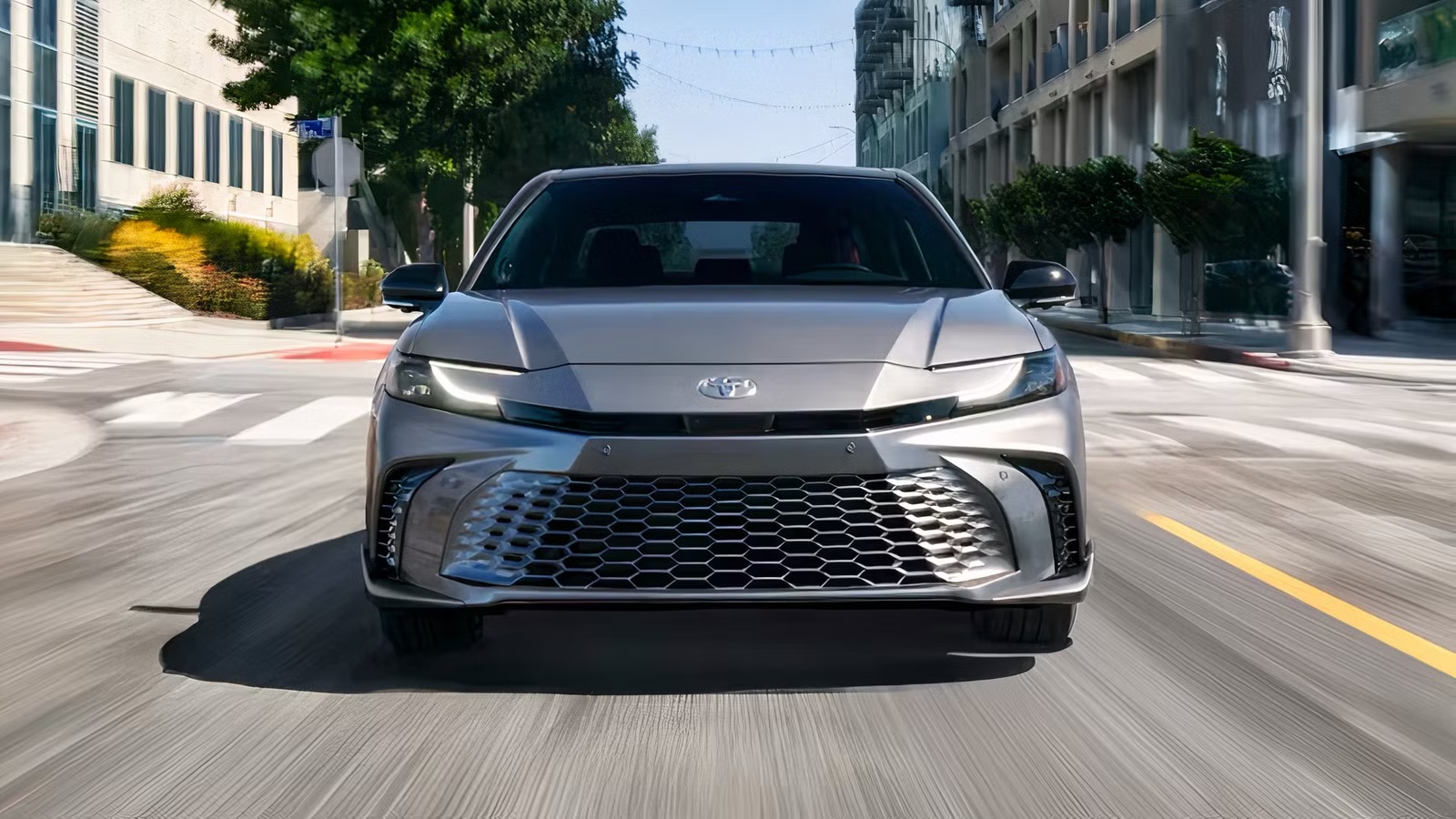
This is where the math gets uncomfortable for anyone eyeing a mid- or upper-trim out of habit. The 2026 Toyota Camry illustrates it cleanly. Every 2026 Camry, regardless of trim, runs the same 2.5-liter four-cylinder hybrid powertrain, the same front-wheel-drive base architecture, and Toyota Safety Sense as standard equipment. The LE starts at $29,600. Step up to the XLE and the price jumps to $34,800—a $5,200 gap—for a car that gets you from point A to point B no faster and no more safely than the LE does.
What does that $5,200 actually buy? Leather and Dinamica microfiber seating instead of cloth, heated front seats and a heated steering wheel, a panoramic glass roof, wireless phone charging, a larger 12.3-inch infotainment display with embedded navigation, and dual-zone automatic climate control instead of single-zone. Every one of those is a genuine comfort upgrade. None of them make the car faster, safer, or more efficient. In fact, the LE is rated at up to 51 mpg combined, slightly better than the heavier, more accessory-laden XLE.

The Honda Civic tells a similar story from the other direction. The $2,000 step from LX to Sport buys 18-inch wheels, heated mirrors, remote start, red ambient lighting, metal pedals, and two extra speakers. These are genuinely nice touches, but not one of them changes how competently the car does its actual job of getting you to work and back. This is the core economic reality buyers skip past. Trim walks are priced like they’re selling you a better car, when what they’re really selling, in the vast majority of cases, is a nicer-feeling cabin around an identical mechanical package. Heated seats are wonderful in winter, but they don’t mean the vehicle is engineered any differently.
Mainstream Brands Make Their Entry-Level Cars Surprisingly Well Equipped

Part of why the base-trim case is stronger in 2026 than it was a decade ago is regulatory and competitive pressure. Federal safety expectations, IIHS ratings, and consumer demand have pushed automakers to standardize driver-assist tech across entire lineups rather than gating it behind option packages, because a base model with a mediocre safety rating tanks a brand’s reputation across every trim.
The result is that “entry-level” no longer means compromised. Mazda didn’t quietly downgrade tech on its cheapest Mazda3; it made the eight-speaker Harmonic Acoustics stereo standard across the range for 2026, upgrading from the six-speaker setup the base trim used to carry. Honda didn’t wall off Sensing behind a paywall; it’s standard on every Civic from the $24,695 LX to the $32,395 Sport Touring Hybrid. Toyota didn’t reserve its hybrid powertrain for flagship trims; for 2026, the Camry dropped its gas-only option entirely, meaning even the cheapest LE now returns fuel economy in the low-to-mid 50-mpg range.

This matters because it changes what “settling” for a base model actually means. A decade ago, choosing the cheapest trim genuinely meant giving something up, often safety tech or a usable infotainment system. Today it more often means giving up wheel size, ambient lighting, and seat material. That’s a very different trade-off, and one that favors the frugal buyer more than automakers’ marketing departments would like to admit.
The Cheapest Trim Can Avoid Expensive Options You May Never Use

The other side of the base-trim case is what it lets you skip. Upper trims don’t just add features individually, they bundle them, often forcing buyers to pay for things they’ll never touch just to get the one or two features they actually want. Want a sunroof on a Camry? You can’t get it on the LE at all; it arrives bundled into the XLE’s $5,200 jump, alongside leather seats and a bigger screen you may not have asked for. Want the Mazda3’s turbocharged engine? It’s only sold on the Premium Plus trim, meaning the extra 41 horsepower (64 horsepower on premium fuel) comes along with a heated steering wheel, a 360-degree camera system, and adaptive headlights, whether you want that full package or not.
This bundling is deliberate. Automakers structure trim walks specifically to maximize the average transaction price, and one of the most effective tools for that is pairing a genuinely desirable feature with three or four the buyer is indifferent to. The person who just wants heated seats in a Minnesota winter often ends up paying for a sunroof they’ll never open and a navigation system their phone already does better.

Buyers who stick to the base trim sidestep this entirely. They’re not implicitly funding features they’ll ignore. And critically, in most cases, they’re not giving up anything on the safety or connectivity side, since that’s standardized. What they lose is optional comfort, and what they keep is a lower purchase price, lower sales tax on that price, and often a smaller loan.
The Commuter, The Second Car, The First Car — Three Buyers Who Should Stop At Base

None of this means every buyer should default to the cheapest trim on the lot. Someone who drives long highway commutes daily in a cold climate will genuinely benefit from adaptive dual-zone climate control and a heated steering wheel. A family that road-trips will often get real use out of a panoramic roof and a bigger navigation screen. Enthusiasts chasing the Mazda3’s turbo engine or the Honda Civic Si’s chassis tuning aren’t overpaying; they’re buying a meaningfully different driving experience, not just trim garnish.
But for the commuter, the second car, the first car for a new driver, or anyone buying primarily to get reliably from home to work and back, the base trim in 2026 is rarely a compromise. It’s often the smartest purchase on the lot, with sufficient safety tech, a workable infotainment system, and a price that doesn’t carry the weight of features that will sit unused.

The real test isn’t whether you can afford the trim above base. It’s whether you can name, specifically, what that extra money buys you, and whether you’d actually use it. If the honest answer is heated seats and a sunroof, that’s a fine reason to spend more. If the honest answer is “I’m not sure,” the base model was already the right car.
Sources: Toyota, Cars.com, KBB

Related posts


Latest Post



No Comments