
The Middleweight Cruiser That Looks More Expensive Than It Is
Modern motorcycle manufacturing relies heavily on platform sharing. To keep profit margins healthy, brands build several models using a single engine and frame. While this cuts production costs, it compromises motorcycles that depend primarily on stance, proportions, and material finishes. Cruisers built to a budget suffer the most from this cost-cutting, often ending up as awkward adaptations of standard street bikes. However, one middleweight motorcycle takes a different route: by pairing a dedicated chassis with metal bodywork, it delivers the visual presence of a larger bike at an accessible price.
Compromised Commuter Platforms And Heavy Last-Gen V-Twins Divide The Segment

Achieving that balance is difficult because the middleweight cruiser segment is split between two flawed extremes. On one side are budget modern platforms based on upright commuter frames. The result is cramped legroom, unnatural ergonomics, and a disproportionate silhouette. The alternative is buying an older traditional cruiser motorcycle, which brings different compromises. These bikes offer classic lines, but rely on dated engineering. Their five-speed gearboxes lack a tall overdrive, causing the engine to buzz uncomfortably at modern highway speeds. Older chassis designs and heavy components also push curb weight up significantly.
A Dedicated Low-Slung Chassis Offers The Right Visual Cues

Fixing this problem requires a dedicated chassis rather than repurposed parts. Proper cruiser geometry needs a low-slung frame that centralizes mass low, combining a relaxed front rake and long wheelbase with modern chassis rigidity. Royal Enfield took this approach by designing a ground-up platform for its parallel twin. Here, the engine serves as the visual centerpiece, with its polished aluminum cases. The gearbox offers a sixth speed that keeps highway cruising calmer than older five-speed platforms. More importantly, the build prioritizes metal over plastic body panels, giving it an authentic cruiser look coupled with modern production quality.
The Royal Enfield Super Meteor 650 Celestial Delivers Big-Twin Presence On A Middleweight Budget


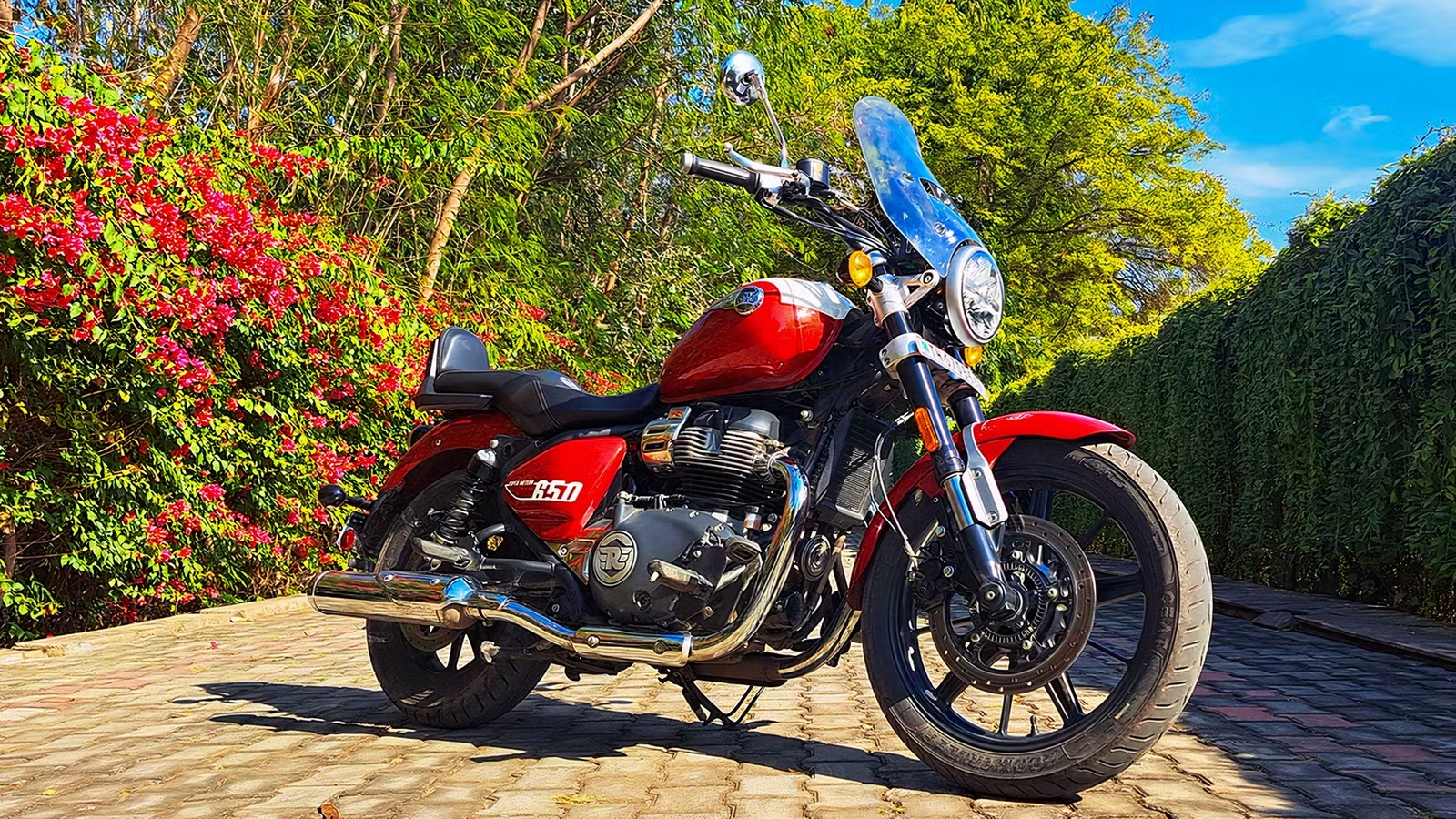
The Super Meteor 650 Celestial is the top-spec touring variant of this model. It comes from the factory with a tall touring windscreen, a sculpted touring seat, and a pillion backrest, giving it big presence without big costs. The bike features modern cycle parts, including 43mm Showa upside-down front forks and twin-piston ByBre brakes with dual-channel ABS. Combined with two-tone paint, aluminum switch cubes, and planted highway manners, the Celestial gives riders the look and feel of a premium cruiser without the high price tag.
Two-Tone Paint And Chrome Finishes That Belong On A $12,000 Bike — At $7,999

Royal Enfield has increased the price of the Super Meteor 650 since its launch a couple of years ago, but at under $8,000, it remains an affordable cruiser still worth buying. It doesn’t have much tech or many features, but what is there is valuable on a daily basis. What is striking is how much more expensive it looks than its list price, even the current one: the finishes are great quality, both paint and chrome, the two-tone paint job looks extremely appealing, and the proportions are spot on.
The 648cc Air-Cooled Twin Pairs Mechanical Simplicity With 270-Degree Pulse

The Super Meteor might have a parallel twin engine, but it still captures the Harley spirit. It shares its 648 cc engine with the rest of the Royal Enfield middleweight range, so it has proven its mettle in different kinds of motorcycles. In the Super Meteor 650, this 270-degree twin has an SOHC head with eight valves, and a compression ratio of 9.5:1.
47 horsepower at 7,250 RPM and 38.6 pound-feet of torque at 5,650 RPM might not sound like much, but low figures are a byproduct of eschewing liquid cooling. This engine is air/oil cooled, revs cleanly, has minimal vibrations, and encourages you to explore its performance ceiling, all the while sounding quite evocative. It does run out of breath at highway speeds, but that’s acceptable given the price point: it is as reliable as an equivalent engine from an established brand.
Showa USD Forks And Tubeless Alloys Offset A Stiff Rear Suspension

The Super Meteor is made for backroad adventures, with its traditional steel tubular spine frame that uses the engine as a stressed member and has inverted front forks, making this the first of the middleweight Royal Enfields with these features. The forks are quality items, too; they are 43 mm Showa SFF-BP forks and offer 4.7 inches of travel. At the rear, there are twin shocks with single-rate springs and four inches of travel. There is rear preload adjustment, but the single-rate springs and small travel often make the rear ride harsh.

Braking is provided by a single 320 mm front brake disc and a 300 mm rear disc with two-piston floating calipers at each end. Royal Enfield chooses to fit the Super Meteor with alloy wheels, with a 19-inch in the front and a 16-inch at the rear. These are practical when you have a puncture because they allow you to fit tubeless tires, but the Super Meteor would benefit from spoked rims if you consider purely its looks. Cross-spoke tubeless rims would make it significantly more expensive, which is why Royal Enfield avoids them.
A Low-Slung 29.1-Inch Stance Delivers True Big-Bike Proportions
The Super Meteor’s proportions are spot on, and it looks like a much larger bike rather than a more expensive one. However, the reality is that it is comfortable enough to even make a beginner feel at ease. The figures stand at 89 inches long and 35 inches wide, with a 59-inch wheelbase.
The seat is just 29.1 inches high with ground clearance of 5.3 inches. This is where that spine frame comes into play, as it has no frame rails going under the crankcase. The fuel tank has a 4.15-gallon capacity, and it weighs a total of 531.3 pounds. Once again, that engine slung low in the chassis means that the weight is carried below knee level, which delivers big-bike confidence without the big-bike drama.
A Heritage Dash Integrates Google Maps Without Digital Visual Clutter

The Super Meteor walks a tightrope between retro styling and modern features by offering big-bike presence without the complexity. It has an asymmetric twin-pod instrument cluster. The larger one on the left houses the analog speedometer on the circumference with a floating needle. In the center is an LCD cluster that shows information like the clock, odometer, trip meters, gear indicator, and fuel level. The smaller circular pod on the right is a TFT screen; this is what Royal Enfield calls the Tripper unit, and it displays navigation via Google Maps and has Bluetooth connectivity as well.
Dual-channel ABS is standard, but there is no other safety feature, not that you need one with just 47 horsepower and a 531-pound weight. The Super Meteor 650 has been available in three color scheme variants: the Astral is a single-color scheme with a split seat, the Interstellar is a two-tone variant with the split seat, and then there is the Celestial variant, which has a two-tone contrasting paint job, considerably more chrome, a single touring seat with more padding for both rider and pillion, a pillion backrest, and a bolt-on windshield.

This is the variant to choose simply because it looks better, and you can always detach the windshield and the pillion backrest while retaining the extra comfort of the touring seat. It does have an options list; it includes soft luggage, engine guards, and sump guards.
The Super Meteor Out-Styles Dated Japanese Iron And Spartan Americans

The Super Meteor is in a class of its own when it comes to combining looks and pricing, but there are a few other options worth exploring. There is the Honda Shadow Phantom, which retails for $8,699 and blends American style with Japanese reliability. This gives you an authentic V-twin experience with shaft drive, and it now has dual-channel ABS with a rear disc brake. It is also exceptionally durable, and the Shadow series is popular and well-respected; just do not expect too much performance from it.

Then there is the $9,699 Kawasaki Vulcan 900 Classic, which has Japanese reliability and American-bike presence. This has a quintessential American V-twin cruiser look complete with loads of chrome, spoked wheels, and belt drive. At a glance, it resembles a smaller Fat Boy, which is no bad thing. There is also a drag-bike-style Vulcan 900 Custom available with blacked-out components, alloy wheels, and a massive 21-inch front rim for a little extra money. However, the Classic does not have tubeless tires, and ABS is not available even as an option.

If you stretch your budget and the definition of a middleweight cruiser, you could include the $11,999 Indian Scout Sixty Classic. You get authentic American iron here, although it has very basic safety with ABS. There are some very interesting differences between these cruisers: the Vulcan is the only one with a monoshock (it is hidden under the seat), the Royal Enfield is the only one that gets a six-speed gearbox, and while the Super Meteor has Bluetooth navigation as a standard feature, it is optional on the Indian, driving the price significantly higher.
Source: Royal Enfield USA

Related posts


Latest Post


No Comments