
The Harley That Ages Better Than Riders Expect
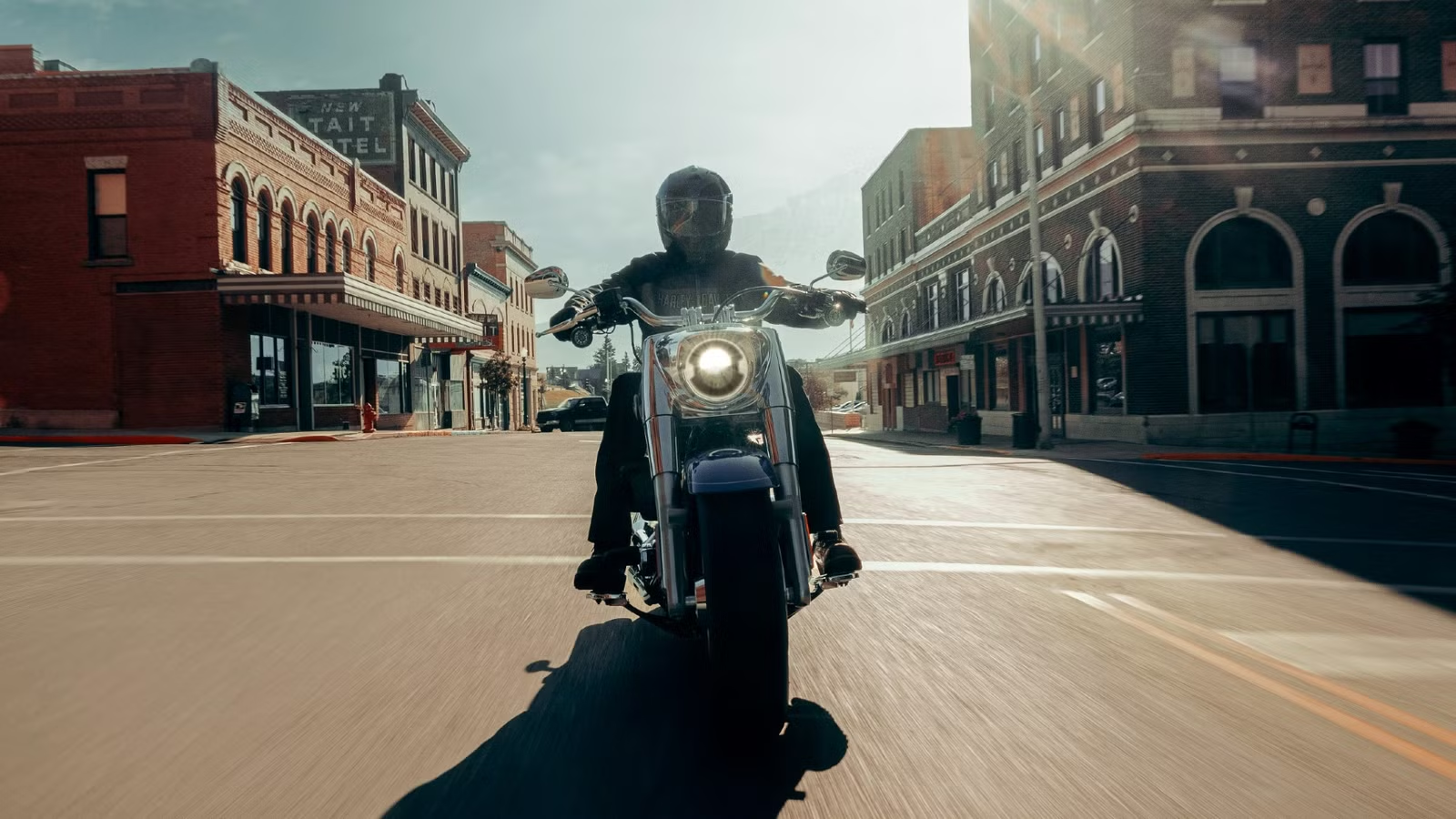
Some motorcycles seem destined to age well. Their styling is timeless, their mechanicals are proven, and nobody is surprised when riders still want them years later. Then there are the motorcycles that surprise you. They’re not necessarily the most advanced, the most practical, or even the most obviously timeless bikes in the lineup. Yet years after they first appeared, they can still look right, feel relevant and give riders plenty of reasons to choose them over something newer. So what makes a Harley-Davidson motorcycle age better than riders expect?
The Three Things That Separate Timeless Harleys From Merely Old Ones
Aging Well Isn’t Simply Getting Older

A motorcycle can get older without necessarily aging well. Time exposes the weak points in a design. Styling that looked modern can suddenly look dated. Technology that seemed impressive can become obsolete. And a motorcycle that was exciting when new can become difficult to justify once newer models do the same job better.

So what does it take for a motorcycle to age well? First, the design has to survive the calendar. That doesn’t necessarily mean looking old-fashioned. In fact, the best-aging motorcycles often have a strong visual identity that isn’t tied too closely to whatever was fashionable when they were introduced. They should still look like themselves years later.

Second, the mechanical package has to remain relevant. An older motorcycle doesn’t need the latest electronics or the most horsepower. It does need an engine, chassis and riding position that still make sense for the kind of riding the motorcycle was built to do. If the fundamental experience remains satisfying, newer technology doesn’t automatically make the older bike obsolete.

Third, it needs character. This matters more than it might seem. As motorcycles accumulate years, their individual personalities become part of their appeal. A bike that was anonymous when new doesn’t become more interesting simply because it got older. A distinctive motorcycle, however, can acquire a sense of selfhood that newer, more complicated machines may never have.
Then There’s The Ownership Equation

Parts availability, service knowledge, reliability, and everyday usability all determine whether an older motorcycle remains something you’d actually want to own rather than something you’d merely admire. But there’s another part of this title that’s more important than simply aging well. “Better than riders expect” means time should reveal something the motorcycle didn’t necessarily advertise when it was new.

That’s the real test. We’re not looking for a Harley that’s obviously designed to become a classic. We’re looking for one whose strengths become clearer as the years pass and whose fundamental appeal remains intact while newer motorcycles come and go. By that standard, the obvious candidates — the Road King, the Heritage Classic — don’t actually qualify. Not because they fail the test, but because they pass it too easily.
The Obvious Choices Aren’t Surprising
Road King: Built To Stand The Test Of Time

The Road King makes an immediate case for itself. Its basic formula has changed remarkably little: a big Harley V-twin, comfortable riding position, windshield, saddlebags, and a chassis designed to cover serious miles without surrounding the rider with a fairing full of technology.

That simplicity helps it age well. A Road King from years ago doesn’t suddenly become useless because Harley introduces a newer infotainment system or another generation of electronics. The things that matter most when riding it—its engine, ergonomics, luggage capacity, and unmistakable silhouette—don’t have an expiration date.

Its styling helps, too. The Road King has never depended on looking like the newest or most futuristic Harley in the lineup. This makes it difficult to pin to a particular model year.

By our definition, the Road King passes the test. But there’s a problem. Nobody should be surprised by that. The Road King has long had a reputation as one of Harley’s more enduring motorcycles. If you told riders that an older Road King would still be desirable years later, few would argue.
Heritage Classic: Almost Too Obvious

The Heritage Classic makes an even stronger case on paper. Its styling deliberately draws from Harley’s past, giving it the sort of visual punch that isn’t particularly vulnerable to changing fashion. The windshield, saddlebags, floorboards, and traditional proportions aren’t trying to predict what motorcycles will look like five years from now. That’s exactly why it ages well.

The Heritage also has the mechanical substance to back up its appearance. It isn’t merely a nostalgic exercise wearing modern hardware. It’s a full-size motorcycle built to be ridden, with the comfort and capability expected from a modern Harley.

So it passes our test, too. But again, there’s no real surprise. The Road King and Heritage Classic are supposed to age well. Their designs practically announce that intention. What we’re looking for is more difficult: a Harley whose long-term appeal isn’t quite so obvious when it’s sitting on the showroom floor. That changes the question. Which Harley might become more impressive with age precisely because riders didn’t expect it to?
The Fat Boy Is An Unexpected Darling
Why The Fat Boy Ages So Well

The Harley that best fits all of those criteria is the Fat Boy. At first, that might seem like an odd choice. The Fat Boy has never been subtle. Its broad stance, massive wheels, solid visual mass, and unmistakable presence make it one of Harley-Davidson’s most recognizable motorcycles. If anything, it looks like the kind of motorcycle that should become dated once the next generation of cruisers arrives. Instead, those exaggerated traits have helped it age unusually well.

The Fat Boy first appeared for the 1990 model year, and Harley has spent more than three decades updating the motorcycle without having to reinvent what makes it a Fat Boy. The engine has changed. The chassis has evolved, now running on the second-generation Softail set-up, and the equipment has been modernized. But the fundamental visual identity has remained remarkably intact.
Timeless Doesn’t Always Mean Conservative

The Fat Boy doesn’t disappear into the background as it gets older. Its distinctive proportions and styling give it enough character to survive changes in motorcycle fashion. An older Fat Boy can look like an older Fat Boy rather than simply an old Harley.

Its mechanical evolution tells the same story. The Fat Boy has lived through Harley’s Evolution, Twin Cam, and Milwaukee-Eight eras. Each brought changes in performance, refinement and capability while keeping the motorcycle’s fundamental character intact.
The Difference Comes With Time

A motorcycle ages poorly when newer versions make the old one feel like a compromise. The Fat Boy has generally avoided that trap because its appeal isn’t built around being the most technologically advanced Harley. Its hardware serves the character rather than defining it.

When new, the Fat Boy’s visual excess can seem like its defining characteristic. With age, that excess becomes something more valuable: identity. The motorcycle doesn’t need to chase the latest styling trend because it already knows exactly what it is. That’s the key to the Fat Boy’s longevity. The very qualities that might have made it seem excessive when new are the ones that help it remain distinctive years later.
The Fat Boy Still Makes Sense Today
The Formula Still Works

The real test of a motorcycle that ages well is whether you would still want one after the novelty wears off. In the Fat Boy’s case, the answer is easy to see: the qualities that made it distinctive in the first place are still here.

The current Fat Boy carries Harley-Davidson’s Milwaukee-Eight 117 Custom engine, producing 103 horsepower and 126 pound-feet of torque. For a motorcycle this substantial, that combination provides the low-end muscle and passing power expected from a big American cruiser.

More importantly, those numbers come in a motorcycle that still has the visual presence and physical character that have defined the Fat Boy for decades. You aren’t buying it because it has the newest gadgetry or because Harley found a way to make it resemble everything else in the cruiser market. You’re buying it because the Fat Boy still looks and feels like a Fat Boy. That also makes the model’s longevity more relevant to someone shopping for a Harley today.
Aging Well Doesn’t Mean Perfectly

Of course, aging well doesn’t mean being perfect for everyone. The Fat Boy’s size and 694-pound weight are part of its character, but they also make it less appealing to riders who want a lighter, more nimble cruiser. Its appeal is strongest for someone who appreciates a substantial motorcycle and doesn’t need it to apologize for taking up space.

That’s a worthwhile distinction when considering its current price. The Fat Boy starts at $22,599, putting it firmly into premium-cruiser territory. That’s not an insignificant amount of money, but the purchase also gets you something increasingly difficult to find: a modern motorcycle whose appeal isn’t likely to disappear when the next model year arrives.

And that’s ultimately why the Fat Boy wins this particular argument. A motorcycle that ages well doesn’t have to become more valuable, more powerful, or more technologically advanced with every passing year. It simply has to keep giving riders good reasons to want it. The Fat Boy has been doing that since 1990.
Source: Harley-Davidson

Related posts

Latest Post


No Comments