
Ceer, LIV Golf and the PIF: what does ‘fully funded’ mean for the new Saudi car company?
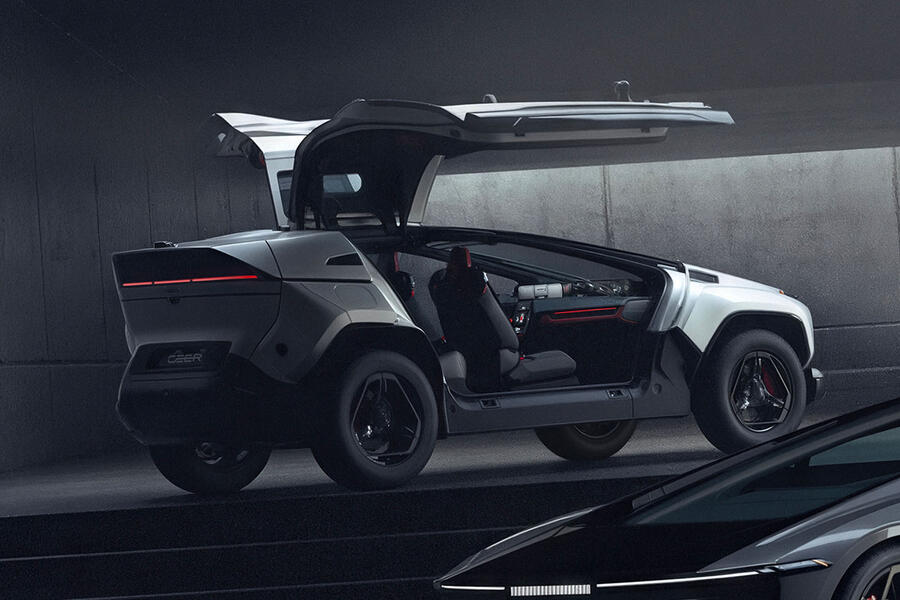
Ceer claims its EV ambitions are “fully funded to 2040” but Saudi commitments are rarely set in stone

Wonder if Ceer CEO James DeLuca has swapped messages with LIV Golf CEO Scott O’Neil?
The two have plenty in common, as leaders of businesses backed by Saudi Arabia’s Public Investment Fund (PIF).
In the case of O’Neil, ‘backed’ now exists in the past tense after the PIF pulled the plug on LIV a few months ago, resulting in its slump into Chapter 11 bankruptcy protection in the US as it seeks new funding.

For those who don’t know, the PIF invested billions into establishing its own golf tour – paying one player a reported signing on fee of £450 million – that was a series of invitational tournaments without any real consequence, narrative or meaning.
It was always hard to see where the return on investment would come for the PIF from LIV. It originally sought to put the establishment tours out of business but then tried to do a deal with them and sought to become part of the establishment itself.
Ultimately, it was just a bunch of mega-rich golfers earning even more money while competing in teams with names such as the Niblicks GC and Iron Heads GC. Unsurprisingly, it flopped.
What drew my eye in the Ceer story is the quote from DeLuca on the new car company being “fully funded until 2040”. The exact same phrase – “fully funded” – was frequently used by O’Neil when questions emerged about PIF’s commitment to LIV, even in the days before it pulled the plug. LIV creditors now include the likes of the United Nations High Commissioner for Refugees.
As an investment for PIF, Ceer looks similar at first glance to that of LIV: a ground-up, cash-hungry investment that’s looking to crack into a highly competitive established market with enormous overheads, complex supply chains and no immediate path to a return on that investment.
A key point of difference in Ceer to LIV is that it’s a domestic investment, looking to boost GDP and diversify the economy away from oil into other industries and manufacturing, rather than promote Saudi Arabia on the international stage.
But the scale of the task is just as big because the automotive industry is a fiendishly tough industry to try to crack. Making your country a production hub for manufacturers is one thing (as the PIF has done in partnering Hyundai), launching your own car brand to take on the establishment is quite another. Chinese brands aside, it’s still only Tesla that has really emerged as a significant global player this century.
The PIF has further investments in the automotive industry with Lucid, also with Saudi production in mind. While Lucid’s early EVs have been excellent and its technology is arguably best-in-class, the company hasn’t made the stellar start to life that Tesla did. The PIF will be able to pull more strings with Ceer than with Lucid, but the Saudi marque is years behind the American one in its development.
While Ceer might be “fully funded” on paper today, there is a track record of PIF’s investments not being bound for as many as 14 years in advance. Things change, the world changes.
Another domestic, oil-diversification investment in Saudi, the Neom city project, has been significantly scaled back, as another example.
This isn’t to say that Ceer will necessarily go the way of LIV. Its cars look interesting enough and the market is responding well to new entrants. Instead it’s the notion that this brand is secure and fully funded into the 2040s.
Can any investment decision made in today’s world really be considered locked in to the 2040s, let alone one as risky as this?

Related posts

Latest Post


No Comments