
America Deserves A Chevrolet Chevelle Do-Over Like This
There are plenty of first-generation Chevrolet Chevelles with LS swaps and pro-touring hardware. This, however, isn’t one of them. The 1974 Chevrolet Chevelle Laguna came from the awkward middle of the ’70s, when Muscle Cars were getting heavier, slower, and way less glamorous.

That makes this reimagined Laguna pretty tasty to consider. Wide, low, and plenty aggressive, it turns one of Chevrolet’s most overlooked Colonnade coupes into the kind of restomod that could make a modern Camaro owner look twice.
This Chevrolet Chevelle Laguna Restomod Looks Ready For A Fight
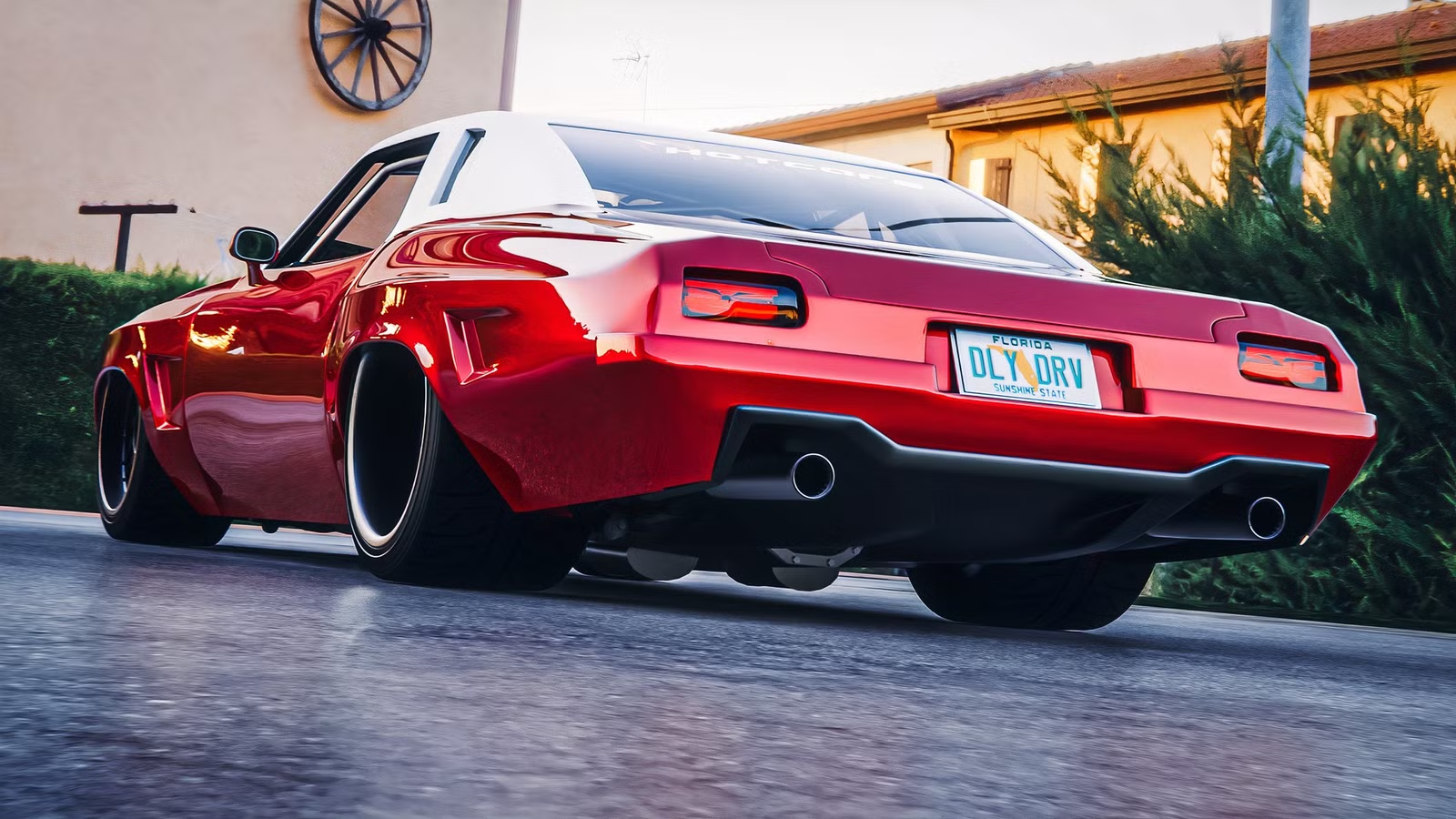
The original 1974 Chevrolet Chevelle Laguna was already a large car, measuring roughly 207 inches long on a 112-inch wheelbase, but this concept visually drags that mass toward the pavement. The body sits extremely low over deep-dish wheels, while swollen fenders push the stance outward. It still reads instantly as a ’70s Chevy, only now it has the posture of a modern pro-touring build.

The front is where the transformation makes itself abundanctly clear. The broad Laguna nose stays, but the bumper-heavy look of the time has been cleaned up with a black mesh grille, compact round LED-style headlights, a deep lower intake, and an enormous front splitter. A raised hood section adds just enough menace without turning the car into a caricature. The red paint and contrasting white roof are especially effective because they preserve some of the two-tone personality that defined American coupes of the era.
Move around the back and the Chevrolet Chevelle restomod becomes plenty convincing. The design keeps the short rectangular taillights and long rear deck, then adds a black diffuser and large dual exhaust outlets. There’s no giant wing, oversized badge package, or attempt to disguise the car’s age. The shape is still unmistakably Chevelle, which is the only way to go about things.
Let’s keep in mind that the real Laguna was already one of the cleaner Colonnade-era designs. Chevrolet gave the 1974 Laguna radial tires, Rally wheels, and a radial-tuned suspension, while the new S-3 coupe added sporty exterior details and special instrumentation that included a tachometer. It was Chevrolet trying to keep some performance flavor in the Chevelle during a difficult period for Detroit.
An LS Swap Could Give This 1974 Chevelle The Power It Always Needed
A Chevrolet restomod that looks this serious needs considerably more than the factory powertrain. The 1974 Laguna S-3 offered multiple V8 choices, culminating in a 454 big-block rated at 235 horsepower. People could even pair the 454 with a four-speed manual. That combination sounds awesome today, but the modest output shows how dramatically emissions regulations and the fuel crisis had changed American muscle by the middle of the ’70s.
For this build, a modern 6.2-liter LS V8 feels almost mandatory. Something in the neighborhood of 450 horsepower would completely change the character of the Laguna while making starting, cooling, and everyday drivability far less troublesome than an old carbureted big block. A modern six-speed manual would be the enthusiast’s choice, though a strong automatic would arguably suit the long-legged grand-touring side of this Chevrolet Chevelle just as well.
Pro-Touring Chevelle

The chassis deserves the same overhaul. A Roadster Shop-style perimeter frame, coilover suspension, rack-and-pinion steering, and large four-wheel disc brakes would turn the car from a big ’70s cruiser into a genuine pro-touring Chevelle. The render’s massive wheels and ultra-low ride height point in exactly that direction. Dial back the stance slightly for real roads, add serious modern rubber, and this could become a large American coupe that actually enjoys corners. The visible roll cage and modern bucket seats suggest a similarly focused interior, although keeping the broad original dashboard and even the Laguna’s wonderfully odd 90-degree swivel-seat concept would preserve some character.
The Forgotten Chevrolet Chevelle Might Be The Better Restomod Canvas

The Laguna S-3 arrived for 1974 as Chevrolet reshuffled the Chevelle lineup. The 307 V8 disappeared, while 350-, 400-, and 454 V8s were offered across the range. Performance was no longer the headline it had been a few years earlier, but the S-3 got styling and chassis changes that gave the Chevelle some attitude during the early Malaise Era. Later Laguna S-3 models took the aerodynamic theme further with the sloping nose closely associated with Chevrolet’s Nascar efforts.
That history makes the 1974 car so much cooler today than it ever was when new somehow. It also remains relatively attainable compared with blue-chip 1960s Chevrolet Chevelles. A 1974 Laguna S-3 in good nick with the 350 V8 would set you back about $18,500. That’s hardly pocket change, but think of it as a brilliant starting point for a serious restomod project rather than starting with one of the most desirable classic Chevelle muscle cars.
Overlooked No More

Lest we forget, the 1973 Chevelle in Drive gave the Colonnade body shape a rare starring role, with Ryan Gosling closely involved in building the movie car before filming. This Laguna restomod feels like that basic idea pushed several steps further: the same long-hood, heavy-shouldered cool, now backed by the chassis, brakes, tires, and LS V8 performance needed to make the attitude credible.
Is that the strongest argument for building one? Maybe. A ’74 Chevrolet Chevelle Laguna restomod doesn’t have to compete with perfectly restored LS6 cars or another army of familiar SS clones. It starts with an overlooked chapter of Chevrolet muscle and gives it the power and stance enthusiasts always wanted. With an LS V8, modern transmission, serious pro-touring hardware, and styling this disciplined, the Laguna could finally become the Chevelle people start giving a damn about.

Related posts


Latest Post


No Comments