Forget The Audi Q5 — This Japanese SUV Feels Way More Luxurious
9 minutes reading
Wednesday, 23 Sep 2026 08:30 0 8 autotech
The 2026 Audi Q5 represents a full generational overhaul of the German brand’s best-selling SUV in the premium compact segment. Slotting above the subcompact Q3 and below the midsize Q7, it carries a base MSRP of $52,800 — a figure that raises a fair question: is the badge worth the premium? The new Q5 leans hard into digital integration and updated lighting, with standard LED headlights and customizable digital signatures that signal a clear shift in Audi’s design direction. But in a market where mainstream manufacturers are closing the luxury gap faster than ever, the Q5 faces genuine competition from an unexpected corner. average of just below $50,000
High transaction prices are reshaping the premium SUV segment in the U.S. The average transaction price for luxury vehicles remains well above the broader industry average, and that gap is starting to cost automakers real volume. Elevated retail prices are pushing budget-conscious buyers away from traditional luxury brands and toward mainstream alternatives. Mainstream subcompact SUVs, which average around $31,113, have seen sales climb more than 23 percent as a result. The message from consumers is clear: value and real-world quality now matter more than a premium badge alone.
Why Mainstream SUVs Are Being Taken More Seriously
Close-up shot of 2026 Toyota Crown Signia Limited front endLyndon Conrad Bell | TopSpeed
Mass-market manufacturers are responding to this trend by increasingly infusing their mainstream SUV lineups with premium design elements. This includes high-quality materials and sophisticated digital systems to satisfy rising consumer expectations for a more upscale daily driving experience. The democratization of luxury is driven by the realization that modern buyers no longer view utility and comfort as mutually exclusive, leading brands to integrate features previously reserved for high-end segments into their high-volume models.
The strategy is working. Sales figures over the past several years have built brand loyalty across a wider demographic of shoppers who want a premium experience without the steep price tag that comes with a dedicated luxury marque. That said, the approach has a side effect: as mainstream models absorb more upscale content, average transaction prices across the entire segment have crept steadily upward, fundamentally reshaping the traditional value proposition of the category.
Toyota’s Broad Approach To SUVs
2026 Toyota Crown Signia Limited front badgeLyndon Conrad Bell | TopSpeed
Toyota approaches its SUV portfolio with a disciplined, multi-pathway strategy that leverages its reputable manufacturing philosophy. The Japanese brand grounds this in the pursuit of efficiency, waste elimination, and continuous incremental improvement — principles that consistently yield high-quality, reliable vehicles produced at global scale. Both the mainstream Toyota and luxury Lexus divisions share a design language that balances athletic aesthetics with functional, driver-focused interiors, and both routinely incorporate advanced safety and connectivity technology to stay competitive in a fast-moving market.
In the U.S., this approach has proven remarkably successful, even as the broader industry navigates supply chain pressures and softening EV demand. Toyota has maintained a dominant market presence by offering a deep, versatile catalog of electrified and internal combustion options. By aligning production capacity with shifting consumer preferences — and leaning into the widespread appeal of its hybrid technology — the company has sustained strong sales momentum and high brand loyalty, cementing its position as one of the most powerful forces in the American automotive landscape.
The Crown Signia Is An Underrated Premium SUV
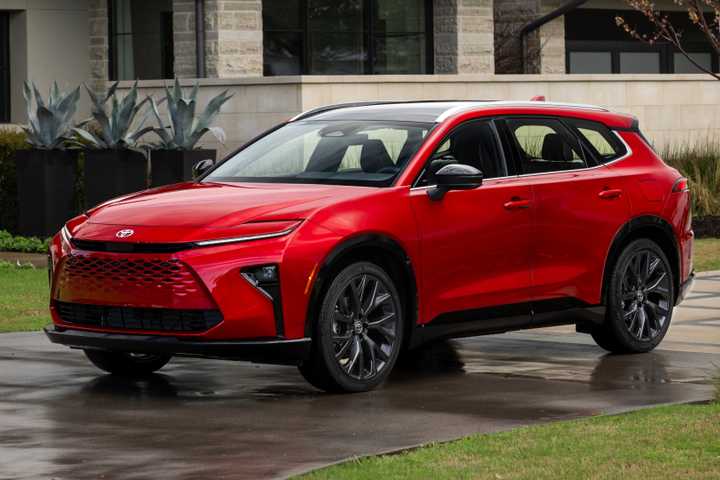
2026 Toyota Crown Signia Limited Exterior Front 3.25 RightLyndon Conrad Bell | TopSpeed
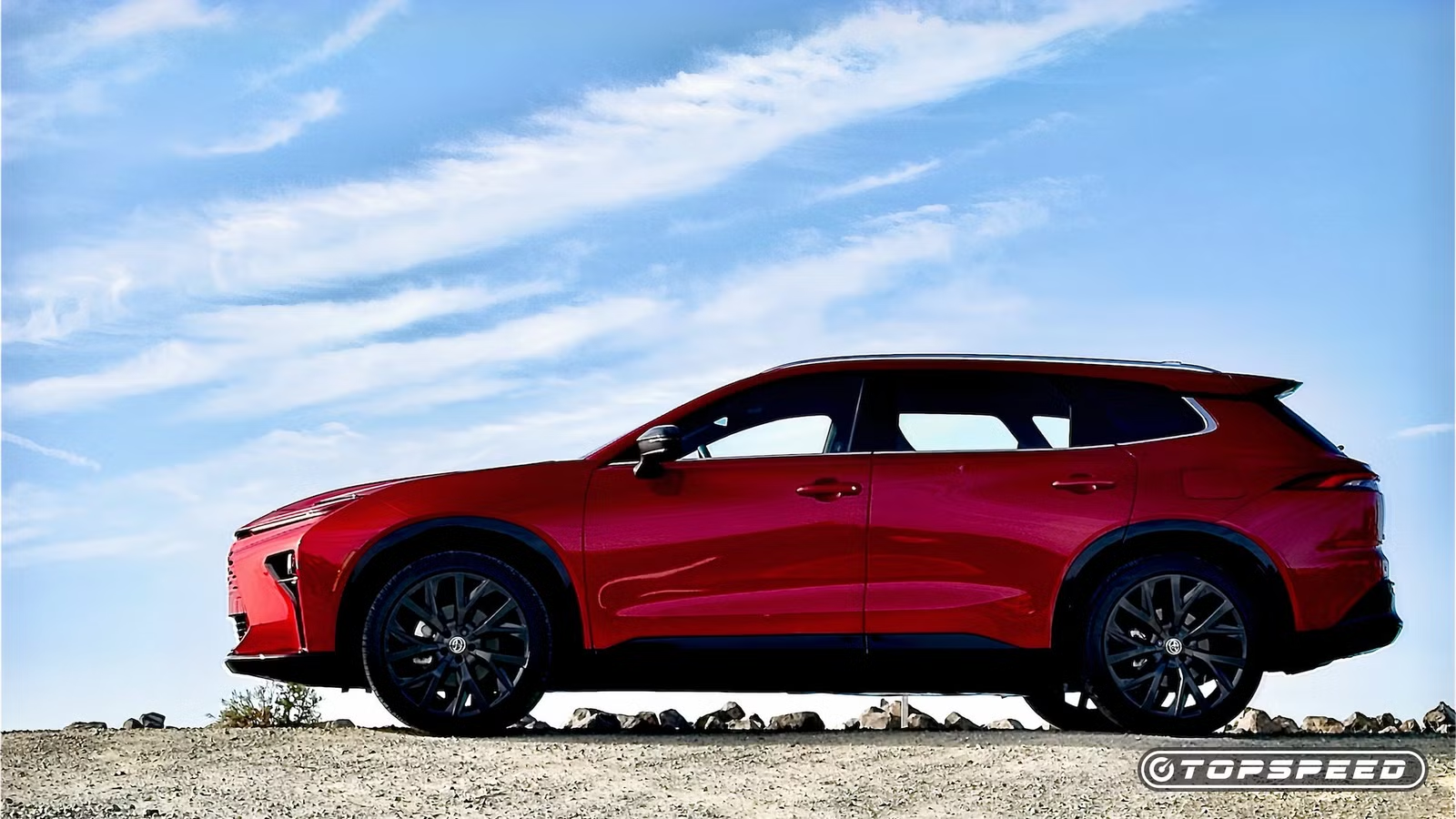
The 2026 Toyota Crown Signia is a distinctive, high-end niche crossover in the brand’s expansive lineup. Positioned as a premium-leaning hybrid crossover that bridges mainstream utility and entry-level luxury, the Crown Signia entered the U.S. market for the 2025 model year. Its sleek, aerodynamic silhouette and refined, quiet cabin deliver a near-luxe experience without the premium-badge price to match.
While it serves as a more accessible alternative to traditional luxury-branded wagons and crossovers, its success rests on Toyota’s core strengths: a fuel-efficient hybrid powertrain and a long-standing reputation for reliability. Together, these make it a compelling value proposition. Toyota reinforces that case with sophisticated ride quality and a comprehensive standard-features list more typical of near-luxury models.
One Of Toyota’s Poorest-Performing Models
Rear 3/4 shot of 2026 Toyota Crown Signia Limited parkedLyndon Conrad Bell | TopSpeed
While it is an appealing luxury crossover value proposition, the Crown Signia has been suffering from a noticeable demand decline this year. As of Q2 2026, Toyota confirms having only sold 11,231 units, reflecting an 8.6 percent sales increase year-on-year. For reference, the Crown Signia shares its platform with the Lexus NX, which the brand reports to have sold 30,763 units in the same period.
Despite its modest sales numbers, the Crown Signia remains a well-regarded crossover. J.D. Power gives the 2026 model year an 80/100 consumer-verified overall score, including 82/100 for quality and reliability, 79/100 for the driving experience, 79/100 for resale value, and 76/100 for the dealership experience.
On the Edmunds consumer reviews portal, the same model holds a 4.6/5 average score. Owners highlight fuel efficiency, visual presence, ride quality, and build quality as key strengths. The main criticisms center on engine performance and the infotainment system.
The Crown Signia’s Well-Appointed Cabin
2026 Toyota Crown Signia Limited interiorLyndon Conrad Bell | TopSpeed
The 2026 Toyota Crown Signia delivers a well-appointed experience even at the entry level, with the XLE trim serving as a sophisticated starting point at $44,690 — meaningfully below the Lexus NX’s base price of $47,120. Standard equipment includes leather upholstery, eight-way power-adjustable and ventilated front seats, and a heated steering wheel. The dashboard centers on a 12.3-inch Toyota Audio Multimedia touchscreen paired with a 12.3-inch digital instrument cluster, wireless Apple CarPlay and Android Auto compatibility, and a Qi wireless charging pad.
Stepping up to the Limited trim costs $49,090. This trim meaningfully elevates the cabin’s atmosphere and convenience, adding an 11-speaker JBL premium audio system, a fixed panoramic glass roof with a power sunshade, and heated rear seats for improved passenger comfort. The Limited also brings practical refinements such as rain-sensing automatic windshield wipers, driver’s seat memory settings, and an upgraded lighting array, along with enhanced parking support through front and rear parking sensors with automatic braking. Across both trims, the vehicle maintains a focus on modern ease-of-use with standard dual-zone automatic climate control and the comprehensive Toyota Safety Sense 3.0 suite.
We Test Drove The Crown Signia, And It’s Definitely One To Keep On Your Radar
There are only two trims available for the 2026 model year, and our team had the opportunity to get behind the wheel of the top-spec Limited. Needless to say, it was very well-equipped, though even the base model comes with leather upholstery, heated and ventilated front seats, heated rear seats, and a heated steering wheel. We enjoyed the premium JBL sound system, though.
Fit, finish, and materials are Lexus-like in execution. The two-row cabin comfortably seats five, with adequate head, leg, and hip room for all occupants. The dash design is contemporary, without straying into avant-garde.
Performance isn’t the primary goal of the Crown Signia, though it does come standard with 240 horsepower and AWD, lending a level of confidence and urgency that makes highway maneuvering easy. That said, don’t expect to win many stoplight drag races — we recorded 0-60 MPH times of around seven seconds. We also saw lower-than-estimated fuel economy, with our stint behind the wheel returning 34 combined MPG against the EPA’s 38 combined MPG estimate, though real-world results will always vary by driver and conditions. Overall, the Crown Signia is a comfortable, quiet, and genuinely premium SUV that doesn’t overreach — it simply does what it does very well.
How This Compares To The 2026 Q5 Experience
Shot of 2026 Audi Q5 interior showing cockpitAudi
The standard Premium trim of the Audi Q5 packages a highly digital cabin with premium interior elements. You get leather seating surfaces, eight-way power-adjustable front seats, and a heated steering wheel for baseline comfort. Audi builds the interior layout around its panoramic Digital Stage display system, which pairs an 11.9-inch virtual cockpit cluster with a 14.5-inch central MMI touch interface.
This setup runs on an Android Automotive operating system and includes standard wireless Apple CarPlay and Android Auto integration. A ten-speaker audio system handles media duties. Convenience highlights include an advanced smart key system, adaptive cruise control, and a triple-zone automatic climate control setup to maintain individual temperature preferences across the cabin.
Toyota’s Trusty Hybrid Powertrain
Close-up shot of 2026 Toyota Crown Signia Limited engine bayLyndon Conrad Bell | TopSpeed
The 2026 Toyota Crown Signia is powered by a 2.5-liter Dynamic Force four-cylinder hybrid engine paired with an electronically controlled continuously variable transmission and standard electronic On-Demand All-Wheel Drive. The system produces a combined output of 240 horsepower and 178 pound-feet of torque.
Toyota quotes a 0-60 MPH time of 7.1 seconds. The brand does not publish an official top speed for this model, which is designed around efficiency and refined daily drivability rather than outright performance. The Crown Signia also offers a maximum towing capacity of 2,700 pounds — sufficient for light-duty recreational hauling such as a small trailer or personal watercraft.
Compact Crossover Interior Proportions
Shot of 2026 Toyota Crown Signia Limited Interior showing rear seatsLyndon Conrad Bell | TopSpeed
The 2026 Toyota Crown Signia offers a spacious, premium interior designed for five-passenger comfort. Front-row occupants enjoy 39.1 inches of headroom and 42.1 inches of legroom, while the rear seating area provides 38.9 inches of headroom and 37.1 inches of legroom.
Cargo flexibility is a key strength. With the rear seats upright, the vehicle offers 25.8 cubic feet of cargo space. Fold the second row flat and that figure expands to 68.8 cubic feet, creating a versatile load area for larger items.
Impressive Fuel Consumption Returns
2026 Toyota Crown Signia acceleratingToyota
Being a hybrid, the Signia’s biggest claim to fame is its incredible EPA-estimated consumption and range figures. The XLE and Limited share the same estimates despite featuring different wheel sizes. The result is a 39/37/38 MPG city/highway/combined rating, along with a 551-mile range claim from the 14.5-gallon tank and 0.9 kWh lithium-ion battery pack.
The EPA estimates owners can save up to $2,750 on gasoline over five years, with an expected annual fuel cost of $1,650. That works out to roughly $2.73 per 25 miles driven and around $60 for a full tank. These aren’t class-leading numbers, but the Crown Signia strikes one of the better balances of efficiency and real-world performance available in the premium hybrid crossover segment.
Base Trim Engine
2.5-liter 4-Cylinder Hybrid
Base Trim Transmission
CVTi-S
Base Trim Drivetrain
All-Wheel Drive
Base Trim Horsepower
188 HP @6000 RPM
Base Trim Torque
178 lb.-ft. @ 4300 RPM
Make
Toyota
Model
Crown Signia SUV
Segment
Compact SUV
Sources: Toyota, J.D. Power, Edmunds, and the EPA.








No Comments