
The Nissan V6 That Revs To 7,500 RPM On A $452 Repair Budget
Characterful large-capacity V6, V8, V10 and V12 engines that haven’t been forced to adopt electrification or turbocharged assistance have almost entirely vanished from the auto industry. They have been pushed to the point of extinction by increasingly stringent emissions and fuel economy regulations.

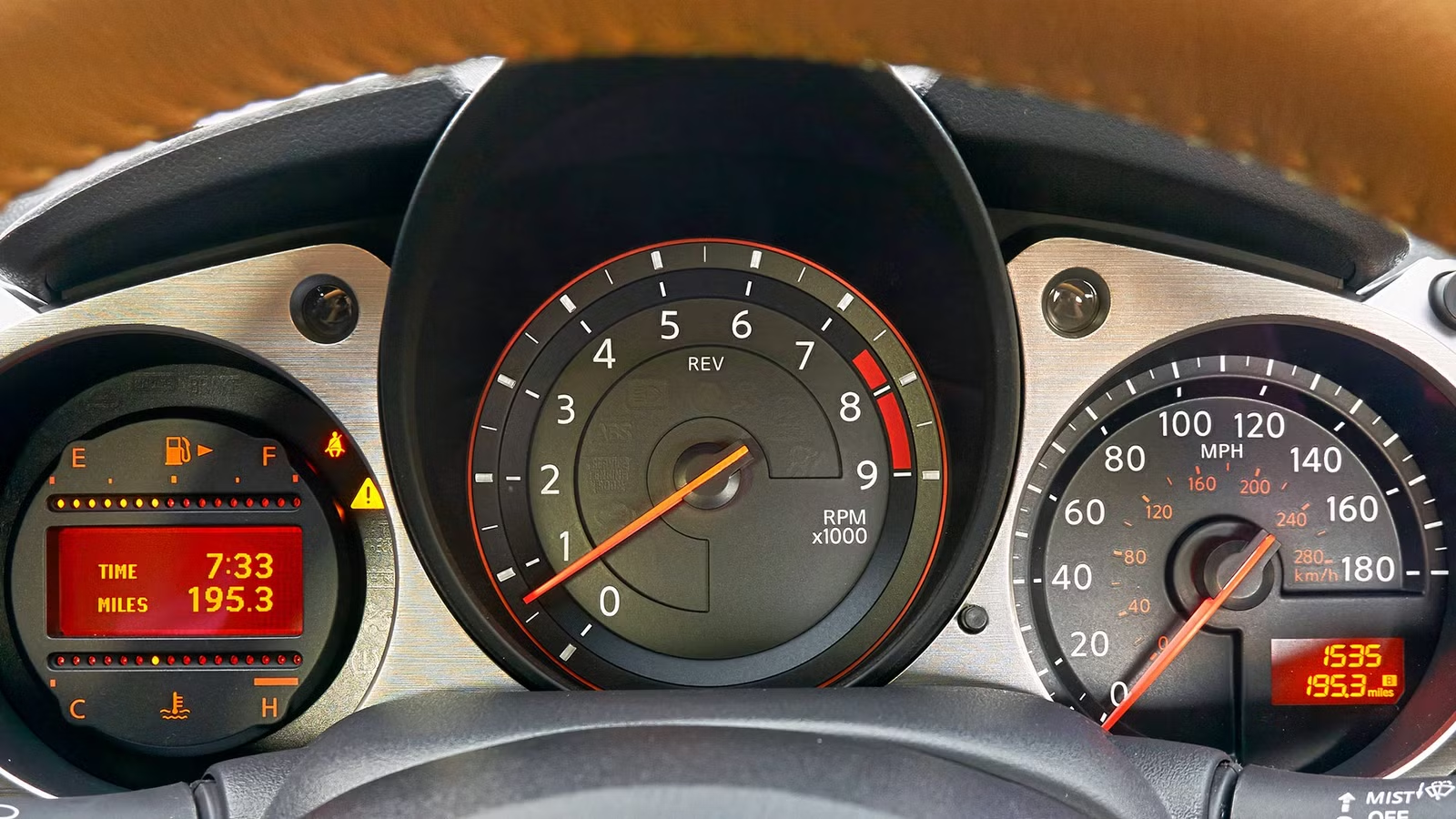
Nissan produced a fantastic V6 that offers the appeal of a thrilling redline of up to 7,500 rpm (from 2007 onward), making it capable of rivaling some supercars, yet it has proven remarkably reliable and as inexpensive to maintain and repair as an economy car.
Last Of The Naturally Aspirated Breed
Other than outrageously expensive exotica such as Ferrari’s 12Cilindri and Purosangue, the last survivors of the pure naturally aspirated breed comprise only the Ford Mustang GT and Dark Horse, the C8 Chevrolet Corvette Stingray/Z06 and the aging Lexus LC500.

Manufacturers have turned to smaller capacity turbocharged internal combustion engines, often with hybrid EV assistance, to produce similar or higher performance outputs while using less fuel.
Turbo four-cylinder engines have generally supplanted naturally aspirated V6s, with force-fed six-cylinders taking the place of NA V8s, while V10s and V12s have mostly been relegated to the history books. These highly stressed smaller turbo engines are inherently far more complex, much more difficult to work on, cost a lot more to maintain, and have patchier reliability records resulting from these very factors.
Nissan Aced The Big V6 Formula

Nissan’s multi-award-winning VQ engine family has a well-earned reputation for delivering punchy performance combined with a distinctive, sonorous soundtrack that wouldn’t be out of place on a racetrack or emanating from an exotic sports car.
The all-aluminum VQ35DE, followed by the later higher-revving 7,500 rpm VQ35HR and VQ37VHR, are best known for powering the Japanese manufacturer’s two-door 350Z and 370Z coupes and roadsters from 2003 to 2020, and were used in a variety of luxury coupes, family sedans, SUVs, minivans, and even panel vans.
Despite the VQ’s inherent sporting character and supercar-rivaling 7,500 rpm rev limit, it is widely regarded as one of Nissan’s most durable engine platforms with economy-car maintenance costs.
Nissan’s Revered VQ Engine Legacy

The Nissan VQ is a family of aluminum DOHC 24-valve 60-degree V6 gasoline engines that were fitted to a wide variety of vehicles from the mid-1990s to the early 2020s in displacements ranging from 2.0 to 4.0 liters. The VQ35DE was the first of the 3.5-liter units, debuting in 2000 powering the Maxima with 255 hp, followed by the 240 hp 2002 Altima—both front-wheel-drive sedans with the engine mounted transversely. It was also introduced on the quirky Murano SUV, Pathfinder, Quest, Xterra and Frontier.
Crucially for enthusiasts, it was the cornerstone of Nissan’s return to its Z-car performance roots with the launch of the hugely successful 350Z two-door sports coupe and roadster, as well as the more luxurious Infiniti G35 for the 2003 and 2004 model years. Mounting the engine longitudinally was essential for the 350Z’s entertaining rear-wheel-drive layout and performance characteristics, and produced an initial 287 hp and 274 lb-ft.

This engine was an immediate hit, producing a muscular growl at low revs and climbing to a raspy roar as it approached the 6,500 rpm redline, while retaining plenty of midrange punch. These outstanding characteristics saw the VQ35DE listed as one of Ward’s 10 Best Engines from 2002 to 2006, with numerous other engines in the VQ family sharing prize-winning credentials.
The VQ35DE was revised on selected models in 2005 with the “Rev-Up” upgrade, lifting the redline to 7,000 rpm and raising the output to 298 hp and 268 lb-ft. This was achieved with more aggressive camshafts, revised intake and exhaust systems, higher-flowing cylinder heads, and updated engine management.
Raising The Bar With 7,500 RPM VQ35HR

Nissan introduced a comprehensive upgrade for the 350Z in 2007 with the new VQ35HR (High-Rev) engine. While the block and some other components remained unchanged from the ‘DE’ engine, it used around 80% new parts in combination with the Nissan Direct Ignition System (NDIS), dual continuously variable valve timing (CVTC), and a higher compression ratio of 10.6:1, compared to 10.3:1.
There were performance and efficiency benefits from the new engine, as it was now capable of a spine-tingling 7,500 rpm redline, produced 306 hp at 6,800 rpm, and was more fuel efficient with lower emissions than the older engine.
The real-world performance gains of the HR were clear, as tests at the time showed a 0.2 sec improvement from 0–60 mph at 5.2 seconds, and a ¼-mile time of around 13.6 seconds, half a second quicker than the original model.
Ultimate VQ Performance In Redesigned 370Z

Nissan wasn’t resting on its laurels with this impressive engine, and launched the enlarged 3.7-liter VQ37VHR as an evolution of the ‘HR’ for the 2009 model year. It retained approximately 65% of the same parts, but had a longer 86 mm stroke and higher compression ratio of 11.0:1. It incorporated CVTC and Nissan’s latest VVEL (Variable Valve Event and Lift) technology that varies the timing and the lift of the intake valves.
That screaming 7,500 rpm redline was fortunately left untouched, to the delight of enthusiasts who were already seeing noise and emissions regulations—in combination with turbocharging—starting to strangle the character of modern performance engines.
The mighty VHR was launched in the sharper, more aggressively styled 370Z, which remained on sale in the US all the way until 2020. This made it one of the longest-running modern sports cars.

In the 370Z, power jumped to 332 hp, while torque increased only slightly to 270 lb-ft. However, it had an improved power curve and more low-end and midrange torque, enabling a 0–60 mph time of just 4.7 seconds and a 13.3-second ¼-mile. In its ultimate guise, the more exclusive track-oriented 370Z Nismo delivered 350 hp. The VHR was also used in a variety of Infiniti models: G37, M37/Q70, FX37/QX70 and Q60.
Tough And Reliable, Even When Driven Hard

Throughout its lifespan, the VQ35 and VQ37 engines have proven exceptionally tough and reliable, even when driven to their full potential in performance-oriented applications such as the 350Z and 370Z, and especially in the Nismo variants.
The VQ35DE is still regarded as one of Nissan’s most reliable engines thanks to its robust cast aluminum block and heads, strong internals, and the durable timing chain instead of a belt. It has a well-documented, proven lifespan of 250,000–300,000 miles or more with regular basic maintenance. Early VQ35DE engines are known to have higher-than-normal oil consumption, instances of piston ring wear, and timing chain tensioner issues, but most of these problems were apparently addressed for the 2005–2006 model years, making these the safer, better buy.

With the VQ35HR and larger VQ37VHR being closely related, there is very little to separate them in terms of reliability, and they are considered Nissan’s most reliable performance engines. The timing chain assembly was redesigned, leading to significantly fewer problems than the original DE. Early indicators of failing tensioners are a rattle on cold start, followed by a slightly rough idle and, eventually, a persistent rattle under part throttle.
Early VHR engines produced from around 2008 to 2012 reportedly have a leaky oil gallery gasket, leading to oil weep at the back of the engine, which may become worse during track use. This is easily resolved by fitting a new gasket. Regular servicing (more frequently if the car is used on track) ensures 250,000-mile-plus durability.
Performance and Character, Without Crazy Maintenance Costs

Being able to enjoy an entertaining sports car such as the 350Z or 370Z (or any of the vehicles fitted with VQ engines) without incurring outrageous maintenance costs is a rare thing indeed. This has become a big issue on complicated modern turbocharged performance cars, where bills stretching into the thousands are the norm rather than the exception. There are numerous $5,000 to $6,000 engine-out horror stories with powerful but fragile German turbo sixes to scare even those with deep pockets away.

Thanks to their robust design, renowned reliability, and hassle-free high-mileage capability, Nissan’s VQ35DE/HR and VQ37VHR engines are inexpensive to run and maintain. Based on RepairPal estimates, the 350Z has an overall annual maintenance cost of around $452, while the 370Z is pegged at approximately $504.
Accordingly, whether you’re buying or already own a thoroughly engaging 350Z or 370Z sports coupe or convertible, a more conventionally VQ-powered family vehicle in sedan, minivan, or SUV form, or something even more utilitarian, from an engine standpoint, it’s one of the safest bets out there.
Sources: Nissan, AutoFindr, Woda Auto Parts, 8020 Automotive, RepairPal

Related posts

Latest Post


No Comments