
The Adventure Bike That Deserves Far More Attention Than It Gets
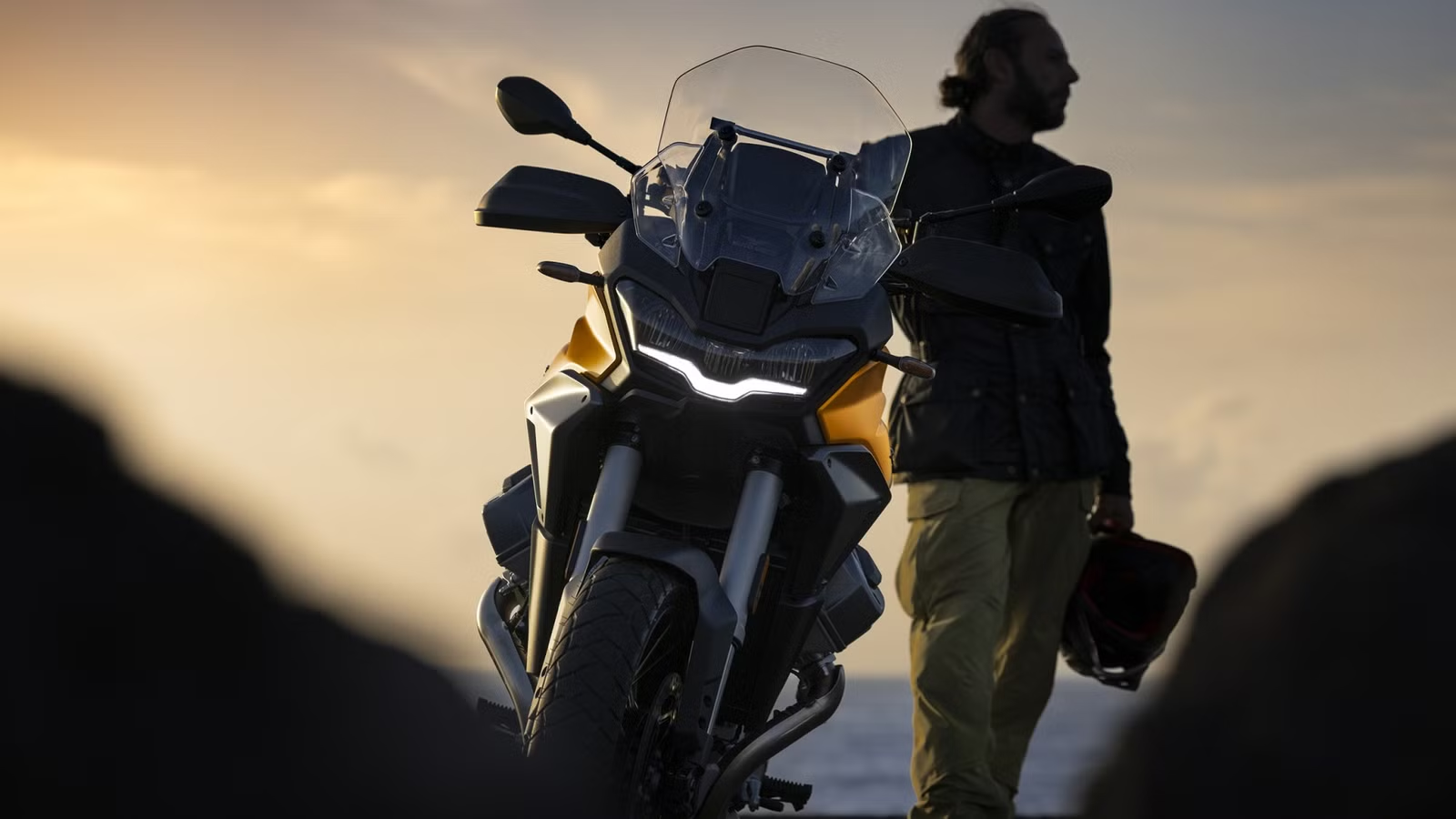
Adventure motorcycles have become increasingly difficult to categorize. Some are built to cross continents, others are really road bikes wearing hiking boots, while a few are unapologetically designed around the dirt. This has resulted in a market filled with excellent choices, but also one where familiar names tend to dominate the conversation. It makes it easy to overlook motorcycles that approach the formula from a different direction. The sweet spot is obviously a machine that can travel for hours, handle imperfect roads, carry luggage, and still feel special when the destination is nowhere in sight. Most ADVs can do this in their own way, but this one bike tends to fly under the radar rather undeservedly.
The Underrated Side Of Adventure Motorcycling
Why Some ADVs Get Lost In The Crowd

The adventure bike market has become a heavyweight decision. The BMW R 1300 GS, Ducati Multistrada V4, KTM 1390 Super Adventure and Triumph Tiger 1200 have all helped define what a modern large ADV should be. They are fast, sophisticated, and packed with electronics. Meanwhile, bikes such as the Yamaha Ténéré 700 and Aprilia Tuareg 660 have attracted riders looking for a lighter, more dirt-focused interpretation of the category.
Then you have the underdogs. Bikes that, for whatever reason, don’t garner as much attention as the rest of the segment. They don’t dominate comparison tests, and they can be surprisingly absent from social media feeds. Sometimes, even the bikes from the big brands get lost in the crowd, like the Suzuki V-Strom 1050 series: The V-Strom 650 gets all the attention, but the 1050 is buried under BMW and Ducati. Speaking of Ducati, the DesertX is another very capable ADV, but it gets overshadowed by the brand’s own Multistrada lineup.
How Moto Guzzi’s Stubborn V-Twin Formula Created The Perfect Touring Engine

The ADV of today’s topic comes from Moto Guzzi, whose history stretches back to 1921 when it was founded in Italy. Over the decades, Moto Guzzi has built everything from racing motorcycles and military machines to iconic road bikes, but one technical feature became inseparable from the brand: the transverse 90-degree V-twin.

The engine was designed by Giulio Cesare Carcano in the 1960s, making its way into production with the V7 in 1967. The V7 Sport, Le Mans, and California helped establish the personality of the company’s motorcycles. Adventure riding eventually became part of that story, too, although more recently compared to the company’s history. The first Stelvio debuted in 2007 and went into production soon after. But the 2011 variant is what actually solidified its ADV credentials with an absolutely massive 8.5-gallon fuel tank.
The Moto Guzzi Stelvio Is A Real Adventure Tourer
How The Stelvio Pass Namesake Sets The Bike’s Touring Mandate

The Stelvio is Moto Guzzi’s modern adventure tourer, fitting the name. The famous Stelvio Pass in Italy is known for its 48 hairpin bends, making it an appropriate namesake for a motorcycle built around traveling through changing terrain rather than simply reaching a destination. The bike offers the hardware expected from a serious modern ADV, while still retaining the mechanical character that makes a Moto Guzzi different. The V-Twin engine, the chassis, and the electronics, including radar-based rider assistance, make this one of the bikes that is surprisingly absent from a lot of conversations involving ADVs.
The Compact Block V-Twin And Shaft Drive Make The Mission Clear

At the heart of the Stelvio is Moto Guzzi’s 1,042 cc “Compact Block” transverse 90-degree V-twin engine. The 96×72 mm bore and stroke produce 115 horsepower at 8,800 rpm and 77.4 pound-feet of peak torque at 6,750 rpm. What these numbers signify is not top-end rush, but low- and mid-range punch, perfect for an ADV that wants to cruise rather than chase high triple-digit speeds.
Immediate, usable torque is what allows riders to overtake cleanly from cruising speed and take off briskly without wringing the throttle too hard. The Stelvio also gets a six-speed gearbox and hydraulic clutch, which transfer the power from the engine to the rear wheel. But the bike also gets a shaft drive. This is another aspect that gives the Stelvio its touring credentials. Shaft drives famously require very little maintenance and absolutely none on the side of the road.

A chain drive requires you to stop and lubricate every 250–500 miles, depending on riding conditions. So, you don’t need to break your pace for anything except fuel. According to Moto Guzzi, you get an economy of 46 miles per gallon, and with a 5.5-gallon tank that’s 253 miles in range. Pretty much on par with the rest of the competition.
Brembo Brakes And Tubeless Spoked Wheels Give The Stelvio An Edge On And Off Tarmac

The Stelvio uses a tubular steel frame designed around the balance between stability and agility. Moto Guzzi specifically highlights the frame as a key part of the bike’s ability to remain manageable while carrying the kind of load expected from a touring-focused adventure motorcycle. Suspension duties are handled by a 46 mm upside-down fork with adjustable preload and rebound damping, and a monoshock with remote preload adjustment at the rear.
With 6.7 inches of travel and a 19/17-inch front/rear wheel setup, the Stelvio showcases a bias toward the road, but still has the chops to tread anywhere. Stopping power comes from twin 320 mm floating front discs and four-piston Brembo monobloc radial calipers. The rear uses a 280 mm disc with a two-piston Brembo caliper.

The wheels are tubeless spoked units, a familiar configuration on large ADVs. The seat sits 32.6 inches high, and the bike weighs 542 pounds at the curb. This does make it a little intimidating, but the high perch gives you a better view of the traffic ahead.
The Moto Guzzi Stelvio Is Designed To Travel, Not Just Look Adventurous
Italian Character In A Sea Of Similarity

ADVs can sometimes blend into each other. Tall screen, beak-line front end, exposed engine, crash protection, and luggage mounts have become almost mandatory ingredients. The Stelvio, though, manages to use those same ingredients without looking generic.
Like the R 1300 GS, the defining characteristic for the Stelvio is the transverse V-twin in the way that it sticks out of the bodywork. The single-sided swingarm and eagle-shaped DRLs add another distinctive Moto Guzzi detail. Then you have the big 5.5-gallon fuel tank, which gives the bike its silhouette. Overall, there is a sense of old-school charm in the Italian design that not a lot of other ADVs bring with them, making the Stelvio distinctive in this segment.
The Stelvio Has Modern Electronics Where It Matters Most

Underneath its skin, the Stelvio isn’t old-school at all. Standard equipment includes cornering ABS, traction control, cruise control, full LED lighting, a full-color TFT instrument panel, and five riding modes, one of which is intended for off-road use. The windshield is electrically adjustable, too, and the more expensive variants also include the company’s PFF Rider Assistance Solution. This system uses 4D imaging radar technology and can provide forward collision warning, blind-spot information, and lane-change assist.
The Moto Guzzi Stelvio Does Not Need To Beat Every ADV
Base MSRP: $16,990

Moto Guzzi in the US lists the base Stelvio at $16,990, with prices going up to $17,590 and $18,490 for the PFF Rider Assistance Solution and Duecento Tributo variants, respectively. Maintenance is handled through the company’s authorized service network, and they recommend timely maintenance even if the mileage hasn’t been reached, which may be a deal-breaker for some. But the Stelvio offers something a lot of other ADVs don’t: character. This charmingly old-school Italian ADV is capable enough to chow down miles as they come and shifts seamlessly from a highway to a back road or trail. Moto Guzzi has not confused nostalgia with tradition, and the Stelvio perfectly showcases that.
Source: Moto Guzzi USA

Related posts



Latest Post


No Comments