
Triumph Tiger 900: The Middleweight That Beats Big ADV Bikes
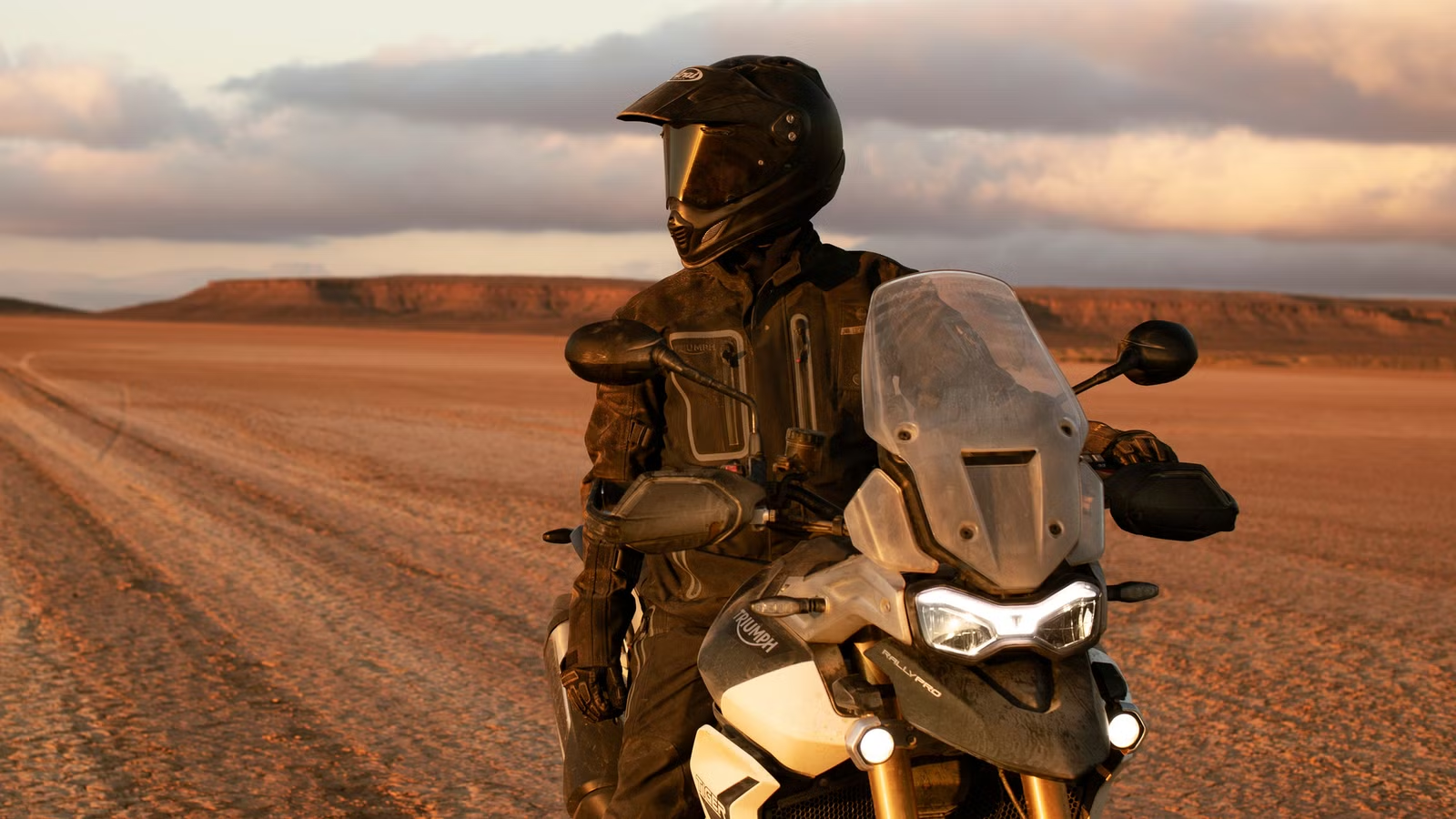
For years, the flagship adventure motorcycle class was driven by a simple ethos: Bigger is better. The formula was simple — take a liter-class engine (or the biggest one they had) and hook it up to an adventure bike frame and a gigantic fuel tank, and voilà, you had a world-conquering machine. These motorcycles were impressive on paper, boasting superbike-rivaling horsepower and touring credentials that would make a grand tourer sit up and take notice. The flaw in the plan, though, was when you took it off the beaten path. Their size and weight meant that these were blunt tools, needing an expert hand to conquer rough trails. To intermediate and novice riders, however, these flagship adventure bikes proved intimidating, and rightly so — try picking up a dropped six-hundred-pound adventure motorcycle in the middle of nowhere, and you’ll get the idea. The same issue arose while moving these behemoths around in parking lots, or riding them on loose gravel trails. Maneuvering these motorcycles at low speeds felt like navigating a tightrope suspended over a gorge. Once that motorcycle began to tip, there was no saving it. You were going down.

It all came down to one motorcycle manufacturer, from Hinckley. Triumph rewrote the flagship adventure motorcycle rulebook with the 2020 Tiger 900. The Brit bike maker realized that there was no point in going after high displacement and heady horsepower numbers. What the adventure motorcycle segment needed was accessibility, a machine that helped riders on the trail, instead of fighting them. The 2020 Tiger 900 is proof that you don’t need massive 1200cc motorcycles to cross continents or conquer tough off-road trails. With the 900, the bike maker focused on balance, packaging, and accessible performance. In doing so, Triumph created a middleweight adventure motorcycle that punched above its class in real-world capability, but at the same time, offered brilliant agility and rider accessibility that made those bigger motorcycles feel fat and clumsy.
The Secret Sauce: Mass Centralization
The 2020 Tiger 900 wasn’t Triumph’s first adventure rodeo. Instead, it was the replacement for the bike maker’s highly capable Tiger 800. When Triumph started developing the 800-replacement, it realized that shaving off a few ounces or liberating a few horsepower wouldn’t suffice. In fact, on paper, the weight difference between the Tiger 800 and Tiger 900 is almost negligible, yet their riding dynamics feel worlds apart. The secret to this dramatic difference between the two lies in their mass centralization. For 2020, Triumph started with a clean sheet of paper, redesigning the frame and engine placement to shift the Tiger 900’s center of gravity lower and further forward. This simple change fundamentally altered how the motorcycle responds to rider inputs and gravity.

Triumph was able to execute this radical packaging for the 2020 model thanks to one major engineering breakthrough — split radiators. A single, massively mounted radiator takes away prime real estate between the front wheel and the engine, forcing the latter to be positioned farther back and higher up in the frame. By switching to dual side-mounted radiators, Triumph reclaimed the crucial space, allowing engineers to tilt the 888cc inline-triple forward by 6.8 degrees and, at the same time, place it lower in the frame. This move helped significantly lower the center of gravity. The result was a significant reduction in the pendulum effect found in top-heavy adventure motorcycles, and a motorcycle that could be flicked from side to side with the lightest handlebar pressure.
The other major engineering milestone which made the Tiger 900 highly capable on the trails was the T-Plane triple crankshaft. The previous Tiger 800 also had an inline triple, but one that featured a traditional 180-degree firing order, which offered smooth power delivery but lacked low-end grunt. The T-Plane crank introduced a unique 1-3-2 uneven firing order. This uneven firing order introduced a long firing gap which mimicked the tractability and low-RPM power pulse of a V-twin, giving the rear tire time to find traction on loose dirt. However, because it was technically still an inline triple, it retained the top-end punch and evocative shriek at high revs. By improving mass centralization and giving the motor a dual personality, Triumph gave the 2020 Tiger 900 a fundamental advantage over its bulky rivals.
The Specs That Matter On The Trail

To truly understand why the 2020 Tiger 900 outshines larger adventure motorcycles on the trail, one has to go beyond the brochure numbers and take a look at the metrics that define its real-world performance. The large flagship adventure tourers routinely tip the scales at well over 550 pounds, and some kitted-out models even push past the 600-pound mark. In stark contrast, the 2020 Triumph Tiger 900 weighs in at just 423 pounds dry (around 470 pounds with a full tank). That 50- to 100-pound deficit becomes a major factor when you are tackling a rocky incline.
The engine performance is another factor where the Tiger 900 shines. While 1200cc adventure motorcycles routinely put out 150+ hp, the challenge arises when putting that power down on loose dirt without spinning the tires or having the overly aggressive traction control intervene. The 2020 Tiger 900’s 888cc motor puts out 94 hp and 64 lb-ft of torque — numbers that are powerful enough when it comes to cruising at highway speed with a full set of luggage, while at the same time being manageable enough to be modulated by the right wrist on loose surfaces. The Tiger’s numbers and power delivery, thanks to its unique firing order, allow riders to safely harness most of its available performance without overwhelming themselves.
Other critical aspects of a capable adventure tourer include fuel range and tank capacity. The Tiger has a large fuel tank that can hold over 5 gallons of fuel, allowing for a comfortable range of over 200 miles between fill-ups. To keep the center of gravity low, even the fuel is packaged lower and between the frame rails, ensuring a full tank does not ruin the Tiger 900’s dynamics. Compare this to the massive fuel tanks of flagship adventure motorcycles, and you realize that the 2020 Tiger 900 offers a comparable touring range without the top-heavy dynamics.
Purpose-Built Packaging For Different Applications

The 2020 Tiger 900’s brilliance extends beyond its mass centralization and engine firing order. Every single component has been optimized for stress-free adventure riding. The Tiger 900’s mid-section is surprisingly narrow, allowing the rider’s legs to be tucked in close to the motorcycle. This tight stance makes it easier for shorter riders to straddle and ride the motorcycle, while also being able to flat-foot the motorcycle. This helps on off-road trails as well, particularly in stand-up riding. The narrow tank and seat junction allow you to grip the motorcycle with your knees, leaving your upper body to do other things.
Furthermore, the 2020 Triumph Tiger 900 family is segmented into distinct, purpose-built variants that, rather than attempting a one-size-fits-all approach, offer riders a cleaner pathway to their preferred riding style. The Tiger 900 GT caters to riders who prefer to spend most of their time carving mountain passes, with the occasional light off-road excursion. The GT features a lower seat height, cast aluminum alloy wheels with a road-biased 19-inch front wheel setup, and suspension tuned specifically for on-road dynamics. The GT makes for a fantastic sports tourer that can hold its own in light off-road trails as well.
For those who prefer dirt riding, the 2020 Tiger 900 Rally series is more up their alley. The hardcore off-road variant features long-travel, fully adjustable suspension, tubeless spoke wheels with a 21-inch front setup, and electronics with dedicated off-road modes. The long-travel suspension soaks up sharp ruts and hard landings that would bottom out most 1200 ADV suspensions, while at the same time being comfortable enough to eat up highway miles with ease.
Why The Middleweight Tiger Feels Superior Over The 1200s

Step away from the spec sheet and into the real world, and you’ll understand how the case for the 1200 falls apart on the trails. The ultimate test for an adventure motorcycle does not lie in its acceleration numbers, but rather in how it behaves when things go wrong in the middle of nowhere. Every adventure rider, regardless of their skill level, has dropped a motorcycle on a trail. When a 600-pound flagship adventure tourer lands on its side in a rut, retrieving it is a backbreaking, multi-person ordeal that’s even worse if you venture out solo.
By comparison, picking up a Tiger 900 is easier. Because its weight is distributed lower to the ground and its overall mass is significantly lighter, even a single able-bodied rider should be able to pick one up if you drop it on the trails. This translates to less rider fatigue at the end of a hard trail ride. Riding a massive adventure motorcycle requires intense concentration and more physical effort just to keep its momentum in check and keep gravity from winning. Do this for four hours, and exhaustion sets in, making a rider more prone to mistakes and eventually draining all the fun from riding. A motorcycle like the Tiger 900 helps keep the ride relatively effortless, keeping you fresh and alert even after hours in the saddle.
The 2020 Triumph Tiger 900 exposed the flagship adventure touring segment’s misguided focus on prioritizing excess over usability. By keeping its sights on better packaging and ergonomics, the Tiger 900 offers about 95% of the long-distance touring comfort of a large flagship tourer while being significantly better on the off-road circuit. In terms of its own capabilities, the Tiger 900 exposes the liter-class adventure tourers for what they really are: overly heavy, too complex, and clumsy motorcycles for off-road riding.

Related posts



Latest Post


No Comments