
The 1986 Suzuki That Sold 155-MPH Performance Over The Showroom Counter
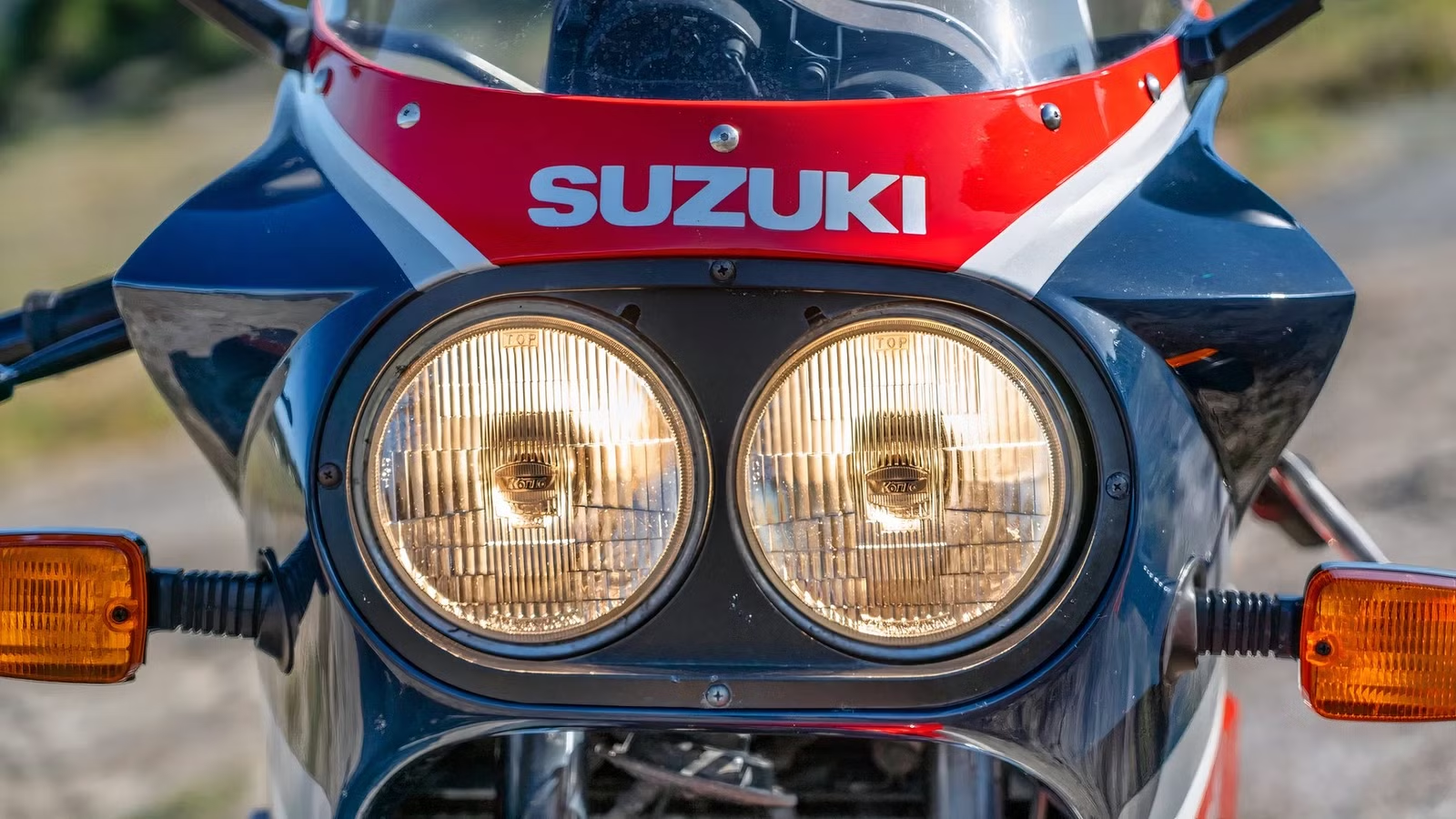
A year after Suzuki launched the GSX-R750, Suzuki took the next logical step and gave us a beefed-up version of the sport bike in the form of the GSX-R1100. The additional displacement gave the bike significantly more power, and an impressive top speed that made it one of the fastest motorcycles on the planet. It played its part in starting what has come to be known as the “Speed Wars,” which raged between the big four Japanese manufacturers up until the end of the century.
The Suzuki GSX-R1100 Made Speed More Accessible
Top Speed: 155 MPH

It is pretty hard to believe these days, but up until the early 80s, no production motorcycle had gone over 150 MPH. All that changed with the introduction of the Kawasaki GPz900, the first production motorcycle capable of such speeds that was readily available. A brief cameo in a popular movie helped give it the kind of exposure motorcycle executives can only dream of. Suddenly, speed was marketable, and this kicked off a race to see who could build the fastest motorcycle.
Each of the Japanese brands were quick to respond in the following years. Suzuki didn’t really need to buy more exposure, all they needed to do was offer a beefed up version of the GSX-R750, which had already taken the motorcycling world by storm. The beauty of this was that production costs were kept to a minimum, and they were able to make its incredible top speed of 155 MPH (potentially 160 MPH under the right conditions) accessible to the masses.
The GSX-R1100 Had An Air/Oli-Cooled Inline-Four
Power: 128 Horsepower


By the 90s, Suzuki would eventually cave and give the model liquid-cooling, but just as they suspected the weight penalty was never worth the performance gains. The relatively simple solution of adding an oil-cooler saved a significant amount of weight for the original bike. At the time, engineers noted that by spraying around 20 liters of pre-cooled oil into the cylinder head per minute, they were able to achieve a similar level of cooling when compared to contemporary liquid-cooled bikes.
It was still able to produce a reliable 128 horsepower. More than enough power in a time when chassis, tire, and suspension technology was still playing catch-up. Even by modern standards, the GSX-R1100 is still a fast motorcycle. In the right condition, they are as fast as any new superbike in a straight line with a 0-60 time of around three seconds, and a quarter-mile time of under 11 seconds.
When It Came Out, The GSX-R1100 Was One Of The Lightest Bikes In Its Class
Dry Weight: 434 Pounds

While other brands continued to chase power figures, Suzuki really understood the value of reducing weight wherever possible. They were pioneers of the aluminum frame, and while the GSX-R750 had already proven its chassis was capable of handling 100 horsepower, this was another big step in terms of power. Although very similar to the design of the 750’s chassis, the 1100 makes use of a more rigid aluminum frame. Back when the bike was new, reviewers praised the GSX-R for its precise handling, and much of that is down to how much lighter it is than any of its competitors. By modern standards, it may not seem all that impressive, but its dry weight figure of 434 pounds made it the lightest bike in its class, and by some margin.
Chassis technology has indeed come a long way since 1986, and it is important to note that this is still a heavy bike, with inadequate brakes and suspension. To modern riders used to bikes that actually do what they are told, this old speed queen will feel anything but precise, especially at greater speed. Speed is the one thing you do have in spades, but bringing all of that to a halt can become a little hairy if the previous owner didn’t take good care of the machine.
The Allure Of Speed

Building the fastest production motorcycle in the world was only partly down to hubris. As previously mentioned, by the time the GSX-R1100 came out, it had become plainly obvious to the Japanese manufacturers that speed was highly marketable, so the motivation to win this “Speed War” had far more to do with sales figures. Having the second-fastest bike didn’t help all that much, for every model year it was a “winner takes all” kind of deal. This period in motorcycle history is all too often remembered only for the positives, of which there are many: engineering boundaries were pushed to the limit, and with such fierce competition, costs were forcibly brought down. But, there were also some negatives that need to be addressed.
In the wrong hands, these bikes were incredibly dangerous. They were capable of speeds previously not thought possible for a motorcycle, and were affordable enough for pretty much anyone who had a decent credit record to buy. Although it is difficult to comprehend today, new riders were given the keys to these bikes, and it was simply a matter of sink or swim. Or maybe, in this case, fly. These bikes had no safety nets, weak brakes, and tires that simply did not offer much in the way of grip.
No Longer The Blue-collar Hero It Once Was
Price Range: $8,000 – $10,000

Today, these bikes are getting harder to find in reasonable condition. For a bike in good shape, you need to expect to pay around $10k. Naturally, project bikes can be had for a lot less. If the bike still has its original 18-inch rims, finding decent tires might be a little tricky, but previous owners may have converted it to modern 17s. Modern rubber and a refreshed suspension will go a long way to making this classic significantly more user-friendly.
Although this is not much of a canyon carver, it is most certainly a fun, fast motorcycle. In the right, more experienced hands, it is one of those bikes that proves 200 horsepower isn’t at all necessary.
Source: Global Suzuki

Related posts



Latest Post


No Comments