
The Motorcycle That Balances Usable Performance With Everyday Rideability
To genuinely enjoy being a motorcycle owner, the bike itself does not need superbike levels of acceleration, nor does it need a sofa-like riding position. What it really needs is usable performance, along with the kind of reliability and dependability that doesn’t make you second-guess yourself when you take the bike out daily. The best middleweight naked bikes understand this philosophy, especially the Japanese bikes. They are entertaining when you need them to be, quiet and sensible on a daily commute, and they are known for their bulletproof nature.
Why Middleweights Hit The Sweet Spot Between Dull And Dangerous
Everyday Rideability Is More Than Just Power And Comfort

The middleweight naked class has always been one of the more interesting parts of the motorcycle market. Speed limits, traffic lights, and suburban roads limit the amount of horsepower you really need. At the same time, a motorcycle that is merely easy to operate becomes dull surprisingly quickly. So, middleweights occupy a sweet spot between those extremes. They have enough torque to make overtaking effortless, enough chassis capability to reward an enthusiastic rider, and enough composure that a routine trip to work doesn’t feel like a chore.

Comfort, too, is an obvious part of everyday rideability, but it’s not the only piece of this puzzle. You can have a wonderfully comfortable motorcycle with big, padded seats. But maintaining these bikes can also become a burden. Japanese bikes excel when it comes to reliable engines and easy, affordable maintenance. The middleweight segment is particularly strong in this regard, because their smaller parallel-twin engines tend to be less complex than bigger inline-fours. At the same time, they still have better capability than the smaller singles.
The MT-07, GSX-8S, And Z650 Are All Strong — So Why Don’t They Win?

This space is largely dominated by Japanese manufacturers, and they are hardly standing still. The Yamaha MT-07 has built its reputation around accessible torque and a light, uncomplicated character. The Suzuki GSX-8S adds a punchy parallel-twin engine and sophisticated electronics to this formula, and the Kawasaki Z650 is known for its comfortable riding position and easy engine. But the bike we want to talk about comes from Honda. You probably know it already, but it manages to bring genuine fulfillment to motorcycle ownership thanks to the fact that all of its performance is available to you every day of the week without having to worry about things breaking down easily.

Why The Honda CB750 E-Clutch Makes Sense
How Honda’s E-Clutch Turns City Traffic From A Chore Into A Non-Issue

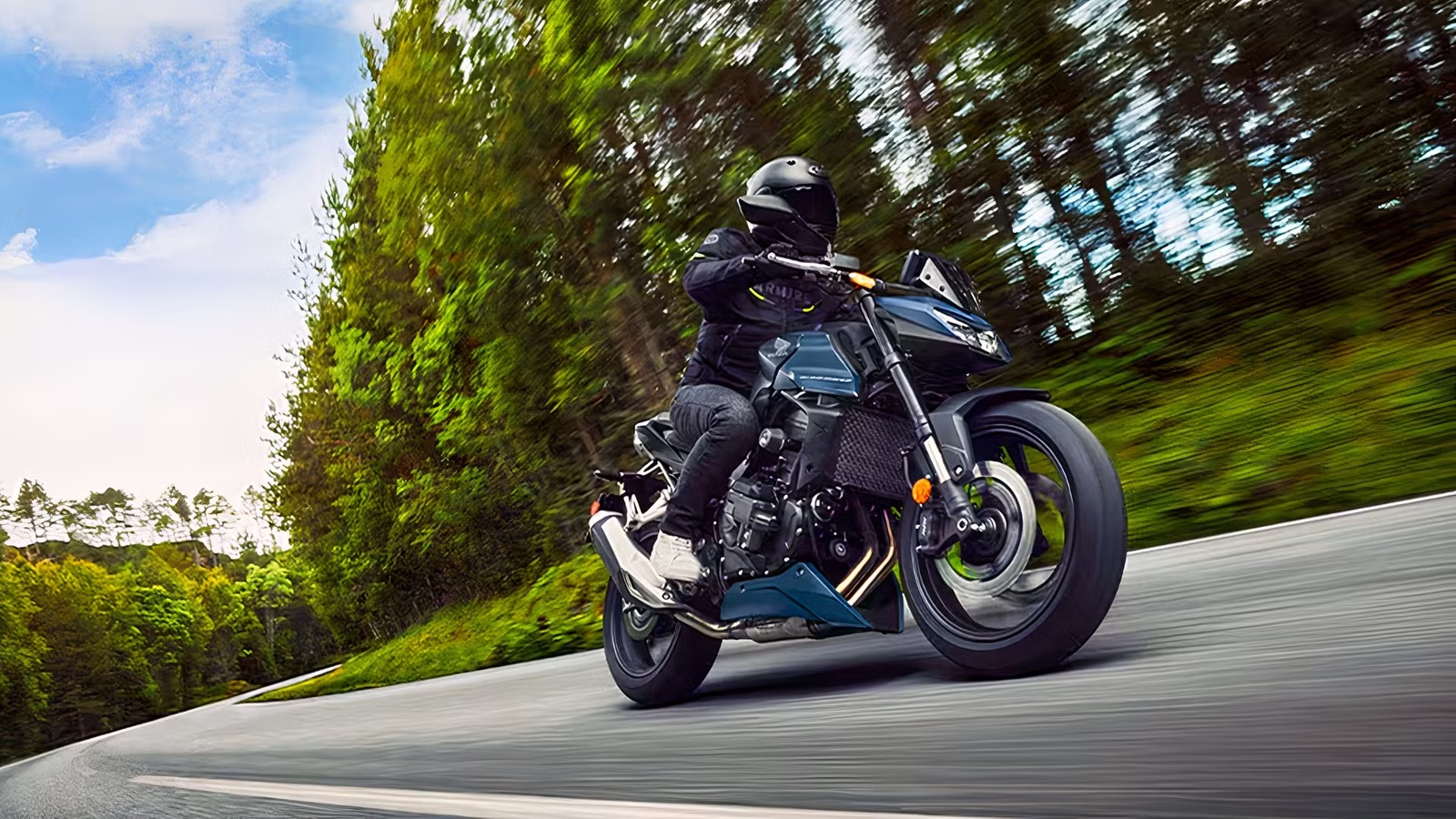
The Honda CB750 Hornet E-Clutch is probably the best fit here, particularly because of its balancing act. Honda hasn’t treated usability as an excuse to soften everything, and the Hornet remains wildly fun despite being a little more powerful than some of its competition. Its performance numbers place it firmly in the middleweight streetfighter category, but what surrounds that is what makes it interesting. One of the features that adds to the bike’s everyday credibility is the E-Clutch system, which effectively eliminates the left-hand clutch effort in traffic.
The CB750 Hornet Gets Real-World Muscle With A 755 cc Twin

Powering the CB750 is a 755 cc liquid-cooled parallel-twin engine producing 91 horsepower and 55 pound-feet of torque. Honda describes the engine as a narrow parallel-twin designed to deliver torque throughout the rev range, with useful low-rpm power and easy cruising ability. On an everyday motorcycle, low-speed tractability is essential since you’ll be spending most of your time in traffic, and with peak torque arriving at 7,250 rpm, this engine makes that easy. But there is enough power higher up in the rev band for high-speed cornering fun in the twisties.
The E-Clutch Makes This Power Easier To Use

The other highlight we mentioned is the E-Clutch system. Six speeds, all of which transition smoothly without any clutch input from the rider. The system manages the clutch for you. In traffic, this is extremely useful since you don’t have to fiddle with it every time you speed up or slow down. You still shift gears manually using the shift lever, but the system eliminates the manual clutch work. Honda has also integrated the E-Clutch with the throttle-by-wire system and the riding modes so that the system can coordinate downshift blipping and clutch engagement to reduce rear-wheel hop during hard deceleration on a more spirited ride.
The Hornet Is Lightweight Enough To Stay Friendly But Packs Some Serious Hardware

Honda gives the CB750 Hornet a steel diamond frame with a 55.9-inch wheelbase, 25 degrees of rake and 3.9 inches of trail. At 432 pounds with fuel, the bike isn’t a featherweight champion, but thanks to the geometry, it rides amazingly nimbly. The 31.3-inch seat height also helps, landing in a range that is neither too low to see over traffic nor so tall that you feel perched above the world.

Honda hasn’t cheaped out on the hardware either. Suspension comes from a 41 mm inverted Showa SFF-BP fork and a Pro-Link single shock at the rear. These offer 4.7 inches and 5.1 inches of travel, respectively. It is tuned to balance comfort and composure, absorbing the city’s potholes with ease or supporting aggressive maneuvers on your nearest mountain pass.
Design And Technology Without The Bloat
The Honda CB750 Is Designed Around Streetfighter Attitude And Everyday Ergonomics

The CB750 Hornet does not hide its intentions behind retro styling. Honda gives it a modern streetfighter appearance, compact proportions, and a dual-LED headlight design that makes the front end instantly recognizable. The ergonomics, however, are more practical than the aggressive styling suggests, and this matters in a daily use setting. The riding position is upright, and the bars are wide enough for decent leverage.

As far as technology is concerned, the CB750 gets all the minimum goodies. It’s not bare-bones, but it’s not cutting-edge tech like some of the bigger bikes. You get four primary riding modes, plus two customizable ones, the E-Clutch system, ABS, and Honda Selectable Torque Control (traction control). There’s a five-inch TFT screen that displays all key metrics, allows you to adjust the bike’s settings, and provides Bluetooth connectivity via the Honda RoadSync app for phone, music, and navigation functions.
The CB750 Also Gets Honda’s Legendary Reliability

The middleweights rarely dominate segments. They may lean toward one or the other, but one of the best middleweights to strike this balance between fun and usability is the Honda CB750 Hornet E-Clutch. What makes this more compelling is the fact that it comes with Honda’s bulletproof reputation. Their engines are famously durable, starting without issue every morning and always ready for the next task. With that kind of confidence, it is easy to take the bike out every day, whether for a spirited highway run, a commute to the office, or a quick grocery errand.
Source: Honda Powersports

Related posts



Latest Post


No Comments