
2026 Toyota C-HR EV Recall: Software Bug Causes Drive Loss
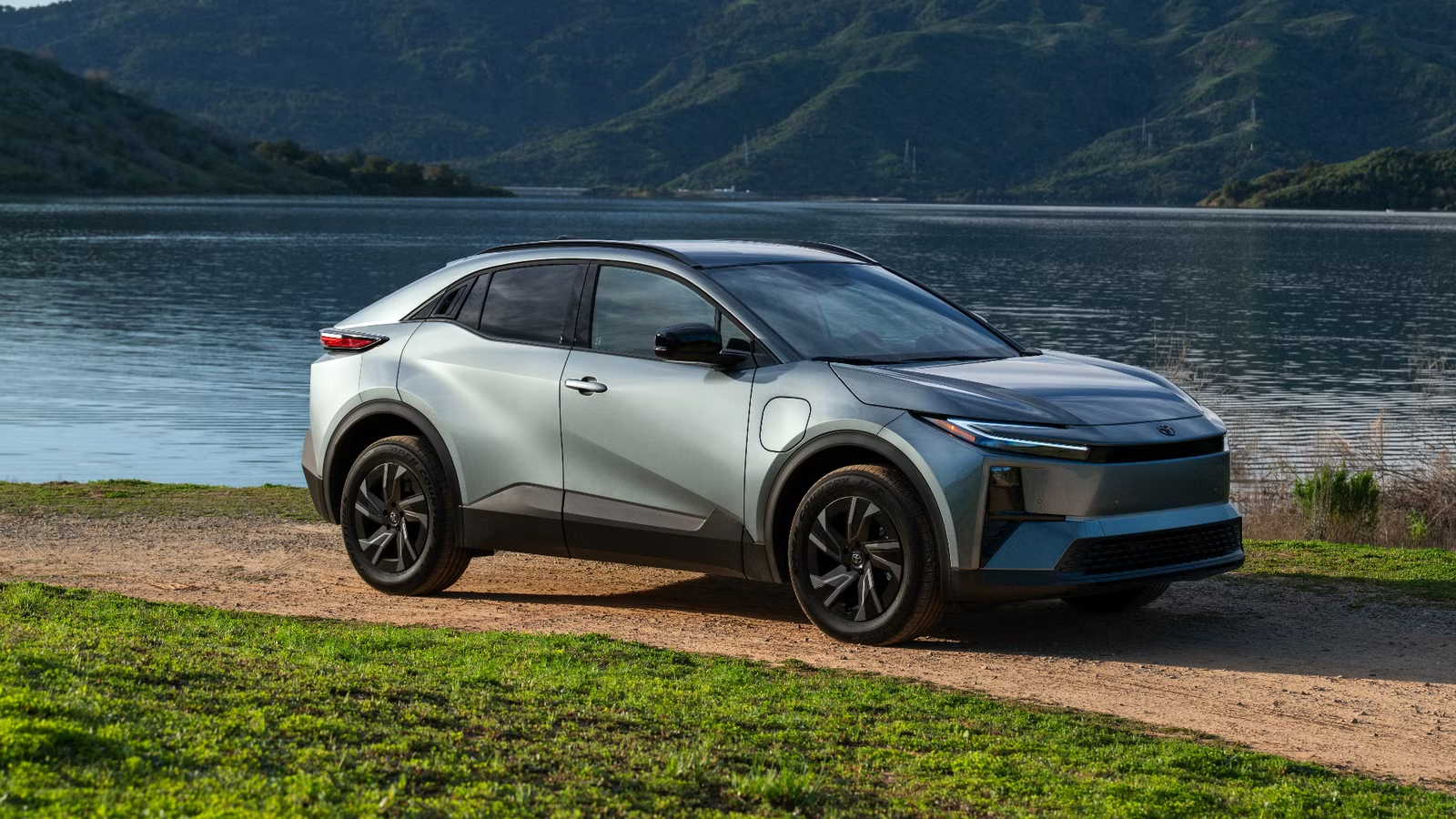
Toyota has issued a safety recall covering 8,521 of its 2026 C-HR electric crossovers after engineers discovered a software bug capable of cutting drive power without warning — a scenario that becomes genuinely dangerous at highway speeds. The recall, published by the NHTSA on September 2 under campaign number 26V570000, marks the first safety action against the redesigned C-HR since it went on sale in the United States earlier this year.

The good news is that Toyota caught the flaw before any C-HR driver experienced it in the real world. The automaker has confirmed no field reports, no warranty claims, and no incidents tied to the condition. The fix is a straightforward software update applied at the dealership, and owner notification letters go out starting October 18.
How the Software Bug Can Kill Drive Power
The problem lives inside the Battery Electric Vehicle Electronic Control Unit — the module responsible for managing how much charge flows into the traction battery. Under normal operation, regenerative braking converts kinetic energy back into electricity and feeds it into the battery pack. The control unit is supposed to cap that intake once the battery reaches a safe charge level.

With the flawed software, that cap fails under a specific combination of conditions: cold ambient temperatures, a battery already sitting at a high state of charge, and extended regenerative braking — the kind that happens when you coast down a long hill or mountain pass on a nearly full charge. Instead of tapering off the energy input, the software allows the battery to overcharge. Once the control unit detects that overcharged state, it triggers a defensive shutdown of the entire electric drive system to protect the battery from thermal or voltage damage. The result is an abrupt, unannounced loss of propulsion. Warning lights and a buzzer activate at that point, but the car is already coasting.
All 8,521 vehicles identified in the recall window carry the problematic software parameters, according to NHTSA documentation. The affected units were built at Toyota’s Takaoka plant in Japan between February 6, 2026, and July 10, 2026. The C-HR cannot accept over-the-air software updates for this particular control module, which is why a dealer visit is required rather than a wireless patch.
How Toyota Found the Problem Before Drivers Did

The discovery came in April 2026, when Toyota engineers conducting routine development testing on an as-yet-unreleased battery-powered model flagged an incorrect parameter inside the BEV ECU. The identity of that test vehicle was not disclosed in the recall documentation, and the brief confirms no further details are available — so speculation stops there.
Once the engineering team identified the error, they cross-referenced the same control logic across Toyota’s existing EV lineup. That review revealed the 2026 C-HR for the U.S. market was running the identical flawed software. Toyota says no other Toyota or Lexus vehicles sold in the United States share the issue — those models either use different software logic or distinct control modules entirely.
The early detection matters. Toyota’s own engineering judgment, as stated in the NHTSA filing, is that zero field technical reports and zero U.S. warranty claims related to this condition have been received. The failure scenario is also narrow enough that most owners would never encounter it organically — it requires a cold day, a nearly full battery, and sustained downhill regenerative braking all at once.
What Affected C-HR Owners Should Do Now

Toyota will begin mailing official recall notification letters on October 18, 2026, with the outreach window running through November 1. Once notified, owners bring their C-HR to any authorized Toyota dealership, where technicians will reflash the BEV ECU with updated software containing corrected battery protection logic. The repair is performed at no cost.
Owners who want to act before the letter arrives can contact Toyota customer service at 1-800-331-4331 and reference internal recall campaign number 26TA17. VINs associated with the recall are also searchable on NHTSA.gov under campaign number 26V570000. Toyota has not advised owners to stop driving their vehicles in the meantime.
For context on the C-HR itself: the 2026 model starts at $37,080 before destination charges, pairs a 74.7-kWh battery with standard dual-motor all-wheel drive, and is rated at 338 combined horsepower with up to 287 miles of range. It sits as Toyota’s smallest and sportiest EV option in the U.S., slotting below the bZ and bZ Woodland in the lineup.
Software recalls are never a great look for a new model, but the circumstances here reflect reasonably well on Toyota’s internal testing process. The flaw was caught during development of another vehicle, traced back to the C-HR before a single owner encountered it, and the remedy is a dealer reflash rather than a hardware replacement. C-HR owners should watch for that October 18 notification letter and schedule the update promptly — especially anyone who regularly drives in cold weather with a full charge.

Related posts
Latest Post


No Comments