
The Electric C-Class Confirms Mercedes Is Done Letting BMW and Audi Own the Entry Luxury EV Space
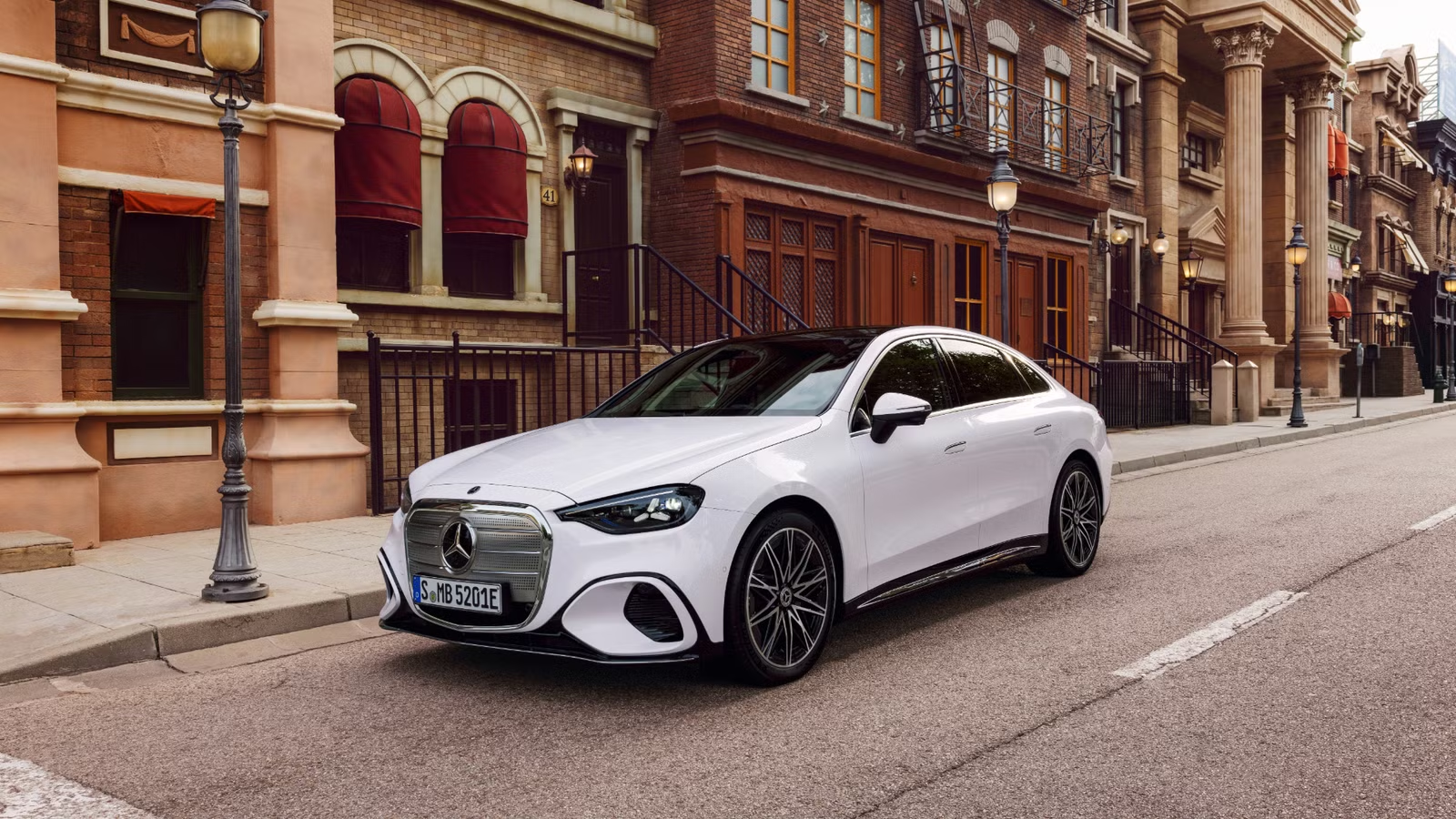
Mercedes-Benz has officially announced the 2027 C 400 4MATIC Electric for U.S. delivery in the first half of 2027, and the specs make the competitive intent unmistakable. With 482 horsepower, a 3.9-second 0-60 time, 800-volt charging architecture, and a claimed WLTP range of up to 762 kilometers (roughly 473 miles), this is not a cautious entry into the electric luxury sedan segment. It is a direct challenge to the cars that have owned that space while Mercedes sat it out.

For years, BMW’s i4 and Audi’s A6 Sportback e-tron have been the default answers for buyers who wanted a premium electric sedan with a proper badge. Mercedes offered EQ-branded alternatives, but never the C-Class nameplate itself — the model that has historically been the brand’s volume anchor and its most recognizable luxury entry point. That changes with the W520 generation, which arrives on a clean-sheet 800-volt platform and drops the EQ naming convention entirely. Mercedes is simply calling it the C-Class Electric.
How the Numbers Stack Up Against BMW and Audi
The launch model’s 482 hp and 3.9-second 0-60 time put it well ahead of the BMW i4 Gran Coupe, which starts at $62,300 with 335 hp in eDrive40 form and 396 hp in the xDrive50. The i4’s range tops out at around 333 miles on the rear-drive variant, dropping to roughly 287 miles with all-wheel drive. The Audi A6 Sportback e-tron, starting at $66,700, offers 456 hp and a 0-60 of 4.3 seconds, with DC fast-charging capped at 270 kW.
Mercedes counters with 330 kW peak charging — higher than either rival — and the 800-volt architecture means 10 minutes of charging can add up to 202 miles of range. Pricing hasn’t been confirmed, but sources tracking the segment expect a starting point north of $54,000, which would slot the C-Class Electric below both the i4 xDrive50 and the A6 e-tron at launch. The performance-per-dollar math, at least on paper, leans heavily toward Stuttgart.
Real-World Range: Tempering the WLTP Headline
The 473-mile WLTP figure is the number Mercedes will lead with in marketing, but U.S. buyers should expect the EPA rating to land considerably lower. WLTP testing conditions are consistently more generous than the EPA’s cycle, and Kelley Blue Book estimates real-world U.S. range somewhere between 350 and 400 miles. That range, if confirmed by the EPA, would still beat the i4 xDrive50’s 287-mile figure and match or exceed the A6 e-tron’s expected EPA number. A rear-wheel-drive, single-motor variant with a claimed 497-mile WLTP range is planned to follow later in 2027, which could push the EPA figure closer to 400 miles for that trim.
The Features Mercedes Is Using to Justify the Premium
Beyond the performance numbers, Mercedes is stacking the C-Class Electric with features designed to make the comparison shopping conversation harder for BMW and Audi. The optional MBUX Hyperscreen is a 39.1-inch continuous display that runs nearly the full width of the dashboard — wider than anything currently offered in the i4 or A6 e-tron. The optional rear-axle steering, with up to 4.5 degrees of movement, reduces the turning circle to 36.7 feet, making a car this size feel noticeably more nimble in urban driving.
The multi-source heat pump — standard equipment — uses waste heat from the drive unit, the battery, and ambient air simultaneously. Mercedes says it heats the cabin twice as fast as a combustion engine during a 20-minute cold-weather drive at 19°F, while consuming roughly half the energy of a conventional auxiliary heater. For buyers in northern climates who have watched EV range evaporate in winter, that’s a meaningful differentiator. Over-the-air updates via MB.OS mean the car’s software can be refreshed post-purchase, and buyers can add features through the Mercedes-Benz Store app.
What This Signals About Mercedes’ Broader EV Direction
The C-Class Electric is the third model in Mercedes’ new EV wave, following the CLA and the electric GLC. All three share the MB.EA-M 800-volt platform, and all three abandon the EQ branding that never fully resonated with buyers. The strategic logic is clear: anchor the electric lineup to the same nameplates that built the brand’s reputation, rather than asking customers to learn a new alphabet.
The C-Class nameplate carries weight that EQC and EQE never did. Putting it on an 800-volt sedan with AMG-adjacent performance numbers — the current C 63 S e-Performance runs 0-60 in roughly 3.4 seconds — signals that Mercedes is no longer content to let BMW define what an electric luxury compact sedan should be. Whether the real-world product delivers on that positioning won’t be clear until U.S. press drives begin, likely later this year or in early 2027.

Related posts

Latest Post


No Comments