
Twin-Turbo Mid-Engine C2 Corvette Built in 2007 Sells for $65,500 on BaT
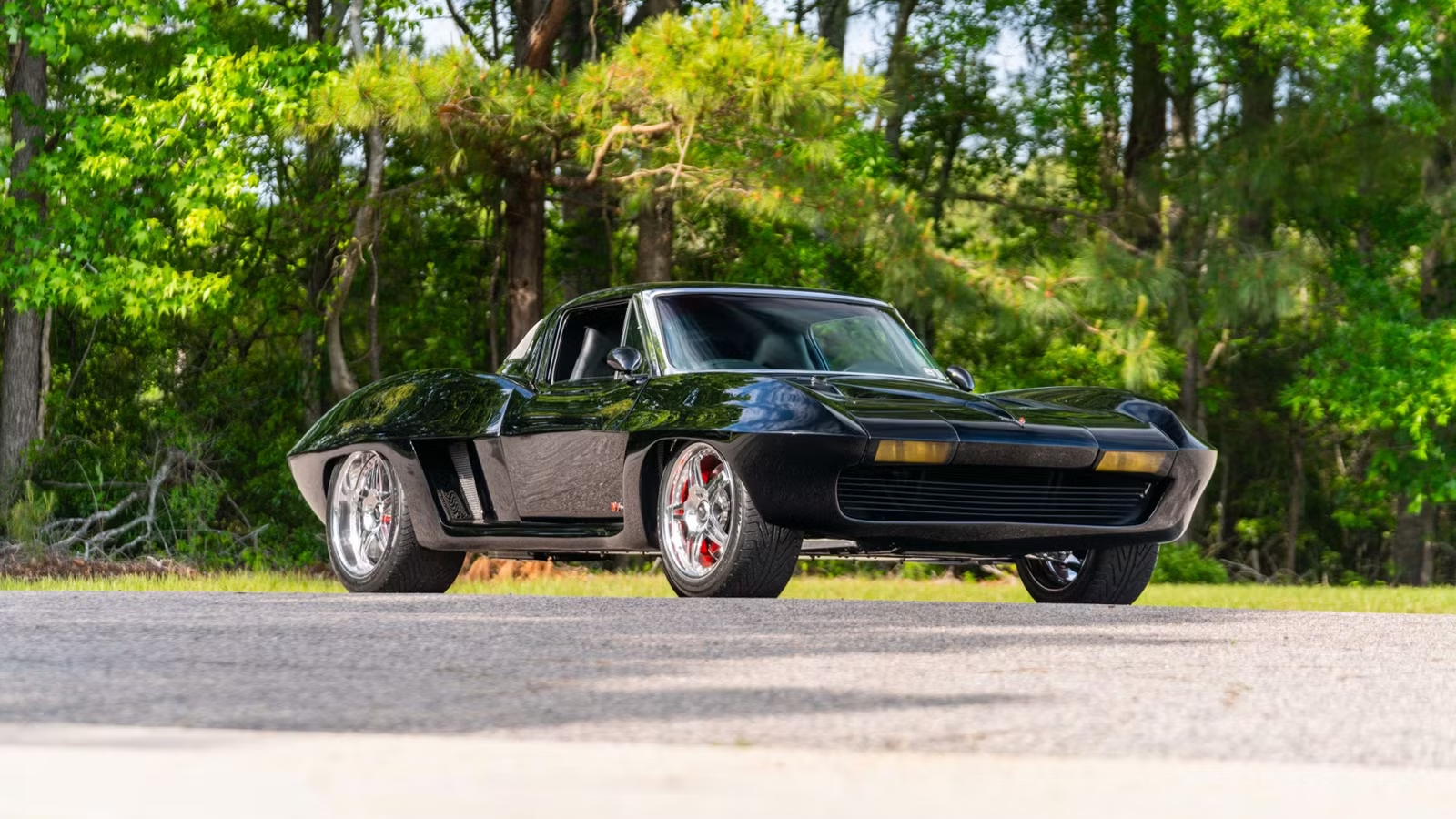
A privateer builder finished a mid-engine C2 Corvette in 2007. Chevrolet wouldn’t do the same thing until the C8 debuted as a 2020 model. That 13-year gap just closed on Bring a Trailer, where the car — a 1963 split-window restomod riding a twin-turbo 395 CID LS1 and a Mendeola transaxle — sold for $65,500 on September 13, 2026.

The sale attracted 43,506 views and 1,930 watchers during its run on BaT, numbers that confirm the Corvette community was paying close attention. And for good reason: this wasn’t a mild restomod with a crate engine and some coilovers. It was a ground-up reimagining of the C2 platform that arrived at the same fundamental conclusions GM’s engineers eventually would — engine behind the seats, cabin pushed forward, transaxle at the rear, wider track — more than a decade before the factory got there.
What It Took To Move the Engine Behind the Seats
Relocating a Corvette’s engine to the middle of the car is not a parts-bin exercise. The builder — designer Mark Harlan, with fabrication by Phil Sommers at American Supercar in Spring Hill, Florida — started with the iconic split-window C2 body and restructured every major dimension around the new layout.

The cabin moved forward two feet to clear space for the engine bay. The body was widened by 10 inches and shortened by three inches. The wheelbase stretched to 111.5 inches. A custom high-strength ladder chassis replaced the original frame entirely, built from polished stainless steel. Up front and out back, the suspension is fully independent, with Penske adjustable shocks at all four corners and Baer six-piston disc brakes on every wheel. The rear tires are 345/30-R19 Michelin Pilot Sports — wide enough to hint at what’s waiting behind the driver.
The Engine: A Stroked LS1 With Serious Turbo Hardware

The powerplant is a stroked LS1 displacing 395 cubic inches, built around the Hot Rod Project Blueprint program — a structured framework specifying exact components and tolerances for high-performance builds. Inside, a Lunati forged crankshaft handles the rotating assembly, and electronic fuel injection takes care of fueling.
Force-feeding the package are two 77mm turbochargers from Re-Source, cooled by a custom liquid-cooled race Aero intercooler. The BaT listing didn’t publish official horsepower figures, so no number here is confirmed — but 77mm turbos on a built 395 CID LS1 represent a serious commitment to output. Historical records from the car’s earlier auction appearances suggest the engine makes well over 1,000 horsepower, though that figure should be treated as background context rather than a verified spec from this sale.
Power reaches the rear wheels through a Mendeola five-speed sequential transaxle — the differential housed in the same unit as the gearbox, eliminating the long driveshaft run of a traditional front-engine setup. That’s exactly the transaxle geometry Chevrolet would eventually adopt for the C8 Stingray.
What the $65,500 Result Actually Means
Context makes the sale price worth examining carefully. The C8 Corvette Stingray — which shares this car’s core architecture — starts well under $70,000, comes with a factory warranty, and is available at any Chevrolet dealer. A buyer spending $65,500 on this restomod is making a very different kind of decision: a bespoke piece of fabrication history that predated GM’s own solution by over a decade, with all the unknowns that come with a one-off custom build.
The car has traded hands before at significantly higher prices — it reportedly sold for $279,000 at a Mecum auction in December 2009, and again for $95,000 at Barrett-Jackson roughly a decade ago. The $65,500 result sparked debate in the BaT comments, with some observers noting that replicating the build today would cost an estimated $400,000 to $500,000. Whether the C8’s existence put a ceiling on what a build like this can realistically fetch is a harder question — and $65,500 is a data point, not a definitive answer.
What’s not debatable is the engineering foresight on display. The builder wasn’t waiting for Chevrolet’s permission. In 2007, the mid-engine Corvette was still a rumor, a concept footnote, and an engineering debate GM had been circling for decades. This car was already on the road. For restomod builders and Corvette collectors, that’s the part worth remembering long after the auction closes.

Related posts




Latest Post


No Comments