
The Roadster That Gives Riders The Best Of Both Worlds
Roadsters help elevate the simple joys of riding, even with more powerful middleweight and liter-class offerings. These motorcycles already nail the timeless appeal with retro-inspired designs. Roadsters stand out for staying grounded in the riding experience, focusing less on technological integration and more on pure enjoyment. Examples like the Royal Enfield INT 650 and even the bigger BMW R 12 nineT deliver on this promise.

However, when the focus leans more towards performance, the balance of old-school appeal and power is disrupted. This is mostly because they share underpinnings with sportbikes that have a spirited character baked in. As a result, it often feels impossible to have a relaxed riding experience on most roadsters with modern underpinnings. But one exception stands out: a versatile middleweight Kawasaki roadster that perfectly balances performance, comfort, and real-world riding experience.
Performance-Focused Retro Roadsters Are A Rare Breed That Struggles With Balance
The tricky part about performance-first retro roadsters today is striking the right balance. They certainly score high in power and torque figures. The riding dynamics also lean sporty, with a focus on nimbleness. This helps these rare roadsters excel at both fast highway runs and spirited winding mountain rides. But this formula robs them of their classic visual appeal, opting for a more neo-retro design.

Also, the no-frills, relaxed riding experience of roadsters is often compromised by an overwhelming use of technology and hardware that leans toward an aggressive riding style. A prime example is the Triumph Speed Twin 1200 RS, which looks very retro but is a beastly motorcycle underneath. Standard features like three riding modes, cornering ABS, and traction control, top-spec suspension hardware, and super-grippy tires show how it tames that aggressive side.

Then there’s the fact that it’s a very expensive affair at over $20,000. While examples like the BMW R 12 nineT and the Ducati Scrambler do an excellent job of balancing laid-back old-school charm with modern underpinnings, they are let down by expensive price tags. In short, the formula falls flat.
From The Moto Guzzi V7 To The Honda CB1000F: Why Every Alternative Falls Short

The demand for retro-inspired roadsters has shot up in the last decade, with many new and refreshing nameplates taking the spotlight. Examples range from the entry-level Triumph Speed 400 to the exotic-looking middleweight Moto Guzzi V7, and the new bang-for-buck Honda CB1000F. The entry-level options offer breezy daily rideability and an affordable ownership experience but lack performance, especially on the highway.
The middleweight bunch ought to offer the best balance, but few hit it right. The Moto Guzzi V7 is a gorgeous option, but it isn’t established enough to offer stress-free ownership. On the flip side, the Royal Enfield INT 650 is a solid all-rounder but feels a little too basic in its riding appeal. The liter-class big guns are impressive, especially with the new Honda CB1000F taking the spotlight by offering a well-rounded experience at a very aggressive price tag.

But the retro treatment might feel a bit forced to many, and there aren’t many visual cues to get excited about. As we said, balancing retro charm with flexible riding dynamics is tough. Every candidate in this class makes you give something up — except one. And it’s been hiding in plain sight for years.
The 2026 Kawasaki Z900RS Is A Rare Retro Roadster That Can Be Desirable All Around
At $12,899, The Z900RS Undercuts Its European Rivals Without Cutting Corners

In Kawasaki’s naked-bike lineup, the aggressive Z-series stands out with its Sugomi styling. These are top-spec naked derivatives of sportbikes that offer cutting-edge design, features, and performance. But what if you want a powerful motorcycle with a relaxed riding character and retro charm? Kawasaki has that covered too with its less-appreciated RS series.
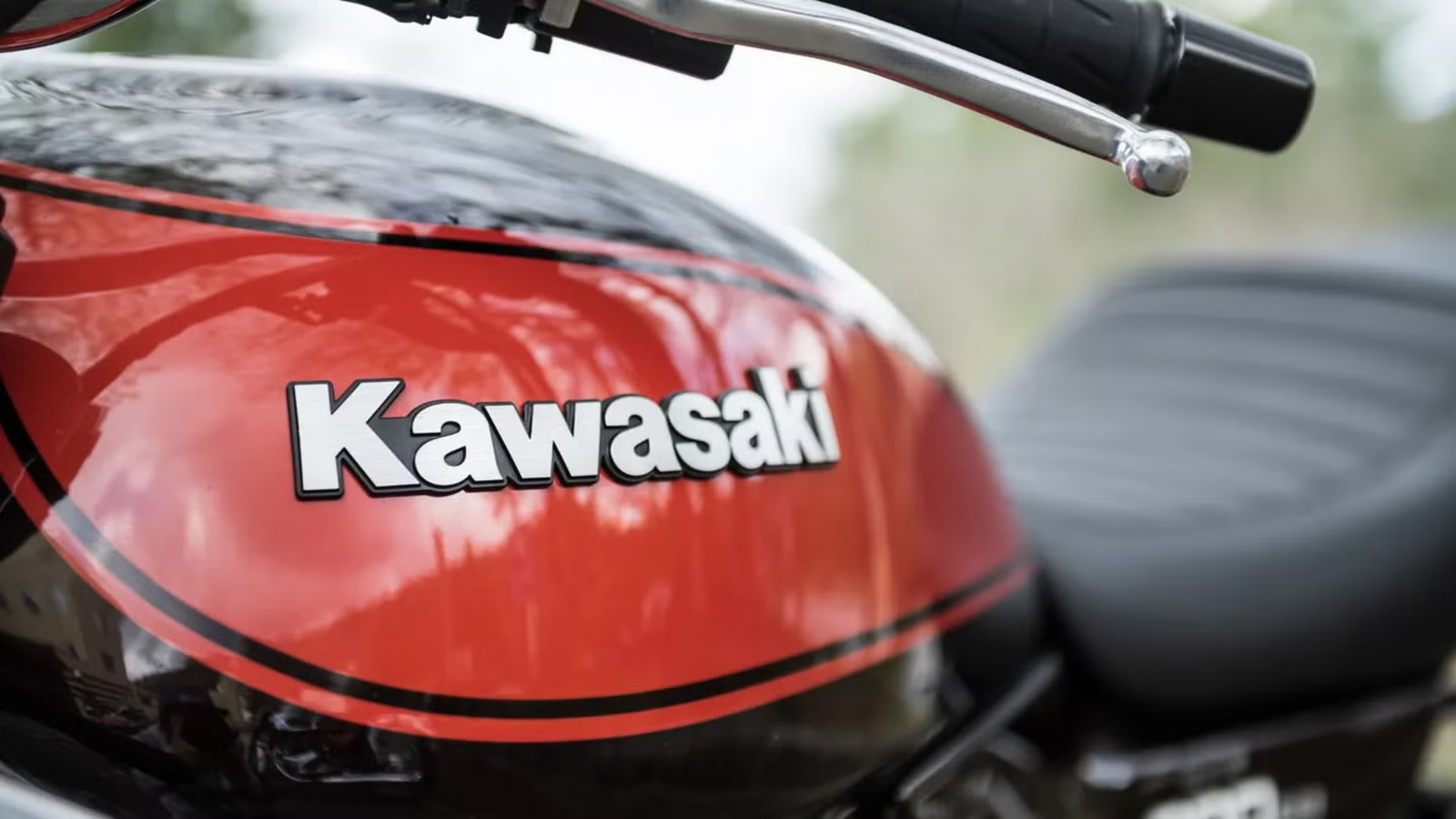
The Z900RS hits the sweet spot of classic-inspired styling and grin-inducing performance. The Z900RS faithfully recreates the old-school charm of the 1970s Z1. The overall silhouette, round headlamp design, and even the twin-pod instrument cluster carry a lot of nostalgia and heritage.

Despite its modern underpinnings, the Z900RS’s classic side stands out thanks to clever and hidden design cues. Given how simple the Z900RS riding experience is, you might be surprised to learn that this retro-inspired roadster packs top-spec assistive features. Notable ones include electronic cruise control, traction control, ABS, power modes, cornering management function, a quick-shifter, and even IMU-enhanced chassis orientation awareness.
Three Trims, Three Rider Personalities — None Require Compromise

The primary reason the more expensive Kawasaki Z900RS is more desirable than the more affordable Honda CB1000F is its more exciting lineup. While the latter comes in only one trim, the 900RS offers more variety. The $12,899 base trim embraces minimalism and has a sporty look, with blacked-out components throughout.

There is very little chrome here. Next up is the aesthetically enhanced $13,299 Z900RS Café, which offers café racer styling cues. Notable features include distinctive front cowls, a black drop handlebar, a cafe-racer-inspired seat design, a brushed exhaust finish, and heritage-rich graphics that pay homage to the classic Kawasaki Mach series.
Next up is the most expensive Z900RS model—the SE. While the only visual differences on this model seem to be a gorgeous two-tone paint job (inspired by the original Z1) and gold-colored wheels and front forks, there’s more to it than meets the eye.

These three models cater to very different types of riders, which also helps uphold the Z900RS’s balance. For someone who wants a more toned-down, relaxed riding experience, the base model is perfect. For someone who wants a bit more styling, the Café model works perfectly. And for someone who is not concerned with the balance and wants a more spirited ride even with retro styling, the Z900RS SE slots right in. But the real story isn’t the styling options — it’s what’s underneath them that makes the Z900RS genuinely hard to walk away from.
Powered By A Very Eager And Modern Inline-Four Engine

The Z900RS shares its inline-four architecture with the popular Z900 naked bike. While the mill is renowned for its performance appeal, Kawasaki has tuned it for more mid-range torque and smoother power delivery on the Z900RS. This translates to peppy real-world performance on the road.
The 948 cc liquid-cooled mill produces 115 horsepower at 9,300 RPM and 73 pound-feet of torque at 7,700 RPM. Power goes to the rear wheel through a six-speed manual gearbox. This retro roadster pays homage to stripped-down UJMs of yesteryear in its performance character.
A Shared Z900 Chassis That Punches Above Its Class — Especially In SE Trim

Adding to its nimble riding appeal is a steel trellis frame shared with the Z900. The Z900RS’s chassis is suspended on 41 mm inverted front forks. It gets 12-step adjustable compression, 10-step rebound damping, and 15-step preload adjustment. It offers 4.7 inches of suspension travel. The rear gets a monoshock with 5.5 inches of travel.

It offers stepless adjustments for rebound damping and preload. Braking duties are courtesy of dual 300 mm discs coupled to four-piston calipers up front. The rear gets a single 250 mm disc coupled to a single-piston caliper. Grip is provided by chunky-looking 120-section front and 180-section rear tires wrapped around lightweight 17-inch alloy wheels. These features are on the base and Café models.
The SE model is stacked with top-spec hardware to elevate the riding experience and offer more spirited dynamics. Features include an Öhlins S46 rear shock with a remote preload adjuster, Brembo front brakes with M4.32 calipers, and steel-braided lines.
How Kawasaki’s 476-Pound Retro Roadster Manages To Feel Like A Daily Commuter

Despite its modern chassis and engine, Kawasaki has made adjustments to help the Z900RS ride like a retro roadster in both dynamics and performance. Size and weight play a vital role here. The Z900RS has a 57.7-inch wheelbase, 4.9 inches of ground clearance for the base model (up to 5.5 inches on the SE), and a curb weight of 476 pounds. Its 31.5-inch seat height also offers an accessible, daily-rideable form factor.
The Details That Sell The Retro Fantasy

Heritage-rich design cues further enhance the form factor. It gets a teardrop-style fuel tank, a round LED headlamp, classic bullet-shaped instrument pods, and even faux polished cooling fin accents on the engine block to complete the look. The four-into-one stainless steel megaphone exhaust not only looks the part but also adds a deep, nostalgia-driven note.
Source: Kawasaki

Related posts

Latest Post


No Comments