
Everything you need to know about Mini
The Mini story really is one of two halves – the first half being the ‘classic’ Mini launched in 1959, and the second half being the ‘BMW’ era.
The original Mini became a symbol of the ‘Swinging Sixties’. It posed with pop stars and models, won the Monte Carlo Rally (several times) and starred in cinemas as Michael Caine and his mates evaded hapless police in The Italian Job. The classic Mini is one of very few cars worthy of that over-used phrase, iconic.

We, however, are focusing on the second half of the story, an all-new Mini which appeared in 2001 as the one positive result of BMW’s short-lived takeover of the debt-ridden Rover Group. The BMW-era Minis have no relation to the original apart from hints of similar styling – in the overall body shape and the dash layout with its huge central dial – plus the fact that most BMW Minis are still built in Cowley, Oxford, a plant that made its first Mini in 1959.
One thing the current Mini certainly isn’t is mini. The latest Cooper dwarfs its classic inspiration and some versions, such as the Countryman SUV, take up virtually double the road space of their forebears.
BMW’s bold move has, however, been well rewarded – the current Mini has become as much of a lifestyle favourite of the 21st century as its inspiration was four decades earlier. The latest challenge has been to transfer that cult following to all-new electric Minis and it appears to be working – while the brand’s UK sales of around 47,000 in 2025 virtually matched the 2024 figure, as of August 2026 sales are up some 29%. This is a success story that will go for a good while yet.
So who or what is Mini?

Before we talk of the BMW Mini, a brief ‘pre-history’…
The 1959 original was a response to a flood of cheap ‘bubblecars’ coming into the UK from Europe. Launched as the ‘Morris Mini Minor’ and the ‘Austin Seven’, the Mini suffered early teething problems but soon became a massive hit – by the time production ended in 2000, close to 5.4 million had been built.
In 1994 Rover Group, by that time owner of the Mini brand, was acquired by German manufacturer BMW, and a year later development of a replacement for the Mini began both at Rover’s Longbridge, Birmingham headquarters and in Munich. What followed was a tortuous power struggle between the British and German teams – this only ended when BMW sold off loss-making Rover, while ensuring it kept Mini for itself.
Plans for production were moved from Longbridge, where classic Minis had been built since 1969, back to the spiritual home of Cowley, which now became BMW Plant Oxford. The all-new Mini launched in 2001 as the MINI, the name all in upper case as BMW attempted to differentiate it from its predecessor – but everyone still writes Mini…
No clever wording was needed to tell the two cars apart. While the original Mini was an affordable ‘car for all’ the new one was designed to fit into upmarket BMW’s range as a premium supermini, which the brand didn’t offer at the time.
While the new Mini retained the ‘wheel at each corner’ design and thus was fun to drive – its makers using the term ‘go-kart like handling’ so often it became a cliche – the car was much larger than its inspiration (though still just as cramped in the back). Purists were aghast at the car being called a Mini.
BMW had judged the market perfectly, however. Smart marketing, right from the launch event which had motoring journalists charging around the packed streets of London on a summer evening playing ‘Minopoly’ and exposing the car to thousands of tourists, quickly established the new Mini as 21st century high fashion.
Much more practical, and cheaper, small hatches were ignored by particularly young buyers who simply wanted a Mini – over the launch weekend the brand’s newly established 150 dealerships welcomed more than 50,000 curious potential buyers.
Within six years, more than a million new Minis had been built, the initial three-door hatch spawning a host of sister cars such as the Clubman, which had an estate-style rear end with van-style doors instead of a tailgate and in its first version a second rear-hinged door on one side only – the ‘wrong’ side for UK buyers. Then there was the Countryman, an SUV which really pushed the boundaries of trade description – this car was many things but by no means mini.
A second-generation Mini followed in 2007 and in 2014 a third, which was even larger than previous models. In 2024, an all-new fourth generation arrived in dealerships, which is based around a core of electric models.
One thing that hasn’t changed, however, is the Mini’s following – rival brands have tried and failed to dent its appeal, notably Smart, but a quarter of a century on from its rebirth the modern Mini still attracts a very wide range of buyers, most choosing it simply because it is a Mini.
What models does Mini have and what else is coming?
The first BMW Mini launched in 2001 with an entry-level model called the One, the mid-spec Cooper (reviving an association with former race team Cooper Cars that produced a hugely popular sporty version of the classic Mini), and the top-spec Cooper S. All had 1.6-litre petrol engines of increasing power, the one in the Cooper S supercharged. Owners were also offered a range of tuning and styling add-ons under the JCW – John Cooper Works – banner.
A diesel-powered Mini arrived in 2003 followed by a Convertible in 2004 – all survived into the second generation in 2006 and were joined by the Clubman estate and the five-door Countryman crossover, which apart from its size attracted further controversy as it was built not in Oxford but Austria.
BMW then tried to squeeze as much as was possible out of the Mini brand – next came a two-seat Mini Coupe and a drop-top version called the Roadster, followed by the Paceman, which was a three-door variant of the Countryman. Meanwhile an electric version of the three-door hatch, launched in 2020, attracted mixed reactions.
Perhaps recognising that not all of its previous models have been big hits – the Clubman, Paceman and Roadster coming to mind – Mini has now retreated somewhat, with the fourth generation which is based around three core models.
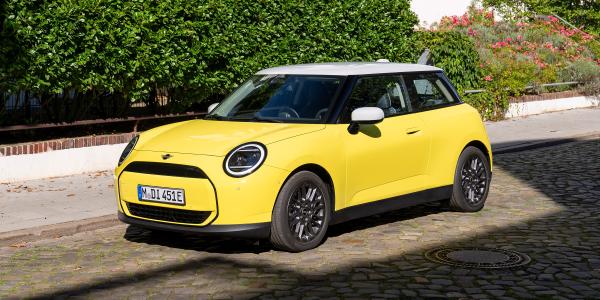
Cooper is now the umbrella name for the hatchback models, rather than a trim level. The fourth-generation Cooper has launched first in early 2025 as an electric three-door model, but is also being offered with combustion engines in both three and five-door form. While the EV is all-new, the petrol versions are heavily refreshed versions of their predecessors which has also helped the three-door petrol Cooper spawn a new variant of the popular Convertible.
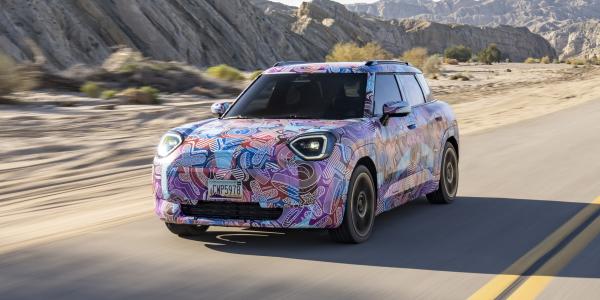
A new version of the Countryman SUV launched in 2024 and took the Mini designation to the limit of credibility, being bigger than its predecessor and longer than a Nissan Qashqai. It’s now available with its original mild hybrid petrol engine and for the first time as an electric model – the EV scores higher on the Expert Rating index, as of August 2026 having a 79% A rating compared to the B-level 70% of its combustion sister.
The one all-new fourth-generation model is the Aceman – effectively a replacement for the Clubman, this is another crossover, with five doors but not quite as gargantuan as the Countryman, and with an electric-only powertrain. The first Acemans upset the purists by being built in China, but production was moved to Mini’s home of Oxford following a £600 million upgrade of the plant. Predicted to become Mini’s best-seller, as of August 2026 it hasn’t quite overcome the electric Cooper though it rivals it for an Expert Rating score, both A-rated with just a percentage point between them.
Where can I try a Mini car?
There are plenty of opportunities for UK buyers wanting to find out what Mini is all about – the brand has more than 110 dealerships across the UK, many of them on the same site as BMW dealers but in their own bespoke buildings. Often they are easily spotted as they have a Mini hanging off the outside wall…
Current Mini range
What makes Mini different to the rest?
Mini stands out from the rest of the small(-ish) car crowd not really for anything in the metal but for the following it enjoys. In the early days after the car launched, Mini owners who encountered perfect strangers coming the other way in the car would flash greetings to them.
Today that habit has largely died out due to the sheer numbers of Minis on the roads, but many owners still consider themselves part of a fashionable and in many ways thoroughly British club – something that Mini itself does its best to keep going with such accessories as Union Jack graphics for the roof and lights.
A Mini fact to impress your friends
How much bigger that the classic Mini is the BMW Mini? Well in 2012 28 women gymnasts set a Guinness World record by all squeezing into a current-era Mini Cooper. The same 28 then tried to fit into a classic Mini, and only 23 of them were able to get in…
Summary
Looked at totally objectively, the Mini is not one of the best ‘superminis’. Rival cars offer more space (Mini has never really cracked the problem of cramped rear seats), cheaper prices and better reliability.
But none of this really matters because BMW has cleverly managed to maintain the Mini’s reputation as a desirable car – many of those driving Minis bought them simply because they wanted them rather than needing transport from A to B. And there is no sign of the Mini losing this basic appeal.
This feature was originally published in March 2024 and updated in September 2026.
Buy a Mini
If you’re looking to buy a new or used Mini, The Car Expert’s partners can help you find the right car.

Discover great deals available on both new and used cars. Find out more

Search for your next new or used car with Auto Trader. Find out more

Related posts



Latest Post


No Comments