
This Used Yamaha Cruiser Delivers More Than You Would Expect
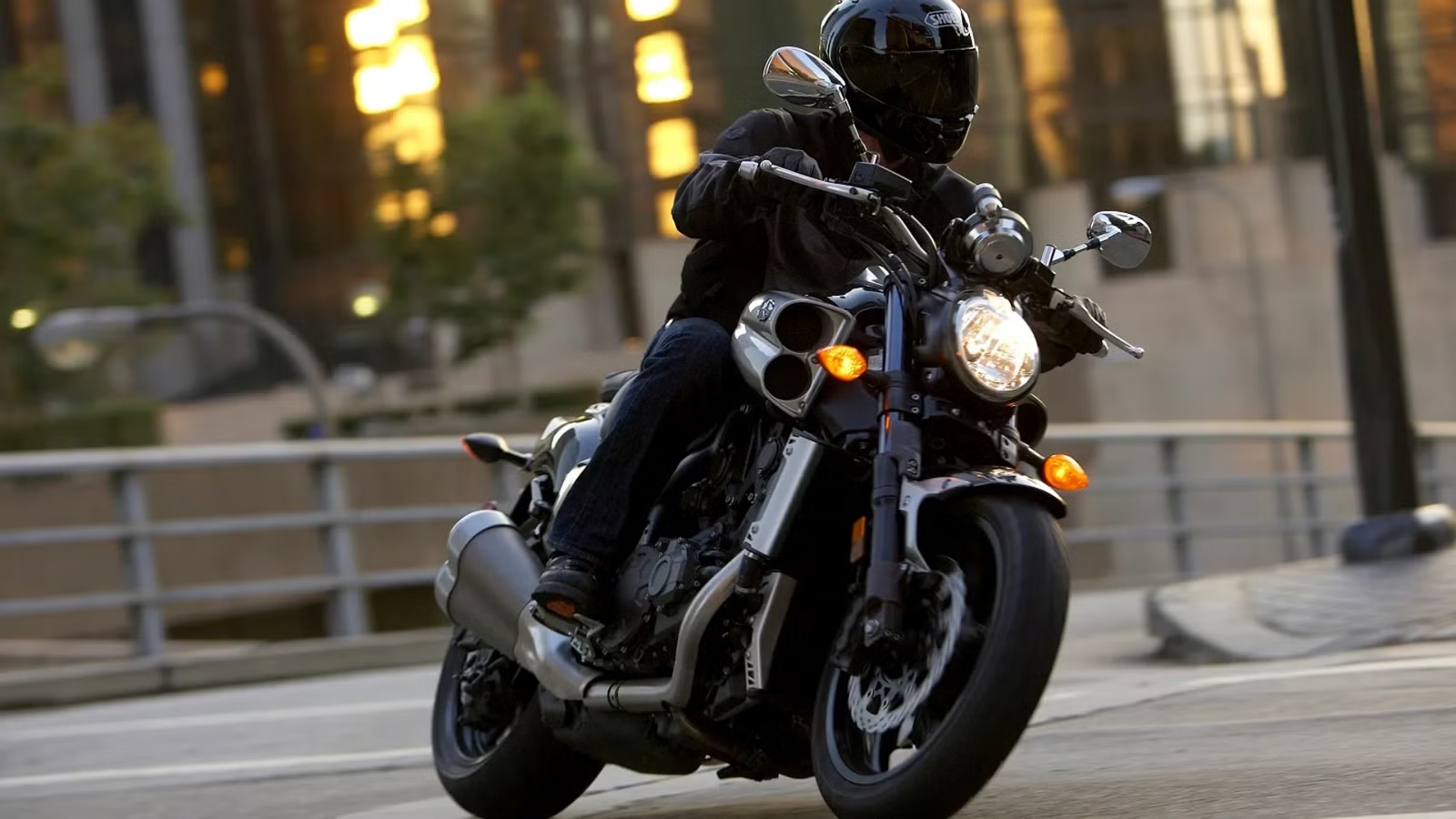
Say the word “cruiser” and most riders picture a relaxed V-twin loping down the highway, chrome catching the afternoon light, the throttle barely cracked. What they don’t picture is a motorcycle that can embarrass a supercar off the line — and then be had for the price of a decent used pickup truck. Yet that’s precisely what the 2011 Yamaha VMAX offers, and right now you can find a clean example for less than $10,000. For roughly the same money as a tired Harley Softail, you get a 200-horsepower, tire-shredding machine that looks like it rolled off a film set and pulls like a superbike. The 2011 Yamaha VMAX isn’t just a solid used cruiser — it’s one of the shrewdest two-wheeled bargains on the market, full stop.
How Much Does A Used 2011 VMax Cost?

The real kicker here is the price. Clean 2011 Yamaha VMax models with under 15,000 miles regularly surface in the $8,000–$10,000 range. Let that sink in. In a market where a new Harley Nightster costs $12,000-plus and barely cracks 90 horsepower, the value proposition of a used VMax is staggering. This is why the VMax is the king of the unsung heroes of the used-bike world — its overlap of price and performance is genuinely rare. Its unconventional styling actually works in your favor here: buyers who care more about looks than performance pass it by, keeping prices honest for those who know better.
It’s not just “more than you’d expect” from a cruiser; it’s more than most bikes offer at any price. In a market packed with overhyped machinery and climbing MSRPs, the VMax delivers serious power, Japanese reliability, and muscle-bike charisma without breaking a sweat — or your wallet. One caveat worth noting: insurance can run steep for younger riders. You’re essentially insuring a muscle car on two wheels, so shop around for quotes if you’re budget-conscious.
The 2011 Yamaha VMAX Is A Used Cruiser That Delivers A Lot More Than You’d Expect

Yamaha didn’t exactly play it safe when it reimagined the VMAX for its second generation (2009–2020). The original 1980s V-Max was already infamous for stuffing a massive V4 into a cruiser frame, but the 2011 model takes everything about that formula and cranks it past 11. At the heart of the 2011 VMAX sits a 1,679cc V4 engine, good for 197 horsepower at 9,000 rpm and 123 pound-feet of torque. To put that in perspective, that’s roughly 50 more horsepower than a Harley-Davidson Road Glide ST, and the VMAX weighs nearly 200 pounds less.
This thing isn’t just “fast for a cruiser.” It’s fast, full stop. A properly ridden VMAX can rip through a quarter-mile in around 10.5 seconds — squarely in superbike territory. Twist the throttle hard enough and the VMAX doesn’t so much accelerate as it blends your surroundings into a parade of indistinguishable blurs. The torque hits like a baseball bat to the chest, and the power keeps coming way past the point where a normal cruiser would be gasping for breath.
2011 Yamaha VMAX Specifications
|
Spec |
Detail |
|---|---|
|
Engine |
1,679cc liquid-cooled V4 |
|
Horsepower |
197 HP |
|
Torque |
123 LB-FT |
|
Transmission |
5-speed manual |
|
Driveline |
Shaft drive |
|
0–60 mph |
~2.7 seconds |
|
Top Speed |
150 mph (electronically limited) |
|
Curb Weight |
683 lbs |
|
Seat Height |
30.5 inches |
|
Fuel Capacity |
4.0 gallons |
|
Average Used Price |
$11,000 – $15,000 |
The VMAX Can Also Take A Corner
Fully Adjustable Suspension For The Win

Here’s the thing: a lot of fast cruisers feel like one-trick ponies. They’re great in a straight line, but road conditions and twisties can expose their limitations quickly. The 2011 VMAX doesn’t sweat any of that. Sure, it’s no R1, but Yamaha’s engineers didn’t phone it in on the handling side either. The VMAX runs a fully adjustable 52mm telescopic fork up front and an equally adjustable rear monoshock.
The chassis is an aluminum frame — surprisingly rigid for a big cruiser. Add a low center of gravity and sticky 200-series rear rubber, and you get a bike that feels genuinely composed when you tip it into a bend. The VMAX has big power and, thankfully, a chassis that can handle it. That said, 200 horsepower is a lot of motorcycle. No, you probably won’t be dragging knees and elbows on the VMAX.
But you will be surprised at how much speed you can carry through a corner, especially compared to the usual cruiser suspects. The brakes are equally serious: dual 320mm wave rotors up front with radial-mount calipers, and a 298mm disc out back. ABS came standard in 2011, and you’ll be glad it did once you realize how quickly this thing gathers speed.
Strange Looks, Old-School Attitude
It’s Fast, But It Isn’t The Best-Looking Thing

The 2011 VMax isn’t for everyone. To be honest, it’s hard to resist calling it ugly, so we’ll say its styling is bold, aggressive, and a little weird. In an era when most cruisers were still chasing 1950s Americana, Yamaha leaned hard into sci-fi muscle-bike territory. You get sculpted intakes, a bulging faux gas tank (the real one is under the seat), twin stacked exhausts, and a brutally upright stance. Some people love it. Some people don’t. But few people are indifferent — and that’s part of the magic. Even parked next to modern bikes, the VMax still looks interesting and fast.
Ultimately, the Yamaha VMax is the ultimate used-cruiser sleeper — a wolf in not-very-convincing sheep’s clothing. With 200 horsepower lurking under your right wrist and a bulletproof Japanese V4 roaring to life at the slightest twist of the throttle, the VMax delivers performance levels few riders will ever fully exploit. Yet it hides in plain sight, dressed in bold, sci-fi cruiser styling that still turns heads more than a decade on. Unlike most cruisers that promise sound and swagger but shy away from real speed, the VMAX backs up its muscle-bike looks with genuine superbike punch.
What to Watch Out For When Buying Used

The good news is that the VMax is a Yamaha, which means it’s built to last. These bikes are famously durable when properly maintained. Many examples on the used market still carry relatively low miles, mostly because they aren’t ideal for daily commuting or long-haul touring.
Keep An Eye Out For A Few Things:
- Service records. Make sure the fluids have been changed regularly. That giant V4 works hard.
- Tire condition. The VMax is a torque monster, and owners love burnouts. Check for uneven wear, especially on the rear.
- Clutch health. Hard launches can cook the clutch over time. Make sure it engages smoothly.
- Aftermarket mods. Some VMax owners install power commanders, exhausts, or airbox mods. None of these are inherently bad, but poorly tuned examples can cause headaches. You never want to have to undo someone else’s poor-quality work.
Sources: Yamaha

Related posts


Latest Post


No Comments