
Chevrolet Once Made A Street Truck That Was Way Too Fast
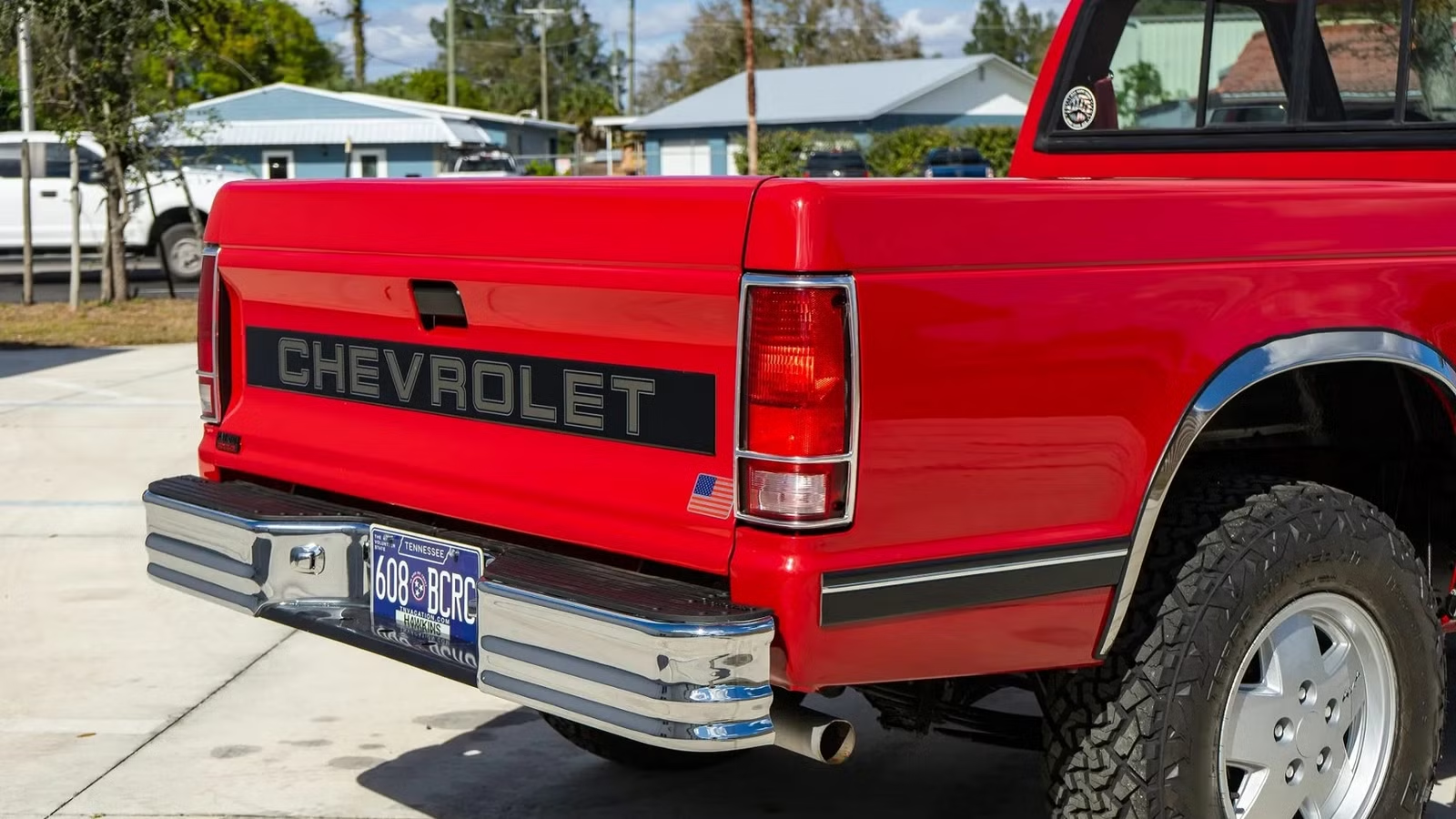
Most compact pickups seem harmless at first glance. They look like the vehicle form of a sensible lunch – cheap, useful, and not likely to raise anyone’s blood pressure. People bought them to haul mulch, grab parts, move a dorm-room mattress, or park in a tight spot without folding a mirror into modern art.

But Chevrolet once built a little truck that escaped that boring job description. It didn’t have a huge big-block V8, but honestly, it did not need one. Street-truck fans saw the better trick hiding underneath: low weight, rear-drive bones, a roomy engine bay, and just enough factory power to get ideas started. The result became one of Chevy’s most tempting cheap-speed platforms.
 95 autotech
America’s First Muscle Truck Packed A Legendary 409 V8 Under The Hood
Long before the horsepower wars hit full swing, one truck showed up with a big-block surprise under the hood.
Compact Pickups Were Never Supposed To Be Performance Icons

Compact pickups came from a practical place. Automakers built them for buyers who needed truck usefulness without full-size truck bulk, full-size fuel bills, or full-size parking problems. The idea was simple: give people a small bed, a sturdy frame, a decent payload, and a price that did not require a second mortgage or a suspiciously quiet talk with the bank. A compact truck had to start every morning, haul whatever fit in the bed, and avoid making its owner cry at the gas pump. That’s all.
That buyer expected normal truck things. A compact pickup had to run cheaply, sip less fuel than a big V8 rig, fit beside a curb, and, of course, haul weekend junk without acting like a dump truck. It lived in the land of hardware-store runs, lawn equipment, and “can someone help me move?” favors. The glory jobs belonged elsewhere.
Still, small trucks had one secret that hot-rodders understand better than accountants. They did not weigh much. Less weight makes every horsepower work harder, and rear-wheel drive makes that power easier to use in a fun way. A short wheelbase also makes a vehicle feel alert, sometimes too alert, like a dog that just heard the treat bag rattle. The basic pickup shape helped too – a light tail, a simple rear axle, and a separate bed gave builders plenty to change.
Chevy Accidentally Built The Perfect Street-Truck Canvas

Chevrolet‘s small-truck formula through the 1980s and 1990s looked straightforward on paper. The company used compact size, body-on-frame construction, rear-drive layouts, and basic engines to give buyers a real truck in a smaller box. It shared the kind of simple hardware that made mechanics feel welcome instead of judged. A platform that does not fight its owner becomes a playground, cheap to experiment with, because a mistake hurts less when the starting point did not cost collector-car money.
The intention was never to build a pocket-size Chevelle with a bed. Chevrolet aimed it at normal buyers first, which makes the later street-truck reputation more interesting. Some versions used modest four-cylinder power, while others offered V6 muscle, and the stronger 4.3-liter trucks had enough grunt to make owners wonder what else the chassis might handle. Chevrolet gave the truck usable bones that could easily handle upgrades.

Then, the aftermarket showed up. Lowering parts, wheels, suspension pieces, engine parts, and swap knowledge made the little Chevy easier to personalize. A simple truck with rear-wheel drive suddenly became interesting for gearheads, who could improve stance, add tire, add power, and repeat as budget allowed. Owners quickly learned that the engine bay and frame could accept far more ambition than the base model ever promised. The truck stayed unassuming, but the shortcut became obvious.
This American Pickup Truck Was Faster Than Some Ferraris (And Nobody Was Ready for It)
A turbocharged AWD American pickup changed the game in 1991 by outrunning Ferraris and proving trucks could deliver real supercar acceleration.
The Chevrolet S-10 Was The Small Pickup That Became A Street-Speed Favorite

The truck was the Chevrolet S-10 pickup. Chevy introduced it for the 1982 model year as its first domestically produced compact pickup, and it replaced the imported Chevrolet LUV. The GMC side got a close relative, first called the S-15 and later known as the Sonoma. That was the start of a small-truck cult. Chevrolet needed a compact truck for practical buyers, but it accidentally handed hot-rodders something with the right bones and the wrong amount of temptation. The first generation ran through 1993, a redesigned second generation arrived for 1994, and the line gave way to the Colorado after the 2004 model year.
The S-10 became outrageous because the layout gave builders options. A compact body kept mass down, rear-wheel drive kept the fun simple, and the big engine bay gave owners room to dream. The truck also came in useful body styles, with regular and extended cabs, rear- or four-wheel drive, and four- or six-cylinder power across its run. That mix gave builders choices instead of one narrow path. A stripped regular-cab, two-wheel-drive truck could become a sleeper, while a cleaner V6 truck could become a lowered cruiser. A tired work truck, in turn, could become a garage project that slowly ate the owner’s weekends, one parts order at a time.

The 4.3-liter V6 gave the S-10 the attitude many small trucks lacked. Chevrolet added the 4.3 to the first-generation order book in the late 1980s, and the second-generation trucks later offered stronger versions, including a high-output 195 hp 4.3-liter V6 for 1994. Those numbers are obviously not wild today, but they explain why the truck felt eager once owners added gearing, traction, and confidence. It had enough torque to feel like more than an economy truck, and enough simplicity to invite tinkering.
That is why the S-10 became a favorite for street builds. Owners could lower it, add grip, freshen the suspension, tune the V6, or go further with a V8 swap. The truck looked like a parts-runner, not a predator, and that made the joke better. With the right setup, an S-10 could embarrass cars that arrived wearing wider tires, louder paint, and far more confidence. A small pickup beating a “serious” car is the kind of comedy enthusiasts never get tired of. That is a big part of the S-10’s legend.
The S-10’s Reputation Outgrew Its Factory Specs

|
Model Year |
Engine |
Power |
Torque |
0-60 MPH |
Top Speed |
|
1982 |
2.8-liter V6 |
110 hp |
148 lb-ft |
11.7 seconds |
95-100 mph |
|
1994 |
4.3-liter V6 |
195 hp |
260 lb-ft |
7.8 seconds |
110 mph |
The S-10 sits in a different corner of Chevy truck lore than the 454 SS. The 454 SS made its point in a very direct way – the company put a 7.4-liter big-block V8 in a regular-cab, short-bed full-size pickup, and the 1990 version made 230 horsepower and 385 lb-ft of torque. Nobody needed a treasure map to find the performance story there; the engine badge practically wore a gold chain. Later versions grew stronger, but the basic message stayed the same – big truck, big engine, big torque, big power. The S-10 was never like that.
The S-10 took another route. Chevrolet did offer a sportier S-10 SS in the 1990s, with high-output 4.3-liter V6 power, sport suspension touches, and the SS package as the street-focused choice. The SS gave Chevy’s showroom a sporty compact truck, and the street-truck crowd gave the whole S-10 family a much louder afterlife.

The broader S-10 scene did the heavy lifting. Builders gave these trucks lowered stances, small-block V8s, LS swaps, drag tires, roll pans, cowl hoods, and quiet sleeper looks. Some owners even went for show-truck polish. Others chased quarter-mile slips at the drag strip. Many landed somewhere between the two, which might be the most S-10 outcome possible. The platform welcomed cheap parts and backyard creativity, and also tolerated plenty of questionable ideas, because every car culture needs a few “what could possibly go wrong?” chapters. V8 swap manuals and parts guides became part of the culture, and one well-known conversion guide focused on using available Chevrolet and aftermarket parts for the job.

GM’s compact-truck family even produced a wilder proof of concept, though it wore GMC badges. The 1991 GMC Syclone used a turbocharged 4.3-liter V6, all-wheel drive, and a four-speed automatic transmission. That powertrain had 280 horsepower and 350 lb-ft of torque, numbers that still make compact-truck fans sit up straighter. The Syclone was not a Chevrolet S-10, and it deserves that distinction, but it showed how much performance hid in the small GM truck package. It also showed that a compact pickup did not need a giant engine to act like a menace. Boost, traction, and a little corporate mischief could do the job.
The Pontiac Pickup Truck Almost Nobody Remembers
This forgotten prototype nearly joined Detroit’s strangest truck wars, then disappeared into collector legend.
The Little Chevy Truck That Became Bigger Than Its Job Description

Compact pickups started as practical tools, and the S-10 never fully lost that charm. Even a modified one still carried the shape of a useful little truck, and that helped its street-truck image. A Camaro looked like it came looking for trouble, a Corvette never fooled anyone, and an S-10 could sit near the shop door with an old cooler in the bed and still hide a very rude surprise under the hood. It had sleeper energy before “sleeper build” became a phrase people used in video titles. The best ones looked like they had work tomorrow and unfinished business at test-and-tune night.
Its greatness also came from potential. The automaker made a compact truck with the right size, the right drive layout, and the right amount of mechanical honesty. The 4.3-liter models gave owners a strong base, especially because that V6 shared so much thinking with Chevrolet’s small-block world. The 4.3-liter, 262-cubic-inch Chevy V6 was closely related to the small-block V8 family, sharing the same bore and stroke as a 350 V8 and much of the same parts logic.

2003 Chevrolet S-10
That is a big part of the reason why the S-10 felt so natural to hot-rodders – it spoke Chevrolet language. That made swaps less mysterious, tuning less scary, and junkyard planning more fun. A builder could start with a tired compact pickup and picture a lowered cruiser, a bracket racer, a corner-carving oddball, or a sleeper that looked ready to deliver a washing machine. The little truck did not judge.
The S-10 helped prove a street truck needed the right bones and the right people to notice them. Chevrolet gave buyers a simple compact pickup, and that is exactly what the audience wanted. Then, enthusiasts gave it the second life. That is why the truck still has pull with people who like affordable speed, clean stance, and machines that reward effort more than money. The Chevrolet S-10 started life as a simple compact pickup, but its size, layout, and mod-friendly personality made it one of the easiest Chevy trucks to turn into something way too fast.
Source: Chevrolet, HotRod, Edmunds

Related posts




Latest Post


No Comments