
Bombshell quotes and broken promises: Inside Seat’s 15-year downfall
Planned closure comes as a shock, but the writing has long been on the wall for the Spanish brand

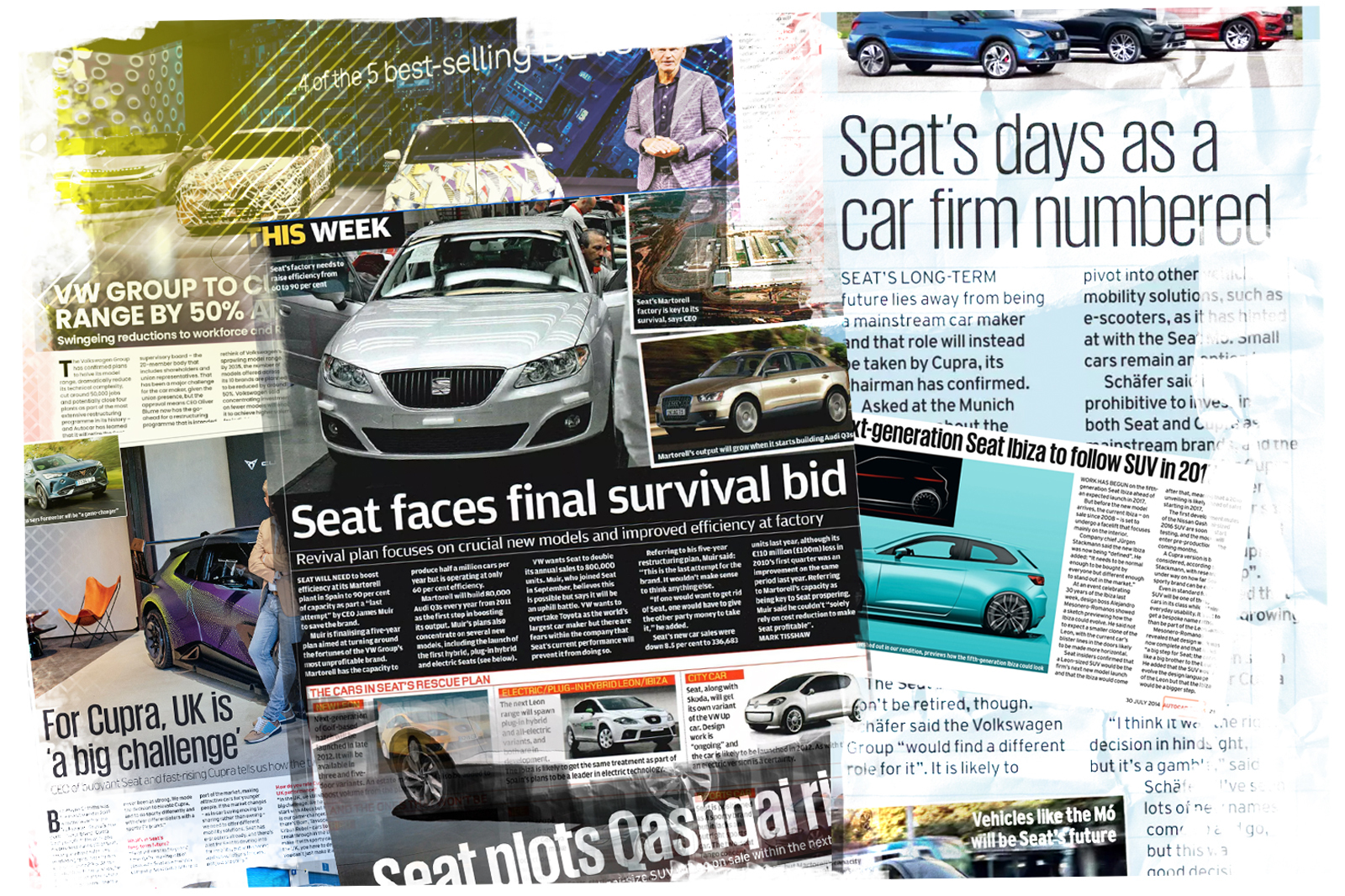
‘Seat faces final survival bid’ read an Autocar headline in May 2010. Just eight months into his tenure as CEO, James Muir was outlining what he called a “last attempt” to save the brand.
This was in an era of unstoppable growth, expansion and success for the Volkswagen Group (VWG), but Seat was the black sheep of the group as its most unprofitable brand.
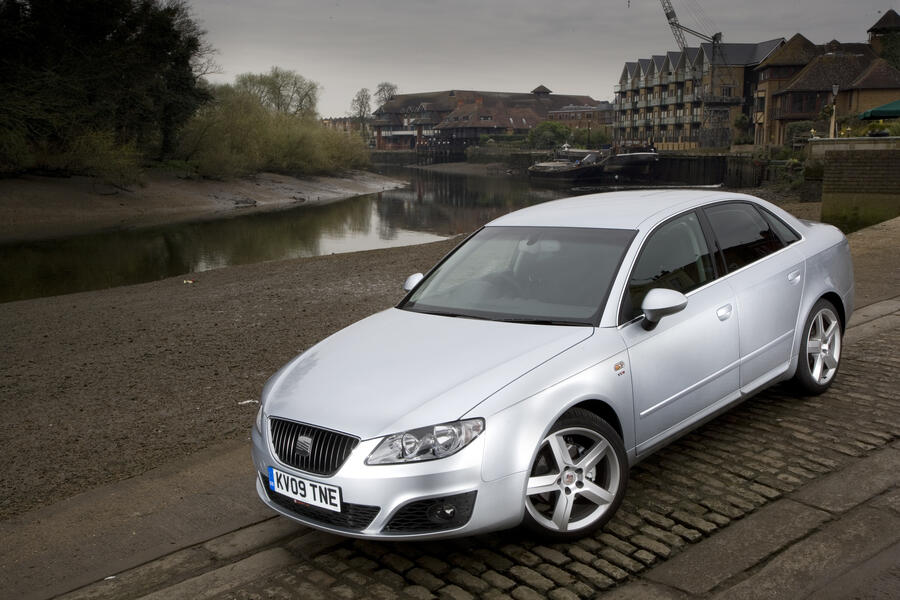
The ‘Cupra version of everything’ plan of the 2000s had failed and a subsequent plan to rebadge old Audis as Seats, starting with the Exeo, was as short-lived as it was short-term in its outlook.

At the time, Seat’s Martorell factory, long considered its greatest asset, was running at just 60% efficiency and annual sales were less than half of VWG’s target of 800,000.
“If one would want to get rid of Seat, one would have to pay the other party money to take it,” was Muir’s take.
Muir’s comments were made to a group of business wire reporters in Germany. Your correspondent was due to be part of a roundtable later that day with Muir, but that was cancelled following his bombshell quotes in an attempt to limit the fallout.
It started somewhat of a personal connection to this story, which looks to have entered its final chapter with the news that Seat will finally be shuttered as part of VWG’s wide-ranging cost-cutting measures, Cupra then becoming its sole Spanish outpost.
Even with a no-show that night in Germany, Muir was one of the most quotable executives of any era, and his plan was no secret: boost Martorell production by opening to other brands’ models, such as the Audi Q3, then reinvigorate the Seat product line-up starting with the next-generation Leon family.
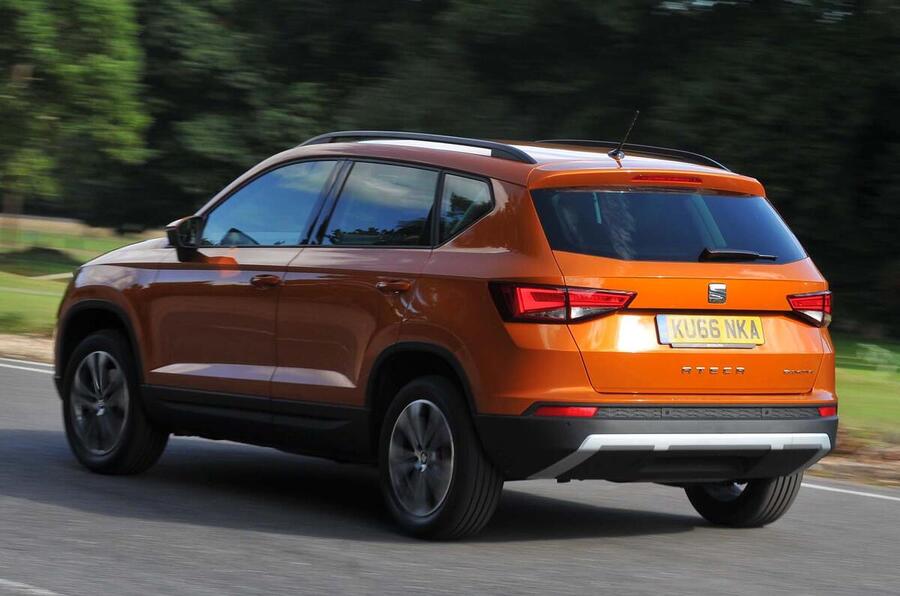
We would finally get in front of Muir at the launch of the new Leon in November 2012, where he confirmed plans for the Ateca, a future Autocar class-leader in the booming family SUV segment. It was expected to add around 100,000 sales to Seat and it did just that, allowing the brand to top 500,000 units by the end of the decade, when it had been joined by the smaller Arona SUV too.
In that chat in Barcelona, Muir was again on punchy form: he recounted an inter-brand battle between whether the Leon or Audi A3 would get LED headlights first, at a time when all the related MQB models fought hard to have their own distinct features. I forget exactly what Muir said about Audi trying to get the technology first when it was already agreed to go to Seat, but it contained a four-letter word beginning with ‘F’. His PR minder did well to keep a lid on that one.
More insight into VWG workings came at a design night to celebrate the 30th anniversary of the Ibiza in July 2014. New CEO Jürgen Stackmann, a steady hand who posted incremental growth for Seat in his tenure from 2013-2015, outlined how the next Ibiza in 2017 would capitalise on the stability the Leon had brought to the brand. But the headlines that night were all about Bentley, as former Seat designers Walter de Silva and Luc Donckerwolke, now in senior VWG design roles elsewhere, seemed far more keen to discuss the upcoming Bentayga SUV and how they had ‘solved’ the awkward concept design for production.
Such sideshows gave the impression that thoughts were always elsewhere for VWG when it came to Seat – but also that it had a rich track record for developing talent not just in design but in leaders. And so it proved in Seat’s next era, from 2015-2020 under Luca de Meo, who fired the starting gun on Cupra as a standalone brand that has ultimately led to Seat’s demise.
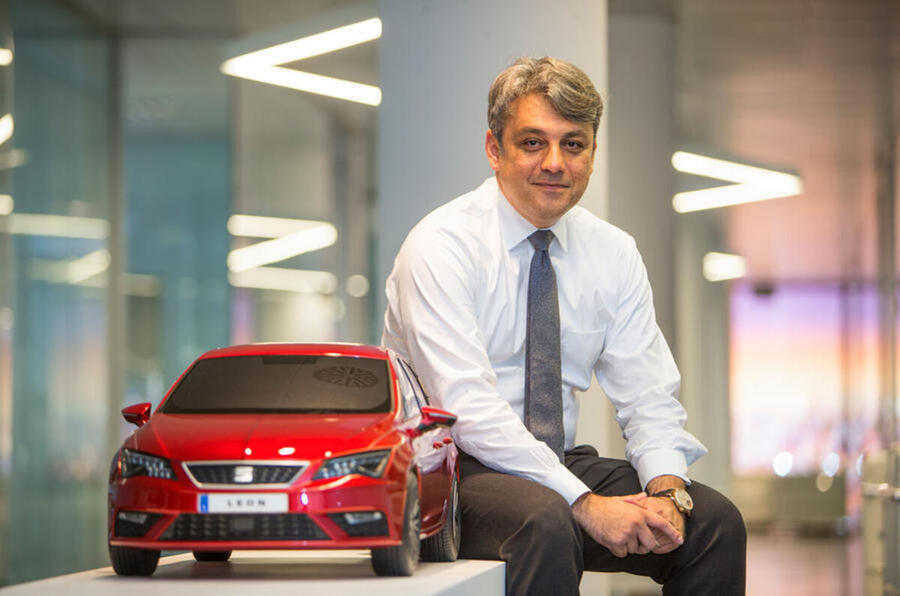
De Meo’s deft touch in product, seen earlier in his career with the Fiat 500 and since with his turnaround at Renault spearheaded by the 5, had him attacking Seat’s profitability and volume problem with not just more attractive and desirable new cars but a new brand.
While Seat’s sales had grown from the low 300,000s to more than 500,000 in the decade since 2010, the growth was only in line with the increase in model range and was well short of Muir’s long-term target. Seat was stuck in the mid-market, and de Meo was open in describing the profitability challenge facing the brand, whereas Cupra had far greater earning potential, even if the new logo looked a bit naff.
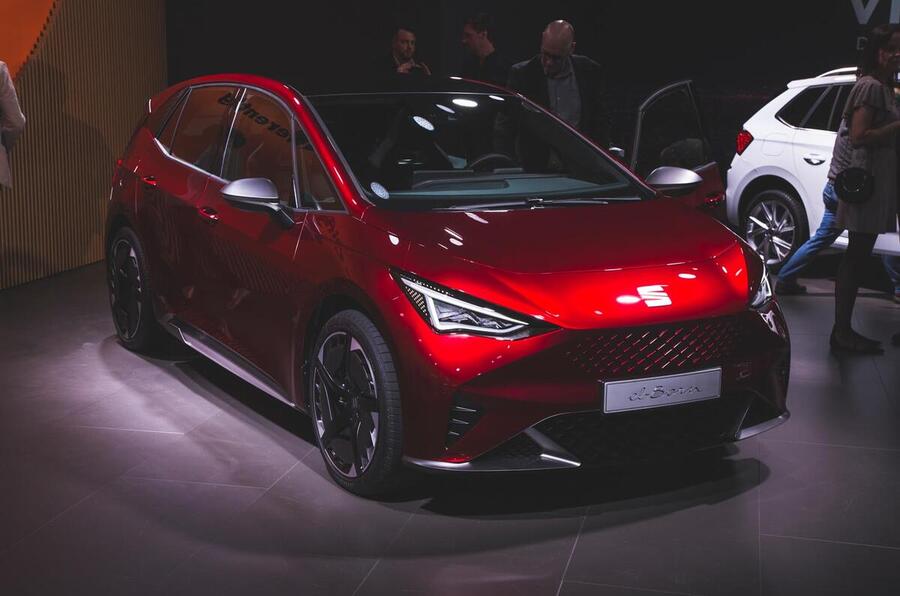
No all-new Seat model has been launched since Cupra’s first standalone model, the Formentor, arrived in late 2020 (although among the Cupras is a rebadged Audi, the Terramar. Heard that before?). What should have been the Seat El-Born (below) became the Cupra Born at a similar time, due to the greater price that a Cupra model could command – another clue as to what was to come.
De Meo headed to Renault just before the Formentor’s launch and handed over to sales and marketing boss Wayne Griffiths, who was straight away dealing with questions on Seat’s future.
At the 2021 Munich motor show, the first time the industry really came together after Covid, Griffiths told me that “Seat will exist in 50 years’ time”, but even then the quotes were qualified with talk of perhaps as a mobility company (whatever that means: it’s still a phrase that no car company executive has successfully articulated).
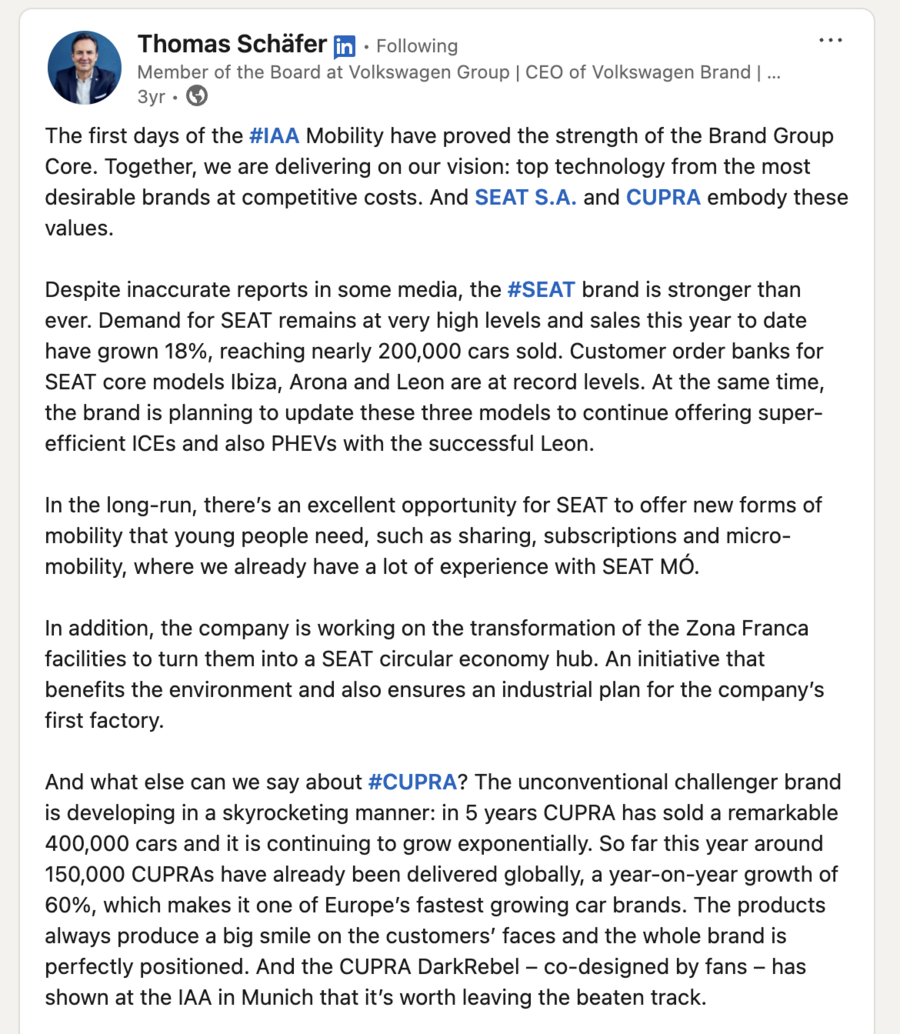
Two years later at the same show, Seat chairman Thomas Schäfer told me: “The future of Seat is Cupra.” As all good stories and headlines do, it caused a stir (I’m told even the king of Spain wanted to know what was going on), but it was categoric and he definitely meant Seat as a car brand, not a holding company.
It got a bit weird when a LinkedIn post later that very week from Schäfer (see below) referenced “inaccurate reports in some media” about the strength of Seat. This felt quite pointed at the time, but with enough water under the bridge three years on, his post now reads a generic, carefully worded non-denial with some more mobility vapourware, particularly in the context of Seat’s strength rather than its future. I probably shouldn’t have taken it so personally.
This period did culminate in Griffiths sitting down with me in London the following May, playing a video from the recent annual conference that showed Seat models being crushed and then reborn. It was made clear to me that my story had played a role in the commissioning process. But your boss said it, Mr Griffiths… He left the company a few months later and now has his own gin brand.
And here we are today: Seat is set to be phased out by the end of this decade as a car brand, fully absorbed by Cupra. Last year, Cupra sales surpassed Seat sales for the first time – unsurprising given the model range of one has shot up as the other has declined.
Even so, Cupra hasn’t yet transformed Martorell’s fortunes: combined annual sales for the two brands sit below 600,000. Profitability had improved through 2024 but collapsed in 2025 before showing signs of recovery so far this year.
On the face of it, I can’t help but think the problem simply seems to have been moved elsewhere.

Related posts

Latest Post


No Comments