
The Honda Naked That Fits Almost Every Rider
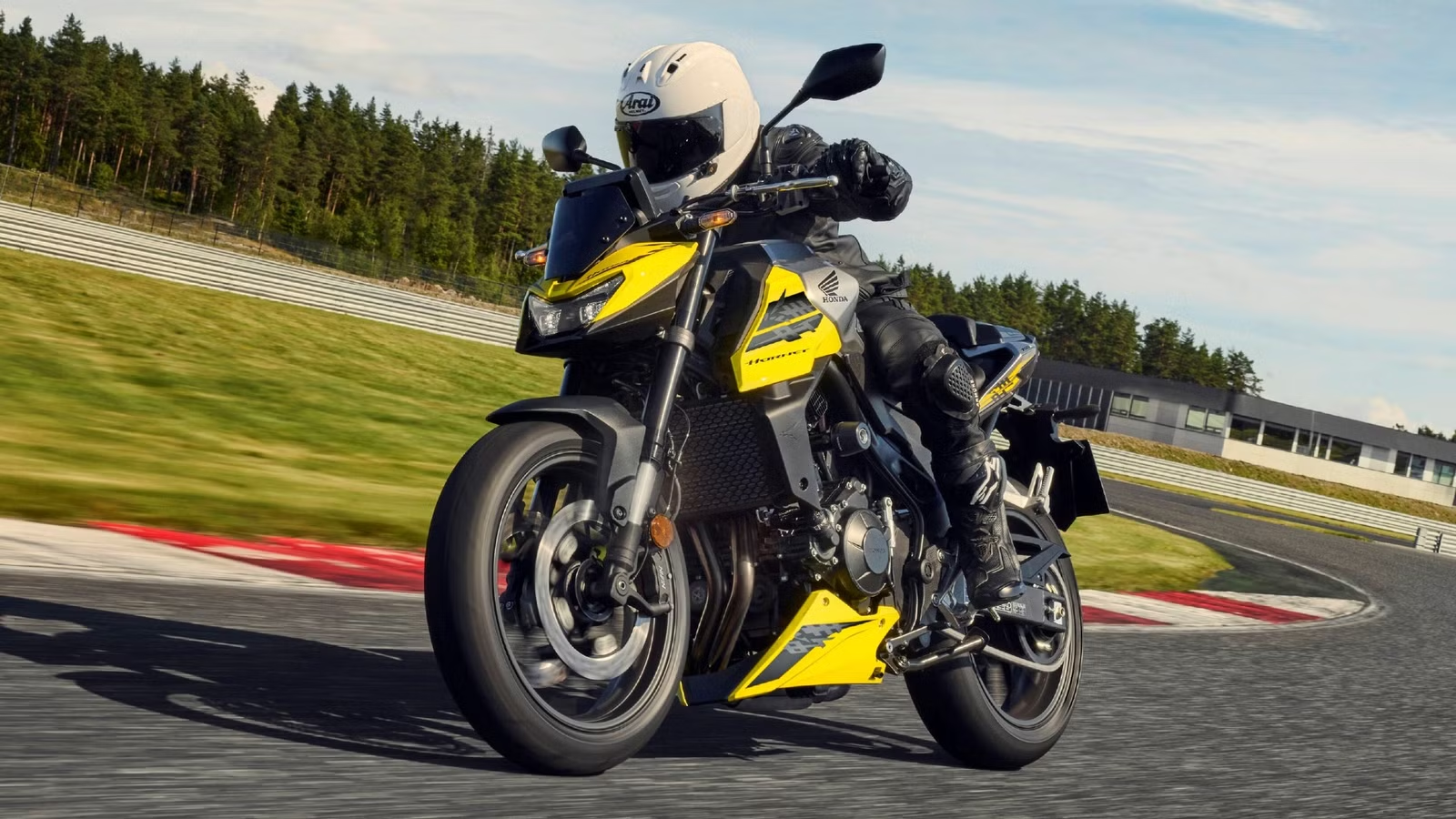
Honda is one of those motorcycle manufacturers that can put a Super Cub on the road in one part of the world and a supercharged V3 naked across a continent in another. That’s partly because it has spent decades building motorcycles around the needs of different countries and regions, from everyday transportation to recreational riding.
The CB family follows a similar approach, and there’s still a lot of variety within it. You can have a lighter, more approachable machine for street riding, a four-cylinder if you like hearing it scream, or step up to a liter-class engine if you want to join that club. It’s a broad family, with something for riders coming at motorcycling from very different directions. Only one bike can be truly justified as fitting almost every rider, and it’s also the newest in the lineup.
The Honda CB Naked Range Has Something For Everyone
While the CB’s history would show us a lot more versatility, its current North American lineup already covers plenty of ground. The lightweight and nimble CB300R makes a strong case for simple street riding. Then comes the CB500. This is a parallel-twin budget midweight that gets the basics right and has a really reliable powertrain at heart. These belong to the entry-level segment, though, and even newer riders will simply outgrow the 300 in a couple of years.


Enter the inline-four CB650R. It leads the way with its inline-four powerhouse and a near-class-leading 93 horsepower. The USP is its engine and price, but it’s all a little too simple otherwise. Honda also has two other inline-four CBs: the CB1000F and the CB1000 Hornet SP. They have a CBR-derived 1000cc engine, producing 122 and 155 horsepower, respectively.

They’ll keep you entertained for years, but we think they can be a little too much for someone with less experience. So what’s the sweet spot then? Well, it’s the newest Hornet Honda has revealed in recent times, based on an all-new parallel-twin platform. The result is a peppy naked with as much power as the inline-four CB, topped with dollops of usable torque.
The CB750 Hornet Serves As The Sweet Spot For A Variety Of Riders

The CB750 Hornet E-Clutch occupies something of a Goldilocks zone. If you’re stepping up from a 400cc or 500cc motorcycle and want a meaningful jump in performance, there’s plenty here to grow into. But it doesn’t suddenly become a boring downgrade if you’re coming from something larger, either. For riders used to bigger engines, the Hornet’s lighter, more manageable package and different character can be a compelling change of pace.
It Undercuts Several Middleweight Naked Rivals

The Hornet’s Goldilocks appeal extends to its price tag, too. At $7,999 before the $600 destination charge, it undercuts several middleweight rivals, including the Yamaha MT-07 and Honda’s own CB650R E-Clutch. It isn’t the cheapest bike in the class (thanks to an influx of Chinese bikes), but the money you save over its Japanese and European rivals can surely go toward better gear, more fuel, or your next weekend ride.
The 755cc Twin Delivers A Kick Without Demanding Too Much

A 755cc engine sounds like the sort of thing that should come with a warning label, but the Hornet doesn’t behave like a motorcycle that’s constantly waiting to catch you out. The parallel-twin has plenty of muscle (just over 90 horsepower) when you ask for it, yet its delivery promises to be friendly enough that you don’t have to ride around treating the throttle like a light switch. It’s a big part of why the Hornet can feel exciting without becoming exhausting.
Strong Midrange Torque Makes Everyday Riding Easier

The party trick is the Hornet’s 55.3 lb-ft of torque. This is the sort of number you appreciate more once you’re actually riding the thing. The 270-degree parallel twin promises plenty of shove in the lower and middle revs, so you can get around town or make a highway pass without constantly reaching for another downshift. It won’t give you the spine-tingling soundtrack of Honda’s inline-four, but you don’t have to wring its neck to make progress, either.
E-Clutch Makes The Manual Gearbox Easier To Live With

A manual gearbox doesn’t have to mean working the clutch lever every few seconds, and that’s exactly where Honda’s E-Clutch comes in. The 2026 Hornet gets it as standard, using electronically controlled clutch operation while retaining the six-speed manual gearbox, so you can pull away and shift without touching the lever, but still take control whenever you want. It even handles rev-matching on downshifts, which makes everything from crawling through traffic to attacking a twisty road a little bit smoother.
The Hornet’s Hardware And Electronics Are Equally Impressive

There’s a reason the Hornet can feel like a big bike that rides like a small one. It isn’t just about what’s in the middle of the frame, but everything Honda has built around it. From the suspension and brakes to the electronics and relatively compact dimensions, the hardware does plenty to keep a 750-class motorcycle from feeling like one.
Showa Suspension And Radial Brakes Add Sporty Capability

The Hornet gets a 41mm Showa SFF-BP inverted fork up front and a Pro-Link monoshock at the rear, with 4.7 and 5.1 inches of travel respectively. The fork isn’t adjustable, but the rear shock gets seven-step preload adjustment. Dual 296mm discs and radial-mounted four-piston calipers handle braking duties. Neither of these is a class-exclusive setup. The MT-07, for example, also gets a 41mm inverted fork and a rear shock with preload and rebound adjustment, while the Trident 660 now offers preload and rebound adjustment at the rear.
432 Pounds And A 31.3-Inch Seat Make A Big Difference

A 750cc motorcycle can sound intimidating until you actually have to pick it up at a stop. At 432 pounds with a full tank and a 31.3-inch seat, the Hornet is relatively easy to manage for its engine size. Those two numbers matter every time you turn around or put a foot down. It will also make life easier when you’re slicing through traffic or moving around in the parking lot.
Five Riding Modes Keep The Electronics Useful

There’s nothing wrong with giving riders a bunch of electronic toys, provided they don’t need a tutorial to use them. The Hornet keeps things fairly straightforward with five modes: Sport, Standard, Rain, and two customizable User modes that let you adjust the bike’s power delivery, engine braking, and traction control to suit your preferences. Again, these aren’t class-leading, but they are plenty for something with just around 90 horsepower.
The CB750 Hornet Trumps Its More Established Rivals

The CB750 Hornet doesn’t necessarily beat its rivals at everything, but that’s almost the point. The MT-07 is lighter, the Z650 is cheaper, and the CB650R has the four-cylinder character some riders will always prefer. What the Hornet does better is bring enough of everything most riders actually care about into one motorcycle, without asking them to make a big sacrifice anywhere. That makes it an easy motorcycle to like, even if it isn’t necessarily the most exciting choice on paper. There’s enough performance for experienced riders, enough accessibility for those moving up from smaller bikes, and enough practicality to make sense as an everyday motorcycle.
Source: Honda

Related posts



Latest Post


No Comments