
Porsche Built a Secret One-Off 918 Spyder Coupe for Ferdinand Piëch
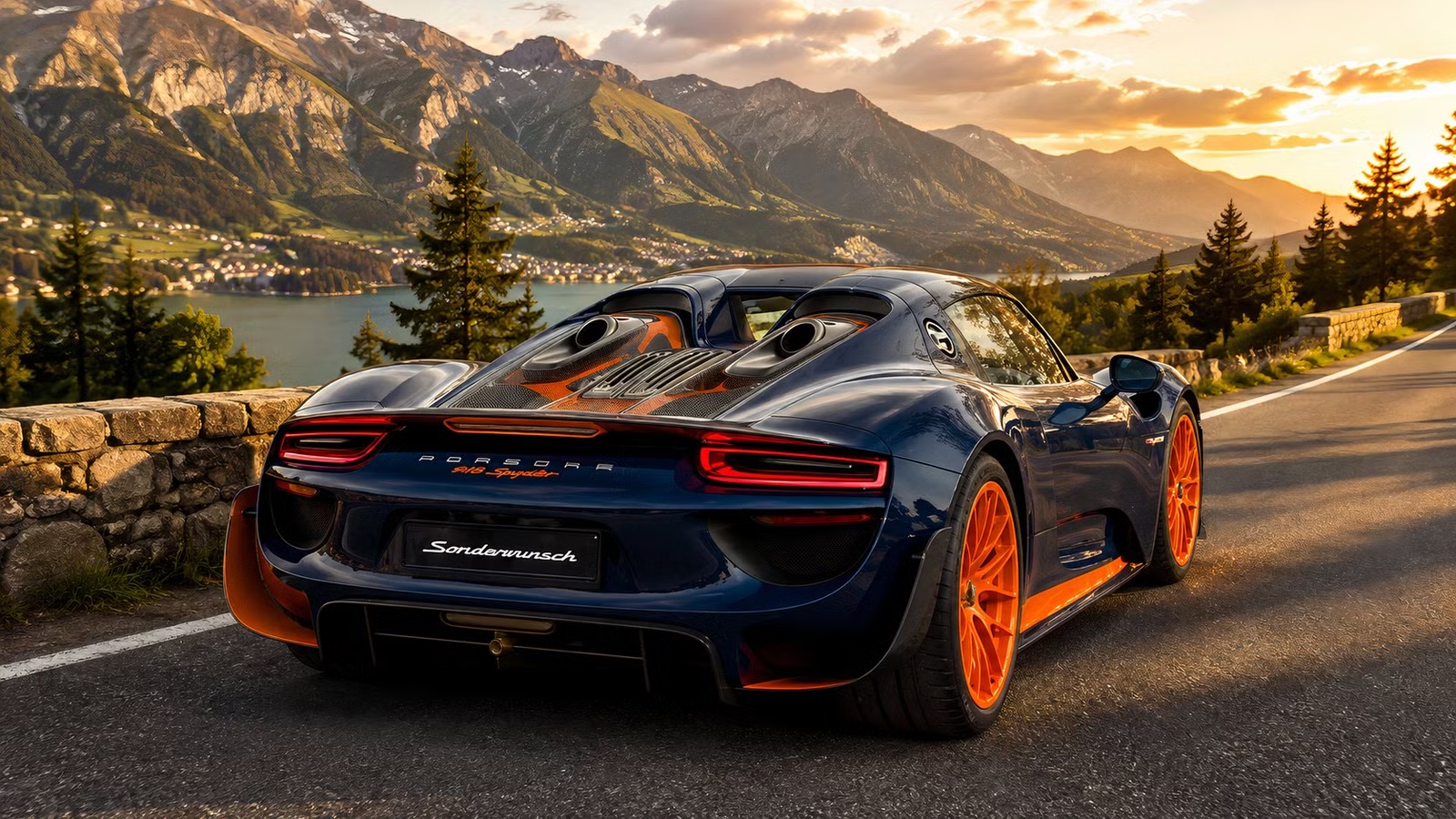
Porsche built exactly 918 examples of the 918 Spyder, and every single one was designed with a removable two-piece carbon-fiber roof. Or so the world believed. This week at Salon Privé at Blenheim Palace, a one-of-one factory-built 918 with a permanently fixed single-piece roof made its public debut — a car commissioned through Porsche’s Sonderwunsch division that had spent over a decade in near-total obscurity.

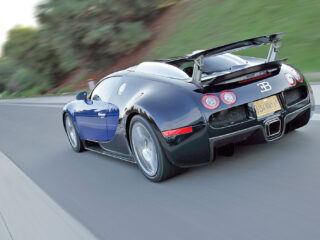
The commission came from Ferdinand Piëch, the late Volkswagen Group chairman whose influence over Porsche’s engineering culture ran deep. Finished in Paint to Sample Oxford Blue with Arancio orange accents on the wheels, intakes, and engine bay, and trimmed inside in Tangerine and Imperial Blue leather, the car is a rolling expression of Piëch’s personal aesthetic — the same blue-and-orange color pairing he applied to a Bugatti Veyron Super Sport and a Bugatti Chiron Super Sport in his collection. At Salon Privé, it was named runner-up in the Concours d’Excellence, competing among 70 exceptional cars spanning nearly a century of motoring.
A Fixed Roof Where No Fixed Roof Should Exist
The standard 918 Spyder’s roof arrangement was always part of its identity. Two carbon-fiber panels could be lifted out and stowed in the front trunk, converting the car from a closed cockpit to an open targa in minutes. It was an elegant solution for a hypercar that needed to be many things at once — a road car, a race-derived engineering statement, a daily driver for the extraordinarily wealthy.

The Sonderwunsch coupe replaces all of that with a single permanently integrated roof structure. There is no removable panel, no targa option, no frunk storage trick. The roofline is simply sealed. It is a fundamental change to the car’s architecture, and one that Porsche executed without any public announcement — no press release, no auto show reveal, no mention in the 918’s official production history. Despite the bespoke bodywork, the headrests still carry the factory “918 Spyder” embroidery, a small detail that underlines just how quietly this car was built.
The Powertrain Underneath Is Pure 918
Mechanically, the coupe shares everything with the production roadster. That means the mid-mounted 4.6-liter naturally aspirated V8 is still present, still paired with two electric motors, and still delivering a combined 875 horsepower and 944 lb-ft of torque through an all-wheel-drive system. The hybrid architecture that made the 918 a landmark car — drawing on Le Mans prototype development and capable of running on electric power alone at low speeds — is unchanged.
Porsche did make a few bespoke finishing touches beyond the roofline. The standard Acid Green hybrid badging was replaced with orange, matching the Arancio accent theme. Brake calipers are finished in Oxford Blue rather than the production car’s default. These are small details, but they signal that this was a considered commission rather than a quick bodywork exercise — a car built to a specific brief, for a specific person, with coherent intent throughout.
What the 918’s Legacy Means for This Discovery

The 918 Spyder sits at the center of what hypercar enthusiasts call the Holy Trinity — the three hybrid performance machines that arrived within months of each other in 2013 and 2014, alongside the McLaren P1 and LaFerrari. Of the three, the 918 was arguably the most technically ambitious: it set a production-car Nürburgring lap record of 6:57 when it launched, ran a sub-10-second quarter mile, and did it all while returning fuel economy figures that made the green-badged hybrid branding feel less like a marketing exercise and more like a genuine engineering priority.
Only 918 examples were produced between 2013 and 2015. Values have climbed steadily since, and the market for exceptional examples has become serious. A Paint to Sample Pure Orange 918 Spyder reportedly sold at auction for $6 million earlier in 2026. Against that backdrop, the existence of a factory-sanctioned one-of-one coupe variant — commissioned by one of the most powerful figures in the global auto industry — places this car in a category entirely its own. It is not simply the rarest 918. It may be the rarest Porsche road car ever built.
Sonderwunsch and the Rolling Laboratory

Porsche’s Sonderwunsch program — the name translates literally as “special wish” — exists to fulfill exactly this kind of commission. It is the factory’s answer to customers who want something the catalog cannot provide, handled by Porsche’s own engineers and craftspeople rather than an outside coachbuilder. The program has produced bespoke paint colors, one-off interiors, and unique mechanical configurations over the years, but a fundamentally different body structure on a hypercar represents a different order of ambition.
The coupe’s existence reframes how enthusiasts should think about the 918’s development period. Porsche was clearly willing to explore structural variants of the platform beyond what reached the public — treating the 918 not just as a finished product but as a foundation for further experimentation. Whether the fixed roof changes the driving character in any meaningful way remains undocumented, but the fact that Porsche built it at all, and built it properly, says something about how seriously the brand took the 918 as a platform. Piëch’s car isn’t a curiosity. It’s evidence of what the 918 could have been.
The coupe has now made its first confirmed public appearance after more than a decade out of sight. For 918 completists and Porsche historians alike, that surfacing matters — not just because the car is extraordinary, but because it proves the production run of 918 was never quite the complete picture everyone assumed it was.

Related posts


Latest Post


No Comments