
The True Difference Between Lexus And Toyota Buyers Should Know
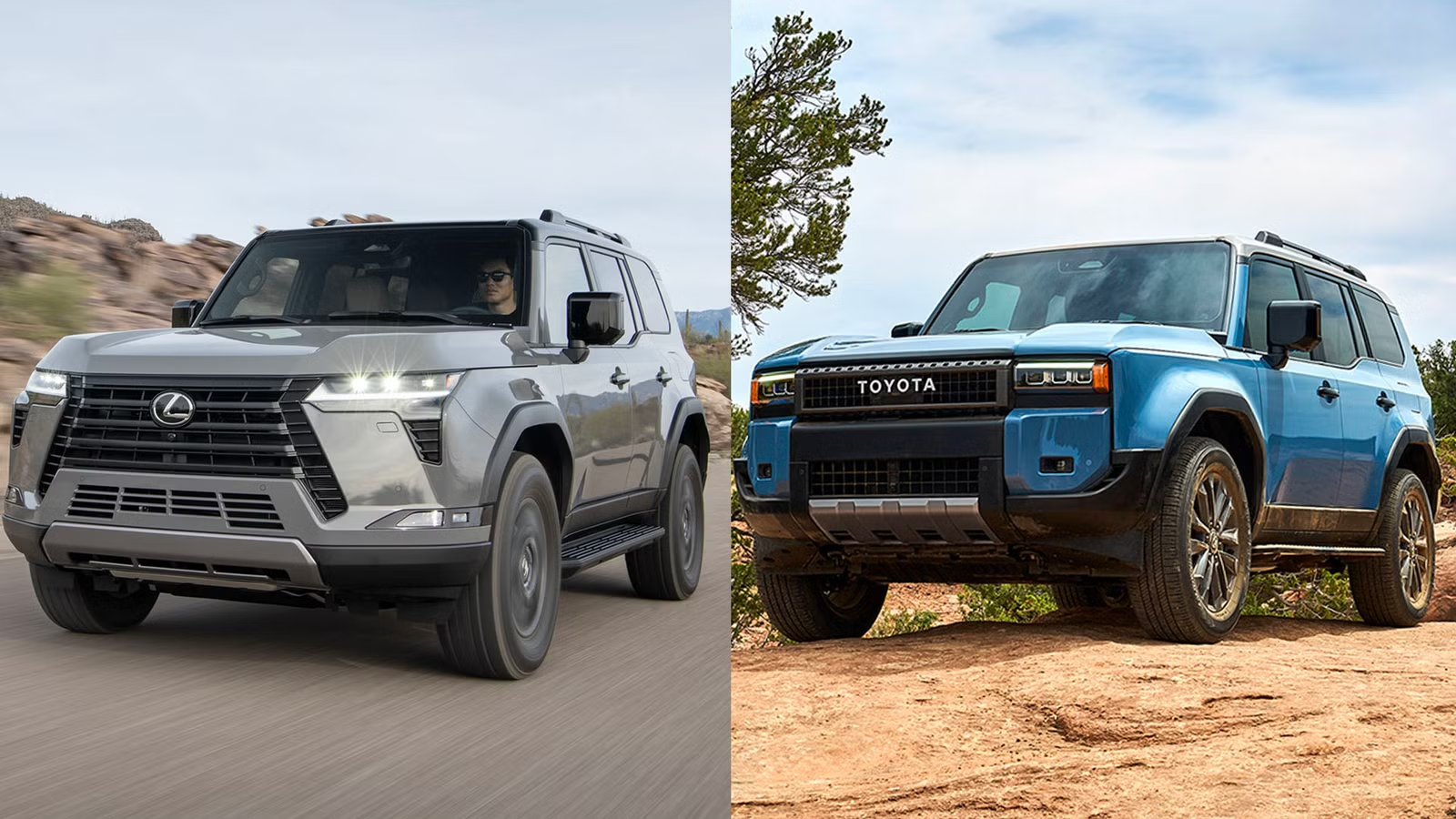
Walk into any Lexus showroom and a familiar question tends to follow you around: is this just a dressed-up Toyota? It’s one of the most debated topics in the automotive world, and it’s easy to see why. The two brands share a parent company, swap platforms, and occasionally even borrow engines from each other. But dismissing Lexus as merely “Toyota with a nicer badge” is like calling a Michelin-starred restaurant the same as a drive-through because both serve food. The relationship is real — the equivalence is not.

On the surface, Lexus is Toyota’s luxury division — the equivalent of Honda and Acura, or Nissan and Infiniti. But the differences run a lot deeper than just leather seats, shiny badges, and a bigger price tag. Toyota and Lexus operate on two very different wavelengths, from how they’re engineered to who they’re built for. Whether you’re cross-shopping a Highlander and an RX, or just wondering why your neighbor spent twice as much on their shiny new SUV, here’s the real breakdown you need to know.
Same Parent Company, Two Very Different Missions
Yes, Lexus is part of Toyota. But don’t make the mistake of thinking Lexus is just a rebranded Toyota lineup with some wood trim and a nicer logo slapped on. Toyota’s mission has always been about reliability, affordability, and practicality — cars that get the job done with minimal fuss and maximum longevity. Whether it’s a Corolla, RAV4, or Fortuner, Toyota builds vehicles that you can hand down to your grandkids.
Lexus Aims To Do What Toyota Can’t

Lexus, on the other hand, was born out of a very different ambition. When Toyota launched the Lexus brand in 1989 with the LS 400, the goal wasn’t just to make a “nice Toyota.” The mission was to challenge Mercedes-Benz, BMW, and Cadillac at their own game — and win. That meant higher standards for materials, quieter cabins, more refined powertrains, and an obsessive focus on the customer experience. While Toyota prioritizes function over flash, Lexus leans into craftsmanship, comfort, and a premium feel. So even though they share some underlying platforms and engines, the way these vehicles are tuned, finished, and sold can feel worlds apart.
What You’re Really Paying For: Engineering, Materials, and Craftsmanship
It’s easy to look at a Lexus and think, “I could get a fully loaded Toyota for the same price.” And technically, you’re not wrong. But where that extra money goes might surprise you. Lexus models aren’t just about plush leather and a few extra gadgets.
What Lexus Models Generally Stand For
- Noise insulation: Lexus pours serious R&D into sound deadening, cabin isolation, and vibration control. This is why a Lexus feels whisper-quiet even at highway speeds.
- Materials: Real wood, aluminum trim, soft-touch surfaces, and handcrafted details are standard in Lexus cabins. Toyota? Functional, yes. Premium? Not so much.
- Ride quality: Lexus vehicles often feature adaptive suspension setups and more sophisticated chassis tuning, delivering a smooth, composed ride that Toyota models at similar price points rarely match.
- Powertrains: Many Lexus engines are either higher-output versions of Toyota motors or feature hybrid setups tuned for refinement over raw efficiency.
- Fit and finish: Lexus assembly lines are known for their meticulous attention to detail, with human inspectors overseeing final quality — something you don’t always get at the Toyota price point.
It’s these details that create the “feel” of luxury — not just the badge.
Who Lexus Buyers Are Vs. Who Toyota Buyers Are

|
Toyota Buyer Priorities |
Lexus Buyer Priorities |
|---|---|
|
Reliability |
Comfort and refinement |
|
Value for money |
Premiumness |
|
Low maintenance costs |
Advanced tech and luxury features |
|
Practicality |
Status and design |
|
Resale value |
Driving feel and craftsmanship |
Toyota buyers are typically practical-minded folks looking for reliability, low maintenance costs, and excellent resale value. They want a car that starts every morning without drama and won’t break the bank to maintain. Toyota drivers care about getting from A to B without worrying about C, D, or E. Lexus buyers, however, are looking for more than just point-A-to-point-B reliability. They want the experience to feel special — even if they’re just commuting to work or hitting the grocery store. Comfort, status, technology, and refinement all play a bigger role in the buying decision. Of course, there’s overlap — especially with Toyota’s higher trims like the Platinum or Limited versions of their SUVs. But the buying mindset between the two brands remains fundamentally different.
Shared DNA Doesn’t Mean Shared Driving Experience

One of the biggest misconceptions about Toyota and Lexus is that, because they sometimes share platforms or engines, the driving experience must be the same. Not even close. Take the Toyota Highlander and Lexus RX, for example. Sure, they share architecture. But the RX carries extra insulation, different suspension tuning, and a focus on smoothness and quiet that you simply won’t find in the Highlander. Likewise, the Toyota Land Cruiser and the Lexus LX may be related, but step inside an LX and it’s a whole different level of plush.
Same, But Different
Lexus hybrids also lean toward seamlessness and power delivery, while Toyota hybrids are usually tuned for fuel economy. Even the steering feel, brake response, and throttle mapping differ across the two brands — Lexus prioritizes effortlessness and composure, while Toyota focuses on ease of use and simplicity. Bottom line: it’s not just about what’s under the hood — it’s how that power is delivered, how the suspension is tuned, and how every touchpoint feels when you’re behind the wheel.
The Luxury Dealership Experience (And Why It Matters)

It’s not just the cars themselves that set Toyota and Lexus apart — it’s also the way they’re sold. Walk into a Toyota dealership, and you’re likely to find a bustling sales floor with a wide variety of models, from compact cars to pickup trucks. The focus is on volume, efficiency, and price competitiveness. Lexus dealerships, by contrast, are all about the white-glove treatment. Expect quieter showrooms, more personalized attention, and service experiences designed to feel, well, luxurious.
Perks Of A Lexus Dealership
- Complimentary vehicle pickup and drop-off for service
- Loaner vehicles that match the segment of your car
- Higher-end waiting lounges with refreshments and workspaces
- Concierge service for scheduling and follow-ups
It’s all part of the premium experience Lexus buyers are paying for — and for many, it’s just as important as the car itself.
It’s Not Just About The Badge — It’s About The Whole Package

Yes, Lexus and Toyota are part of the same corporate family. Yes, they sometimes share parts under the skin. But the way those parts are tuned, assembled, and presented makes all the difference. Toyota will always be the go-to for buyers who value practicality, durability, and affordability. Lexus exists for those who want all that Toyota dependability wrapped up in a package that feels exclusive, luxurious, and refined. So, are they the same? Not even close. Sources: Toyota, Lexus.

Related posts






Latest Post


No Comments