
The Sport Bike That Still Feels Special In An Era Of Electronic Everything
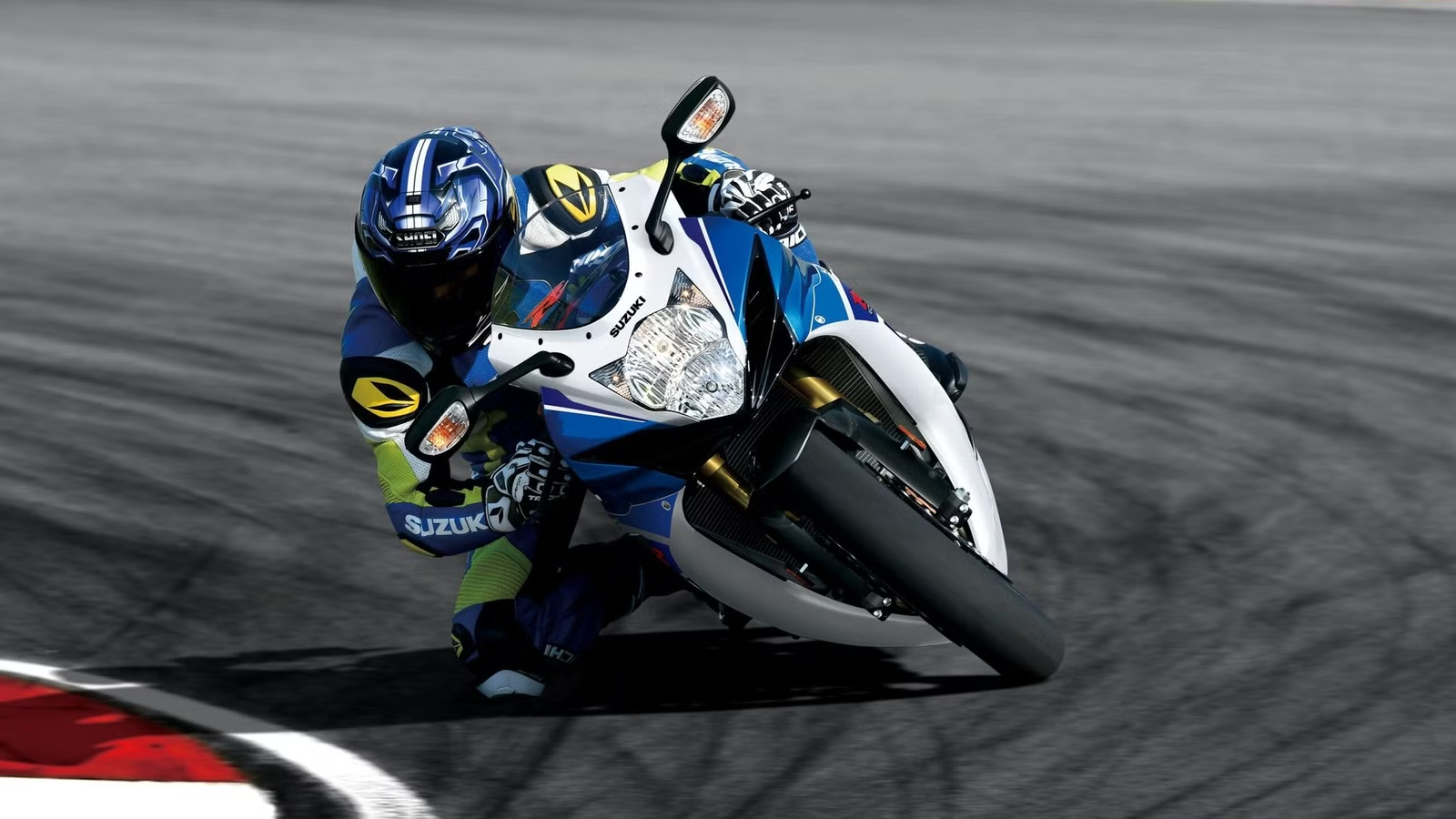
The sportbike space is shifting drastically, and not everyone is happy. On the bright side, this shift is making aggressive sportbikes much more tamable, helping new riders jump into this experience with more confidence. Even brands have realized this, which is why we now (for the first time) have a toned-down Ducati with the new Panigale V2.

But this comes at a cost: it diminishes the rider-motorcycle connection, which was one of the defining qualities that made riding sportbikes so thrilling and engaging in the first place. But even in this phase of electronics galore, Suzuki stands out by offering one of the last analog sportbikes with no filtration whatsoever. This Gixxer sportbike single-handedly reminds us of what truly matters.
Sportbikes Are At Their Prime Right Now, But There’s A Catch
There was a time when riders would think twice, thrice, and more to twist the throttle when riding out of a corner. But that’s not the case today, thanks to a comprehensive suite of advanced safety and assistive technology features. Features like cornering traction control, wheelie control, cornering ABS, and more help tame these unruly machines without active human intervention.


The result is mind-bending acceleration, razor-sharp handling, and quicker lap times with a lot more confidence. A six-axis IMU plays a vital role in integrating the various cutting-edge technology features and helping them work seamlessly on the road. Years of motorsport experience have also helped trickle down more tech at a lower cost, especially in the middleweight motorcycle segment. But these assistive features come with a huge downside.
Overwhelming Electronic Integration Makes For A Shallow Rider-Bike Connection

For new riders, all of these electronic aids are appealing. But for experienced riders, they are a hindrance because they limit a motorcyclist’s ability to develop. Furthermore, most of these assistive and safety features are baked in and cannot be turned completely off.
Even ride-by-wire technology, which helps with various ride modes, isn’t always flawless and can cause hiccups with twitchy throttle response. Even in their least intrusive setting, these features hinder the pure riding experience and disconnect the rider from the machine’s mechanical feel. This is the catch that disappoints many experienced riders: modern sportbikes lack a raw, analog feel.
Analog Sportbikes Are Special And A Luxury Today

Physical connection is the keyword here. On analog sportbikes, every movement and every input by the rider can be felt. Cable throttles link the rider’s wrist directly to the carburetors or throttle bodies. This translates into an instant, precise response the rider can feel and calibrate in real time, unlike ride-by-wire, which can feel like a remote control.
No computer nannies monitor the ride. The lack of traction control, wheelie control, and complex riding modes translates to a more rooted rider-motorcycle connection. In short, the rider controls the motorcycle and its explosive power. The absence of electronic damping, suspension aids, and other chassis-related assistance translates to pure feedback, with the rider feeling every vibration from the engine and even the texture of the asphalt through the frame.

Modern, technology-laden sportbikes cannot offer these experiences, and that is what makes the small group of remaining analog sportbikes a luxury. But with the wider sportbike market moving away from analog machines, is there even a viable option left for riders who want this experience — and can it compete on price?
The 2026 Suzuki GSX-R750 Is Still Very Desirable
At $13,249, It Undercuts Most Middleweight Rivals By Thousands

By 2026 standards, the Suzuki GSX-R750 is an outdated sportbike because it lacks even the basic electronic suite now considered mandatory on modern sportbikes. But that is also what elevates its analog riding experience, making it a gold mine for seasoned riders. Also, its aggressive pricing helps offer riders one of the best power-to-price ratios among middleweight sportbikes. The GSX-R750 is so affordable because of its age.
The current-gen model was given its last generational upgrade in 2011. That’s 15 years ago. While that makes it a relic today, Suzuki leaned into the time-tested formula and refined this Gixxer over the last decade to eliminate even the slightest imperfections. The result is a hardcore, track-going sportbike with unreal reliability, efficiency, and low running costs.
A Surprisingly Wallet-Friendly Sportbike

The GSX-R750 is one of the most reliable sportbikes on the market. Many long-time owners back this claim, saying their bikes need only routine maintenance and can easily rack up 30,000 to 50,000 miles. These are impressive figures for a high-strung sportbike. Furthermore, because the core platform has remained unchanged for so long, it relies on proven mechanicals and incorporates very little electronics; fewer things can go wrong.
Given the age of this sportbike, Suzuki has made spare parts and servicing affordable. Owners on online forums suggest an annual maintenance cost of around $300-$400 for standard service. Major services, like chain sprocket replacement or a valve clearance check, will bump the numbers to around $350-$600. Plus, impressive fuel economy ratings of around 40 miles per gallon should help keep fuel costs in check.
Powered By One Of The Last Remaining Middleweight Four-Cylinders

A seasoned 750 cc inline-four engine powers this mighty Suzuki. This four-stroke, DOHC, liquid-cooled mill is the last of its kind and a fierce one too. It has a 12.5:1 compression ratio and produces 148 horsepower at 13,200 RPM and 63.7 pound-feet of torque at 11,200 RPM.
Stringent emissions regulations are making things difficult for this Gixxer, as its peak power has dropped from over 150 horsepower in 2024 to the current figures. But Suzuki keeps the power loss minimal while still delivering the aggression of a high-revving mill. Power is sent to the rear wheel via a six-speed manual gearbox with a slipper clutch and a final chain drive.
Complemented With Traditional Yet Versatile Underpinnings

The GSX-R750 sits on a lightweight, nimble chassis based on the smaller GSX-R600. The twin-spar aluminum frame balances weight and rigidity for a sharp riding experience. The chassis rides on fully adjustable Showa suspension. The front gets 41 mm Big Piston forks with 4.7 inches of travel. The rear gets a monoshock with a remote reservoir and 5.1 inches of travel.
Braking duties are taken care of by dual 310 mm fully floating discs with Brembo monoblock radial-mounted four-piston fixed calipers. The rear gets a 220 mm disc coupled to a Nissin single-piston floating caliper. Grip is provided by 120/70 front and 180/55 rear tubeless tires wrapped around 17-inch lightweight alloy wheels.
A Compact Form Factor Further Helps With Nimble Riding Dynamics

The GSX-R750 is compact with a wheelbase of 54.7 inches and a length of 79.9 inches. Its 3.8-inch trail and 23.8-degree rake angle keep the dimensions tight and the riding dynamics versatile. With a curb weight of 419 pounds, a seat height of 31.9 inches, and an adaptive rider triangle focused on an aggressive stance, rider engagement is maximized by its analog appeal.
Barebones Electronics Add To Its Raw Riding Appeal

Its electronics are bare-bones by 2026 standards. The only noteworthy electronic features on the GSX-R750 are two power modes and an electronic steering damper. You can select the power modes via the Suzuki Drive Mode Selector, which toggles between unleashing 100 or 70 percent of the total power.
This Suzuki Gixxer Proves An Analog Riding Experience Transcends Spec-Sheets

The Suzuki GSX-R750 doesn’t have the most futuristic sportbike design on the market today. The feature list is as bare-bones as it gets. But despite its shortcomings, this analog sportbike still commands strong demand. This proves that a connected, raw rider-motorcycle experience still ranks high on many avid motorcyclists’ priority lists. No number of sensors, TFT screens, or adaptive suspension systems and ride modes can beat the raw appeal of a rider, a motorcycle, and nothing in between.
Sources: Suzuki Cycles and Suzuki Archives

Related posts



Latest Post


No Comments