
Lexus Just Revealed An All-New ES With EV Powertrains And A Radical Design, And It Changes The Luxury Sedan Math
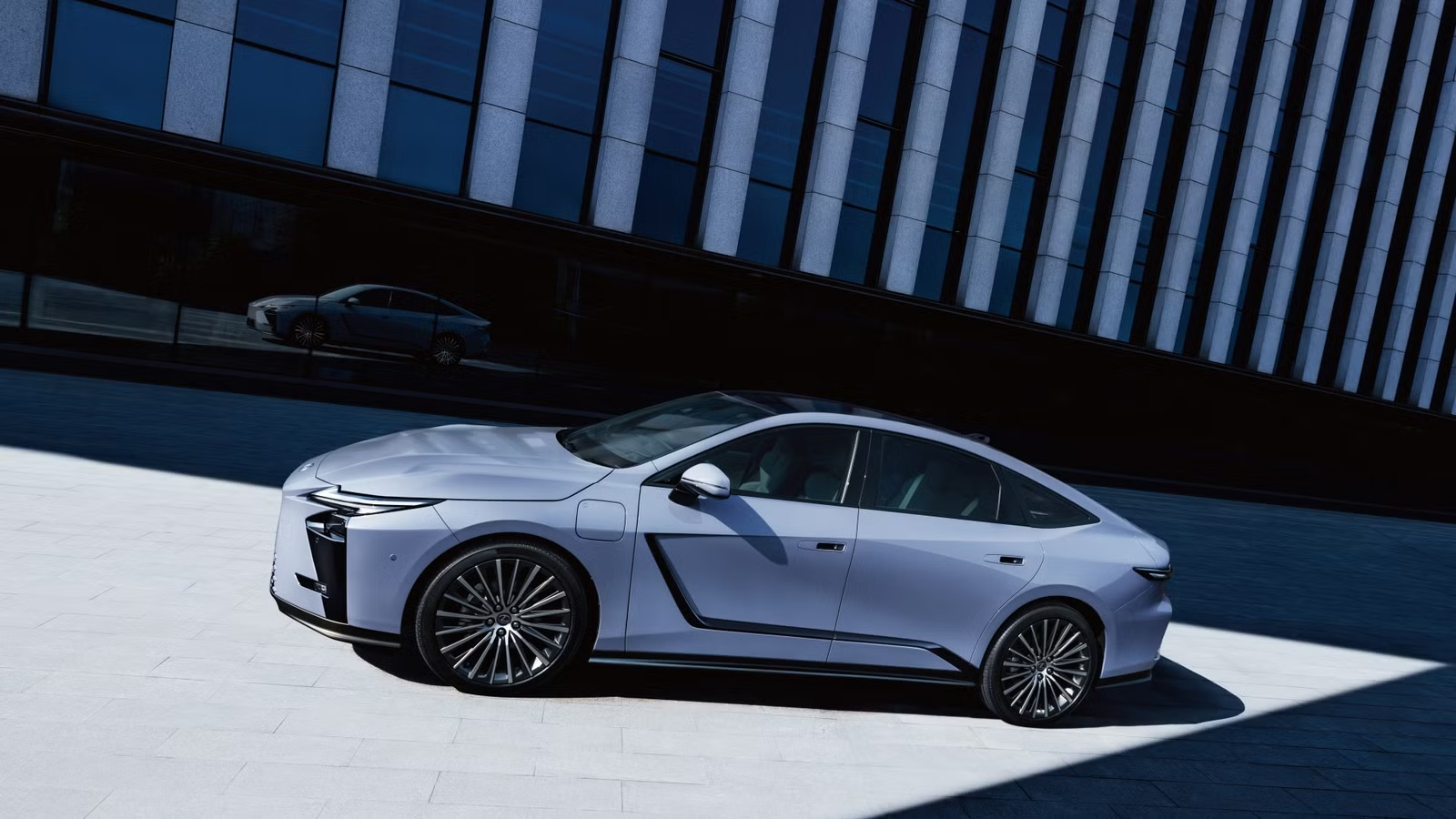
The eighth-generation Lexus ES arrived this week with the kind of redesign that makes you reconsider what the nameplate stands for. Gone is the conservative silhouette that defined seven previous generations. In its place is a fastback sedan that is longer, wider, and taller than its predecessor, with sharper lines and an aerodynamic profile drawn from the LF-ZC concept. More significantly, the new ES is now offered exclusively as a hybrid or an electric vehicle — no gasoline-only option survives.

The lineup breaks into four variants: the ES 350h hybrid at 244 hp, the single-motor ES 350e EV at 221 hp with up to 307 miles of range, and the dual-motor ES 500e AWD at 338 hp with up to 276 miles. That last figure — 307 miles from the base EV — lands in a segment where the BMW 3 Series, the ES’s most obvious rival, still has no full EV option at all. The math has shifted.
A Design Departure That Signals Something Bigger

Lexus has always played the long game on design — cautious, refined, occasionally polarizing. The eighth-generation ES breaks that pattern. The fastback silhouette is a clean departure from the classical three-box shape, with smoother surfaces replacing the complex body lines of the outgoing car. The electric variants go further still, with a flush front fascia and a drag coefficient of 0.25 that reflects genuine aerodynamic intent rather than styling theater.
The size increase is meaningful inside the cabin. The electric ES models ride on a wheelbase that is 3.1 inches longer than the previous generation, and the car is 6.5 inches longer overall, 2.2 inches wider, and 4.5 inches taller. That translates directly into rear legroom and shoulder room that the outgoing model couldn’t match — and that the BMW 3 Series, with its more compact footprint, doesn’t offer either.
Four Powertrains, One Clear Direction
The powertrain lineup is straightforward once you decode the naming. The ES 350h is the hybrid, pairing a 2.5-liter four-cylinder with electric motors for 244 hp and up to 46 mpg combined in front-wheel-drive form. It’s the familiar Lexus formula, refined.
The two EV variants share a 74.7-kWh lithium-ion battery. The ES 350e uses a single 221-hp front motor and returns up to 307 miles of EPA-estimated range — the figure to lead with for range-conscious buyers. The ES 500e adds a 118-hp rear motor via Lexus’s DIRECT4 all-wheel-drive system for 338 hp total, hitting 60 mph in 5.1 seconds at the cost of some range (276 miles). Both EVs charge from 10 to 80 percent in about 28 minutes on a NACS port at up to 150 kW. Notably, the base ES 350e starts at $47,500 — actually undercutting the ES 350h hybrid, which opens at $51,095. That pricing inversion is unusual and deliberate.
What the BMW 3 Series Still Doesn’t Have
The competitive framing here is pointed. The BMW 3 Series remains a sharper driver’s car — its rear-wheel-drive chassis, precise steering, and optional Adaptive M Suspension give it a dynamic edge the comfort-tuned Lexus doesn’t chase. The M340i’s 3.0-liter inline-six produces 386 hp and reaches 60 mph in 4.1 seconds, well ahead of anything the ES offers on performance terms.
But the 3 Series tops out at mild-hybrid four- and six-cylinder engines. There is no full EV 3 Series — the Neue Klasse successor is coming, but it isn’t here yet. Meanwhile, the Lexus ES 350e starts at roughly $500 less than the entry-level BMW 330i’s $48,000 base price, offers substantially more passenger and cargo space, and arrives with a 307-mile electric range. For a buyer who isn’t cross-shopping on lap times, that’s a different kind of math.
Inside: Tech Catches Up, Luxury Goes Further
Interior tech has historically been a weak point for the ES. The new generation addresses that directly with a 14-inch Lexus Interface touchscreen and a 12.3-inch digital instrument cluster — the first Lexus to display a detailed map view in the gauge cluster. The software now includes route planning for EV models, charging schedules, preconditioning, and vehicle-to-load management. Wireless Apple CarPlay, Android Auto, and digital key support via Apple, Google, and Samsung Wallet are all standard.
The cabin materials lean into Japanese craftsmanship: bamboo-accented trim, semi-aniline leather on Luxury trims, and ambient lighting that highlights the interior detailing. The headline feature for rear-seat passengers is the optional Executive Package — available only on EV trims — which adds reclining, heated, ventilated, and massaging rear seats alongside a power ottoman on the passenger side. It’s the kind of rear-seat specification that usually lives in a segment above this one.
Lexus has spent decades winning on reliability and understated refinement. The eighth-generation ES keeps those qualities intact while adding something the brand hasn’t always prioritized: a willingness to take a clear position. Offering a full EV sedan at a lower price than its own hybrid, with more space than the German benchmark and 307 miles of range, is a statement. Whether buyers follow is a separate question — Lexus expects the hybrid to account for roughly 80 percent of sales — but the terms of the comparison have changed.

Related posts


Latest Post


No Comments