
The Kawasaki That Feels Tailor-Made For Everyday Riding
There’s a quiet confidence that comes with riding a motorcycle that simply works — one that doesn’t need a perfect road, a cleared schedule, or a specific mood to justify taking it out. In a market crowded with machines chasing extremes, that kind of effortless usability is rarer than it sounds. Manufacturers pour resources into horsepower wars, electronic rider-aid suites, and aggressive styling, yet the bikes that earn genuine long-term loyalty are often the ones that fit into real life without friction. They start on cold mornings, thread through traffic without drama, and still put a grin on your face when the road opens up on a Saturday afternoon.

Some motorcycles are built to impress at a glance. Others are built to be ridden every single day — and those are the ones worth paying attention to. Finding a machine that does almost everything well, without demanding compromises at every turn, is where the real engineering challenge lies. The Kawasaki Z500 makes a compelling case for being exactly that kind of motorcycle.
Everyday Usability Is An Underrated Concept
Motorcycles are often marketed around extremes. More horsepower, sharper handling, taller suspension, or increasingly sophisticated electronics packages dominate spec sheets and advertising campaigns. Yet most riders spend their time navigating traffic, commuting to work, running errands, and enjoying occasional weekend rides. For them, everyday usability matters far more than outright performance.

A motorcycle that starts easily, maneuvers effortlessly in traffic, inspires confidence at low speeds, and remains comfortable after an hour in the saddle will often prove more satisfying than one engineered primarily to impress during brief moments of maximum attack. The challenge is finding a machine that delivers practicality without becoming dull.
What Most Riders Actually Need From A Motorcycle

Most riders don’t need superbike acceleration or touring-bike bulk. What they need is predictable power delivery, manageable weight, comfortable ergonomics, and ownership costs that don’t become a burden. A motorcycle should encourage its owner to ride more often, not make every outing feel like an event that requires planning and preparation.
The best everyday motorcycles also leave room for growth. They should be welcoming enough for newer riders while offering enough performance and capability to remain enjoyable long after experience levels increase. That’s a surprisingly narrow target, yet it’s where some of the most successful motorcycles in the industry tend to live.
The Middle Ground Between Beginner-Friendly And Long-Term Usability

Striking that balance isn’t easy. Many beginner-focused motorcycles prioritize simplicity to such a degree that experienced riders quickly outgrow them. On the opposite end of the spectrum, some middleweight machines offer impressive specifications but introduce higher costs, greater weight, and a more intimidating riding experience. The sweet spot lies somewhere in between. A truly versatile motorcycle should deliver enough acceleration to handle highway riding comfortably, enough agility to thrive in city traffic, and enough comfort to support longer weekend rides.
It should also remain reasonably affordable both at purchase and throughout ownership. That’s the kind of motorcycle that becomes a daily companion rather than a weekend toy. Manufacturers have spent years trying to perfect this formula because it appeals to an enormous range of riders. Whether someone is upgrading from a smaller-displacement machine, returning to riding after years away, or simply searching for a dependable all-around motorcycle, this category often makes the most sense. The best examples rarely dominate headlines, but they’re the bikes people actually ride.
The Kawasaki Z500 Can Tackle Your Daily Ride And More

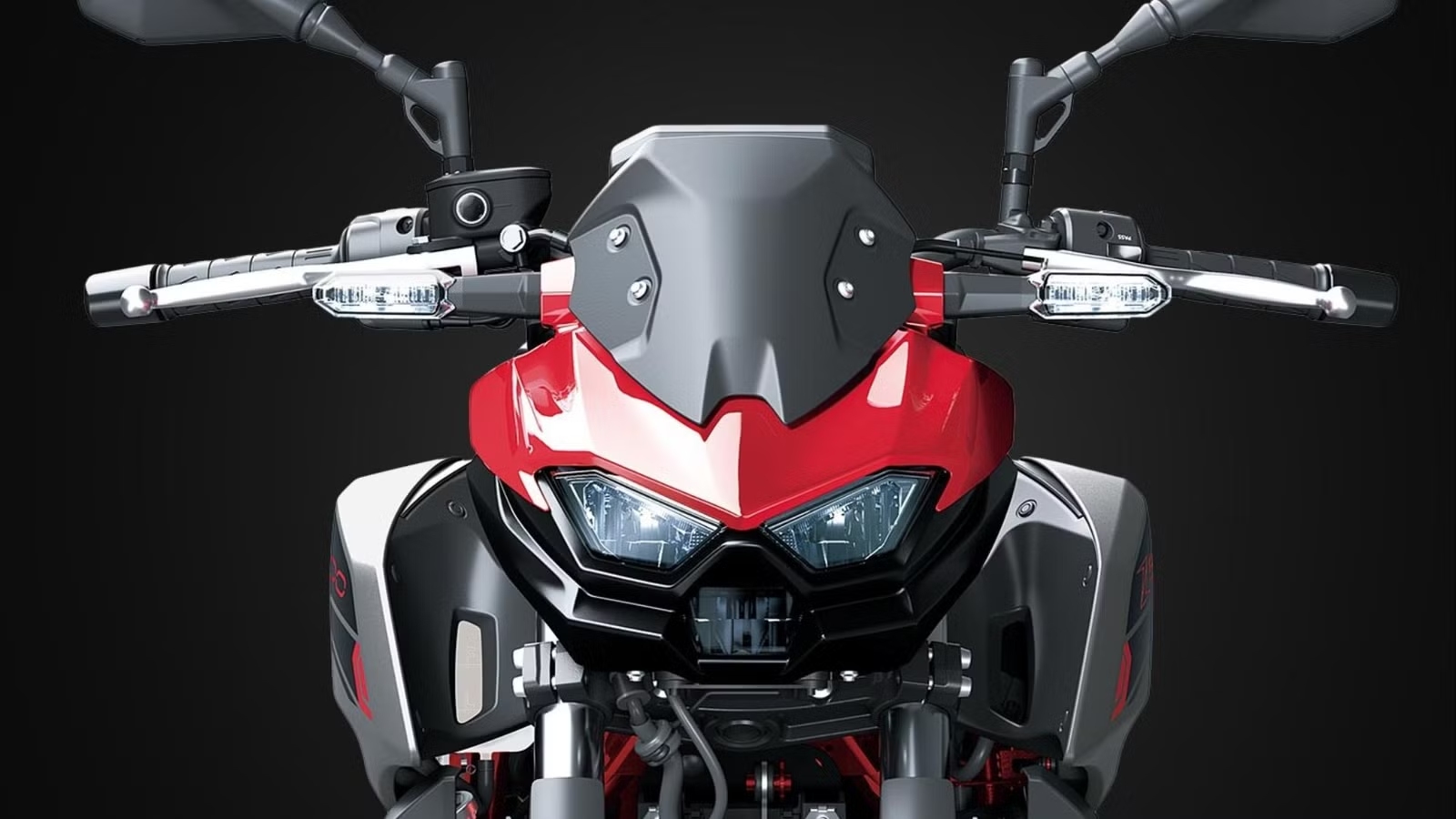
Kawasaki’s answer to that challenge is the Z500, a motorcycle that manages to strike an impressive balance between accessibility, capability, and affordability. With an MSRP of $5,699, it sits among the most budget-friendly options in the modern naked-bike segment, yet it doesn’t come across as a motorcycle built solely to hit a price target. Instead, Kawasaki has focused on delivering the things riders interact with every day — a responsive engine, comfortable ergonomics, modern technology, and approachable handling.
What makes the Z500 particularly appealing is that it doesn’t force riders into choosing between practicality and enjoyment. It’s accessible enough for newer riders to approach with confidence, yet capable enough to remain entertaining long after the learning phase is over. Rather than chasing headline-grabbing specifications, the Z500 concentrates on creating a well-rounded riding experience, and that’s precisely what makes it such a compelling everyday motorcycle.
Power comes from a 451cc liquid-cooled parallel-twin engine producing 31.7 pound-feet of torque and approximately 51 horsepower, paired with a six-speed transmission and assist-and-slipper clutch. The engine delivers smooth, predictable acceleration while still providing enough punch to keep experienced riders entertained. Rather than overwhelming the rider, the powertrain focuses on flexibility and real-world responsiveness.
|
Engine |
451cc liquid-cooled parallel-twin |
|
Output |
51 horsepower 31.7 pound-feet of torque |
|
Transmission |
6-speed with Assist & Slipper Clutch |
|
0 to 60 mph |
Approximately 4.5 seconds |
How The Z500 Delivers Confidence Without Sacrificing Fun

The Kawasaki Z500’s approachable character starts with its ergonomics. A low 30.9-inch seat height helps riders of various sizes feel comfortable at stops, while a naturally upright riding position reduces fatigue on longer rides. The lightweight chassis contributes significantly to that confidence, with the ABS-equipped model tipping the scales at just 368 pounds ready to ride. Kawasaki pairs that manageable weight with a steel trellis frame, a 41 mm telescopic fork, and a Uni-Trak rear suspension system offering preload adjustability. Braking is handled by a 310 mm front disc with a two-piston caliper and a 220 mm rear disc, while 17-inch wheels wear 110/70 front and 150/60 rear tires. The package is straightforward, but that’s part of its appeal — nothing feels excessive, yet everything feels purposeful.

|
Frame |
High-tensile steel trellis frame |
|
Suspension |
Front: 41 mm telescopic fork Rear: Uni-Trak monoshock with preload adjustability |
|
Wheels and Tires |
17-inch front and rear wheels | 110/70-17 front tire,150/60-17 rear tire |
|
Brakes |
Front: Single 310 mm petal disc, two-piston caliper Rear: Single 220 mm petal disc, two-piston caliper |
|
Wet Weight |
368 pounds |
Technology is similarly focused. Riders get a modern TFT instrument display with smartphone connectivity through Kawasaki’s Rideology app, along with practical features such as gear-position indication, fuel consumption information, and maintenance reminders. Rather than burying the motorcycle beneath layers of electronics, Kawasaki includes the features riders are most likely to use every day.
The Z500 Is An Honest, Everyday Motorcycle
What ultimately makes the Z500 stand out is how naturally all of its individual strengths come together. In urban environments, its light steering and compact dimensions make filtering through traffic less stressful. On back roads, the parallel-twin engine provides enough character and urgency to keep rides engaging without demanding constant attention. The bike’s efficiency and manageable size also make it well-suited for commuters — riders aren’t wrestling with excessive weight in parking lots or dealing with intimidating power delivery in poor weather conditions.
Instead, they’re getting a motorcycle that’s easy to ride on Monday morning and equally enjoyable on Saturday afternoon. That versatility extends beyond rider experience levels. A newer rider can appreciate the forgiving nature of the chassis and power delivery, while a seasoned rider can enjoy the simplicity and practicality that often get lost as motorcycles grow larger and more specialized. The Z500 doesn’t try to be everything. It simply focuses on doing the fundamentals exceptionally well.
Balance Often Beats Bigger Numbers

That’s ultimately where the Kawasaki Z500 succeeds. It doesn’t rely on outrageous horsepower figures, cutting-edge electronics, or attention-grabbing styling gimmicks to justify its existence. Instead, it delivers a thoughtful combination of comfort, performance, affordability, and usability that works remarkably well in the real world.
For riders searching for a motorcycle capable of handling daily commutes, weekend escapes, and everything in between, the Z500 represents something increasingly valuable: balance. And while balance may never generate the biggest headlines, it’s often the reason a motorcycle remains enjoyable long after the excitement of a new purchase has faded.
The Most Balanced Sub-500cc Streetfighter

Compared to its rivals, the Kawasaki Z500 stands out as the most balanced option available today. For $5,699, you’re getting a versatile naked bike with a 51-horsepower parallel-twin that combines dependable performance, lightweight handling, and comfortable ergonomics. Spend $6,399 to unlock the SE ABS model, which adds a TFT display, LED turn signals, frame sliders, a USB-C outlet, and a few cosmetic upgrades. It’s a complete package with few rivals that come close.

Its closest rival is the Honda CB500 Hornet, starting at $5,899, and even this bike is geared toward daily commuting and spirited riding. Where the Hornet differs is in its 471cc parallel-twin’s character — it focuses more on low-end torque with accessible pull in the lower rev range. This, combined with lower peak power figures, means the CB500 Hornet feels more relaxed compared to the rev-happy Z500. The Hornet’s handling is praised for being plush and planted, but the Z500 takes the edge here for being the sportier and nimbler of the two.

The next close rival is the KTM 390 Duke, featuring a 45-horsepower 399cc single-cylinder engine hung in a sharp trellis frame. Being a KTM, the Duke offers explosive performance and razor-sharp handling — it’s a genuinely playful motorcycle that excels on tight, twisty canyon roads. It also offers class-leading features, but the Duke falls short in its compact seating position and firm setup. Compared to the Duke, the Z500 is more comfortable and easier to live with day-to-day.

The Z500’s latest rival is the Aprilia Tuono 457, starting at $6,599. This is the newest entry in the segment and easily the most intriguing. It features a lively 270-degree parallel-twin with an excellent exhaust note, along with the sharp handling Aprilia is known for. This bike, however, is very new, and its long-term reliability is yet to be proven. Similarly, the CFMoto 450NK is a capable option, but CFMoto’s limited service network keeps it from being a practical choice for many buyers.
Source: Kawasaki

Related posts


Latest Post


No Comments