
The Adventure Bike That Quietly Masters Long-Distance Travel
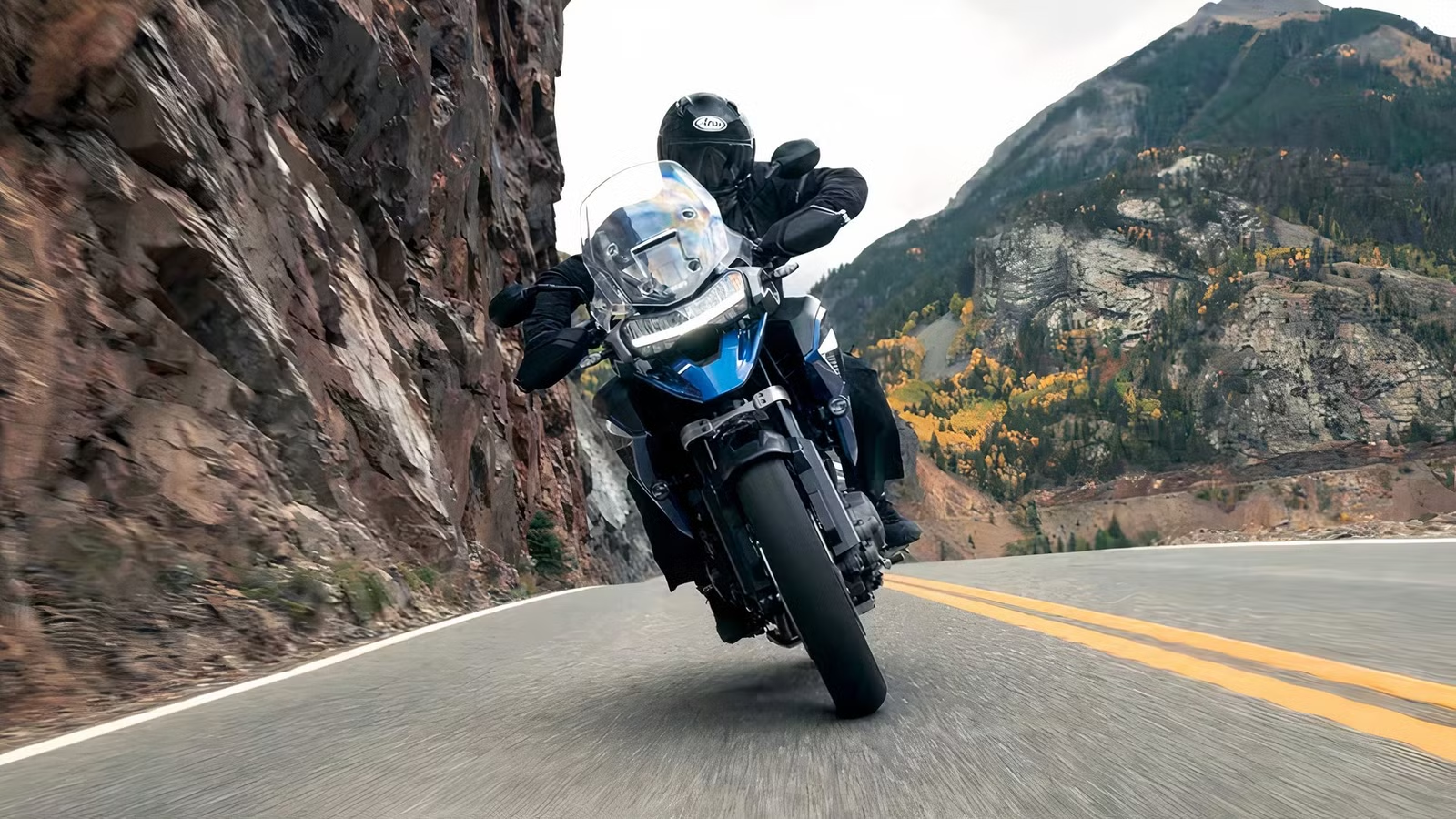
A 500-mile motorcycle day can sound romantic until you are several hours into one. On lonely stretches of Nevada’s Highway 50, the Alaska Highway, or a remote dirt section of the Continental Divide, little annoyances stop being little. Engine buzz, a seat that leaves your hips sore, heat creeping through your riding gear, wind battering your helmet, and a tall, heavy bike that feels awkward every time you stop — all of it adds up. Long-distance touring is less about peak performance than it is about reducing those sources of fatigue.
Why Bigger Isn’t Always Better For Long-Distance Comfort

Most riders assume the biggest, most expensive adventure bike on the showroom floor will also be the most comfortable one on a 500-mile day. It rarely works that way. High-frequency engine vibration doesn’t announce itself in the first hour — it accumulates, turning your hands numb somewhere around lunch and keeping them that way through dinner. Stiff gear shifts and a heavy clutch pull do the same thing to your left hand and forearm, one repetitive motion at a time, until a simple downshift into a gas station feels like a chore. Add a big-bore engine radiating heat onto your inner thighs in peak summer, and fatigue stops being a mood. It becomes physical.
Then there’s the seat height problem nobody talks about until they’re straddling one. Flagship adventure bikes, loaded with luggage and a full tank, routinely push seat heights past 34 inches. That’s fine at highway speed. It’s a different story at a red light, or crawling through a tollbooth line, where a rider on tiptoes is one bad angle away from dropping a $25,000 motorcycle. The bikes built to go the farthest are, ironically, often the hardest to live with in the ten seconds it takes to actually stop.
The Triumph Tiger 1200 GT Pro Quietly Masters Long-Distance Travel
$22,095 Buys Hardware Borrowed From Triumph’s Range-Topping Explorer


There’s a Triumph in the Tiger 1200 lineup that doesn’t try to out-tank anyone. The Tiger 1200 GT Pro starts at $22,095, and it makes its case for long-distance riding through refinement rather than brute-force specification.
Under the tank sits a 1,160cc T-plane triple, paired with Showa semi-active suspension and Brembo Stylema brakes — hardware borrowed straight from Triumph’s range-topping Explorer models. The tank itself holds 5.28 gallons, smaller than the Explorer’s, and the bike weighs 540 pounds wet. On paper, none of those numbers scream “class leader.” On the road, over ten hours and 500 miles, they add up to something quieter and more useful. But the spec sheet doesn’t explain why — that answer starts with an engine design borrowed from racing.
A Twin’s Character With A Triple’s Top End
The Asymmetric Firing Order Advantage

The GT Pro’s engine is the reason this bike rides like something bigger than its spec sheet suggests. It’s a 1,160cc liquid-cooled inline-three, but Triumph didn’t give it a conventional-even firing crank. Instead, it uses the brand’s T-Plane crankshaft, firing in a 1-3-2 order with uneven intervals between combustion events.
As a result, the motor mimics a V-twin’s low-rpm pulse — that tractor-like, hard-to-stall tractability that makes tight mountain switchbacks forgiving — while still opening up into a proper inline-triple rush once the revs climb. The engine provides tractable power at low rpm in second gear, transitioning to higher output at increased rpm on open straights.
147 Horsepower Meets Shaft-Drive Maintenance Freedom

Numbers-wise, the GT Pro makes 147 horsepower at 9,000 rpm and 95 pound-feet of torque at 7,000 rpm. That power reaches the rear wheel through a Tri-Link shaft final drive, which means no chain to lube, adjust, or replace on a trip that might run three weeks and three states.
Throttle response through the shaft drive is immediate, which matters more than it sounds when you’re merging onto the freeway with a loaded pannier rack. Triumph also fits its Shift Assist quickshifter as standard, letting you bang up and down through the gearbox without touching the clutch lever — a small thing that saves your left hand hundreds of unnecessary squeezes over a long day.
Chassis Refinement Over Raw Bulk
Intelligent Damping Across Changing Road Surfaces

A 540-pound motorcycle cannot hide its physical size forever. What it can do is make that weight easier to manage. The GT Pro uses 49mm Showa semi-active upside-down forks with 7.87 inches of travel, paired with a Showa semi-active rear shock offering the same 7.87 inches of wheel travel. The rear system also has automatic electronic preload adjustment. This is particularly valuable on long-distance routes because roads rarely remain consistent for an entire day. The suspension can adjust damping according to the selected riding setup and the conditions, while the preload system accounts for changes in load.
That’s exactly what a touring motorcycle needs. A suspension system that is too soft can become fatiguing because the bike moves around too much. One that is too firm simply transfers every imperfection to the rider. The Tiger’s semi-active hardware gives it a much broader comfort window. The road-biased 19/18-inch wheel combination helps, too. Rather than chasing maximum off-road ability, Triumph has optimized the GT Pro for pavement without turning it into a conventional sport-tourer.
The Suspension That Automatically Lowers The Bike The Moment You Stop

Triumph’s Active Preload Reduction feature quietly drops the rear suspension by 20mm the moment the bike comes to a stop, then returns it to full height once you’re rolling again — meaning that 540-pound machine gets noticeably shorter and more manageable exactly when you need your feet flat on the ground, without sacrificing an inch of cornering clearance once you’re back under way.
Seat height itself adjusts between roughly 33.5 and 34.5 inches, with an accessory low seat dropping things another 0.8 inches for shorter riders. Add a flatter seat pan that lets you shift your weight around for longer stretches, and the GT Pro solves the seat-height intimidation problem without pretending the bike is smaller than it is.
Rider-Assist Tech That Works Quietly In The Background
A Seven-Inch TFT That Replaces Your Phone Mount, GPS Unit, And GoPro App

The Tiger 1200 GT Pro is not short on technology, but much of it is the sort that disappears into the background once configured. The centerpiece is a seven-inch optically bonded TFT display, designed for clear visibility and incorporating Triumph’s My Triumph Connectivity System. This system runs turn-by-turn navigation, phone and media control, and GoPro integration through that same screen, cutting down on the phone-mount-and-squint routine that plagues cheaper touring setups.
Standard equipment covers what actually matters on a multi-day trip: heated grips for cold mountain mornings, keyless ignition and fuel filler so you’re not fishing for a key with gloves on, a center stand for easy maintenance stops, and an under-seat USB port to keep a phone charged through a full day of navigation.
Five Ride Modes, Hill Hold, And A One-Hand Windscreen That Solve Real Touring Problems

Five ride modes — Road, Rain, Sport, Off-Road, and a Rider-Configurable setting — each retune throttle response, ABS sensitivity, traction control, and suspension damping to match conditions, so switching from a dry interstate to a wet mountain pass is just a couple of button presses.
Hill Hold Control keeps the GT Pro from rolling backward on a steep standing start, which is especially helpful the first time you’re stopped on a grade with a full load. And the windscreen — tool-free, adjustable with one hand while stationary — works with a set of aero deflectors to cut down on helmet buffeting at the 75-plus-mph cruising speeds that define most of an American interstate day. The best part is that none of it demands attention.
Source: Triumph

Related posts

Latest Post


No Comments