A Used Audi A7 Now Stickers For Less Than A New Toyota Crown
8 minutes reading
Friday, 28 Aug 2026 21:00 0 5 autotech
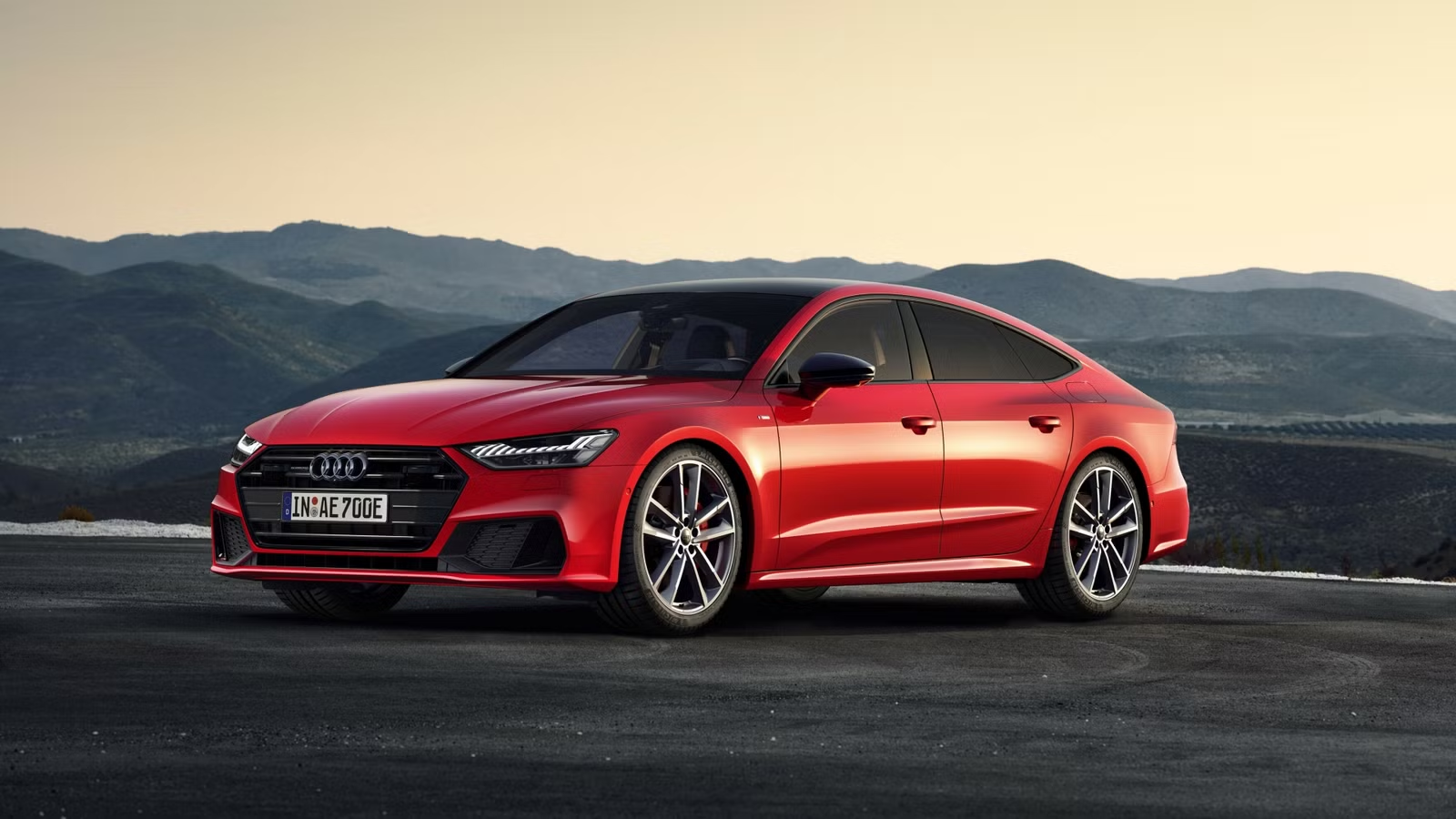
A used Audi A7 has drifted into the same price bracket as a brand-new Toyota Crown, and that sentence alone should stop most sedan shoppers mid-scroll. One of these cars started life wearing a near-six-figure sticker with options; the other rolls off the lot today for less than $50,000. Yet current market data puts a well-specced Audi and a new Crown Limited within a few thousand dollars of each other. The real question isn’t which car is “better”; it’s which kind of ownership you’re actually signing up for.
Five years ago, cross-shopping a used Audi A7 against a new Toyota sedan would have sounded absurd. The A7 launched as a design-forward luxury liftback with an as-tested price comfortably north of $80,000 in higher trims. Today, that same car, with all its air suspension, Bang & Olufsen audio, and quattro all-wheel drive, sits in the same shopping cart as a mainstream Japanese sedan wearing a Toyota badge.
That’s not a knock on either car. It’s simply what happens when a luxury flagship’s depreciation curve intersects with a mainstream brand’s steady price creep. The Crown itself is part of that creep: it replaced the Avalon as Toyota’s most expensive sedan and now edges into territory once occupied by entry-level luxury models. Meanwhile, the A7 has shed roughly half its original value in under five years. Those two trend lines were always going to cross somewhere, and they’ve crossed right in the $35,000–$50,000 band where a lot of everyday car shoppers actually live.
Depreciation Turns A Six-Figure Luxury Experience Into A $35,000 Used-Car Proposition
The numbers are specific enough to be useful. A 2021 Audi A7 55 TFSI — the volume model in the lineup, not the S7 or RS7 — currently trades in a market average band of roughly $32,000 to $37,000, depending on trim, mileage, and condition. Step down to a 2019 or 2020 example and the entry price drops further, though with more mileage and less certainty around service history. Higher-trim 2021 Prestige models with lower mileage can push toward the upper end of that range, while higher-mileage Premium trims dip below it.
2025 Audi A7 front seatsAudi
For the price of a mid-spec new Toyota Crown, you can park a car that once had an MSRP north of $70,000, complete with a supercharged-feeling turbocharged V6, quattro all-wheel drive, a frameless-window coupe silhouette, and an interior that still looks and feels genuinely special. That’s the headline. It’s also the trap. A car that lost half its value in five years didn’t lose that value randomly: depreciation on German luxury cars reflects real buyer hesitancy about what comes next, not just market oversupply. The used A7 is cheap because the market has priced in some risk. The question is whether that risk is overstated or accurate.
The 55 TFSI Delivers Performance, But Its Maintenance Demands Still Matter
Audi
The 3.0-liter turbocharged V6 in the 55 TFSI is a genuinely strong engine, quick, refined, and far more effortless than anything in the Crown’s hybrid lineup. But it’s also a modern turbocharged direct-injection engine, and that combination has a known maintenance rhythm that shouldn’t be waved away.
Carbon buildup on the intake valves is the most commonly cited issue with this engine family, a byproduct of direct injection not washing the valves the way port injection does. A carbon cleaning service, typically walnut-blasting the intake tract, tends to become relevant somewhere in the 40,000 to 60,000-mile range, and independent specialists generally quote that job in the $600 to $1,200 range depending on scope. It’s not catastrophic, but it’s real, and it’s not optional if you want the engine to keep breathing properly.
Interior dashboard view in the 2023 Audi A7Audi
Timing chain and tensioner wear is the other item worth flagging, particularly on earlier examples of Audi’s EA839-family V6. It’s less universal than the carbon issue, but when it does surface, it’s an expensive repair, parts and labor can run well into four figures, and it’s exactly the kind of failure that turns a “cheap” used luxury car into a financial regret.
The fix for a buyer isn’t to panic; it’s to insist on documented service history, a pre-purchase inspection from an independent Audi specialist, and realistic budgeting for a $150–$300 annual maintenance reserve beyond routine oil changes. Figure on $1,200 to $1,800 a year in typical upkeep for a well-maintained example, with the possibility of a larger one-time bill if carbon cleaning or chain work comes due during your ownership window. All of that is manageable — if you have the appetite for it. The question is what you give up by choosing the car that asks for nothing.
A New Toyota Crown Trades Audi Drama For Predictable Ownership Costs
2027 Toyota Crown side shotToyota
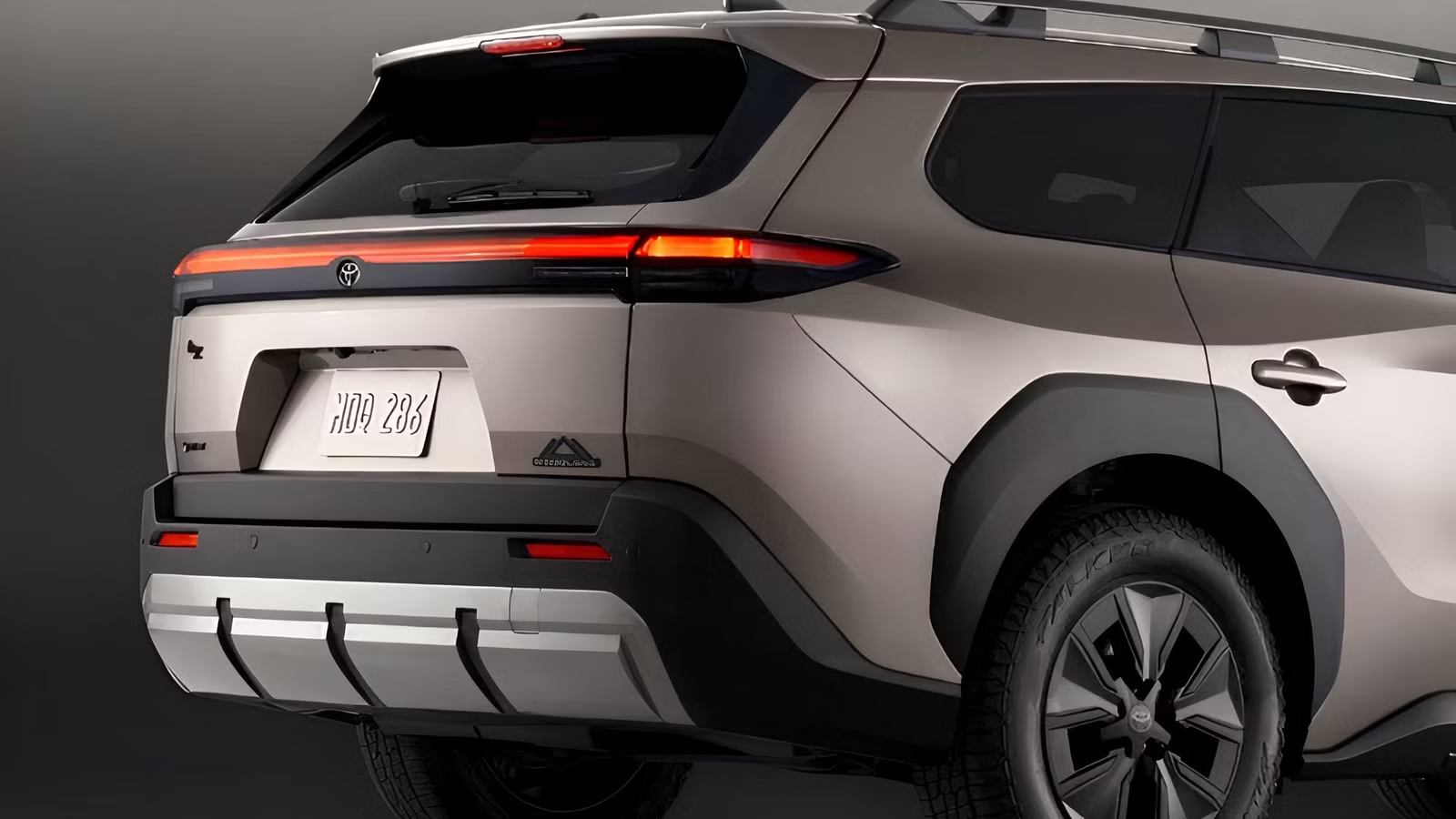
The Crown’s pitch is the mirror image of the A7’s: less drama, more certainty. The 2026 Crown Limited starts at roughly $45,950, putting it just above the higher end of the used A7 market and positioning it as the direct price-band rival in this comparison. Step up to the Crown Platinum, and pricing climbs to around $54,990, a meaningful jump that buys Toyota’s more powerful turbo-hybrid powertrain, adaptive suspension, and a genuinely quicker car than the standard hybrid Crown trims.
What both Crown trims share is the things the A7 can’t offer from a dealer lot: a factory warranty, zero prior owners to guess about, and Toyota’s well-documented hybrid reliability record. Toyota’s hybrid systems have a long track record of low failure rates, and routine maintenance on a Crown — oil changes, tire rotations, the occasional battery health check — typically runs a few hundred dollars a year, a fraction of what an aging German V6 can demand in a bad year.
2026 Toyota Crown engineToyota
Fuel economy also favors the Crown decisively: where the A7 55 TFSI returns roughly 21-24 mpg combined in real-world driving, the standard Crown hybrid powertrain is rated in the low-40s combined, with even the more powerful Platinum trim staying in the low-30s. Over a five-year ownership window, that gap alone can total several thousand dollars in fuel costs.
The trade-off is obvious. You’re paying full retail for the privilege of predictability, and you’re doing it in a car that, however handsome and well-equipped, doesn’t carry the same design pedigree or driving character as the A7. The Crown is engineered to disappear into your life without incident. For a lot of buyers, that’s precisely the point.
The Smartest Buy Depends On Whether You Value Luxury Now Or Lower Risk Later
Neither car is the objectively “smarter” choice; they’re answers to different questions. If what you want is the tactile experience of a genuine luxury flagship, quattro grip, and design presence that a new $46,000 mainstream sedan simply can’t replicate, the A7 delivers that today for meaningfully less money. But that lower price tag isn’t free money; it’s compensation for risk you need to actively manage.
For A7 shoppers specifically, the checklist is straightforward. Insist on full service records, particularly around timing chain inspections and any prior carbon cleaning. Budget for a pre-purchase inspection from an independent Audi or VAG specialist, not the selling dealer, before you commit. Look seriously at Audi Certified Pre-Owned examples where available; CPO coverage typically extends bumper-to-bumper protection and adds a limited powertrain warranty on top of the remaining factory coverage, which meaningfully offsets the two biggest risk items on this engine. Walk away from any example with a gap in maintenance history around the 40,000 to 60,000-mile mark, since that’s exactly when deferred carbon or timing issues tend to surface.
2025 Audi A7 Sportback InteriorAudi
If, instead, you’d rather trade some of that character for a warranty, a hybrid drivetrain with a strong reliability record, and monthly costs you can actually forecast, the Crown, in either Limited or Platinum guise, is built for exactly that peace of mind, at a price that reflects it. The used A7 rewards buyers who do their homework and accept some risk for a lot more car. The new Crown rewards buyers who’d rather not think about their car at all. Both are legitimate ways to spend the same money. The honest answer is knowing which one actually describes you.












No Comments