
Mazda CX-90: The Turbo Inline-Six SUV Taking on BMW X5
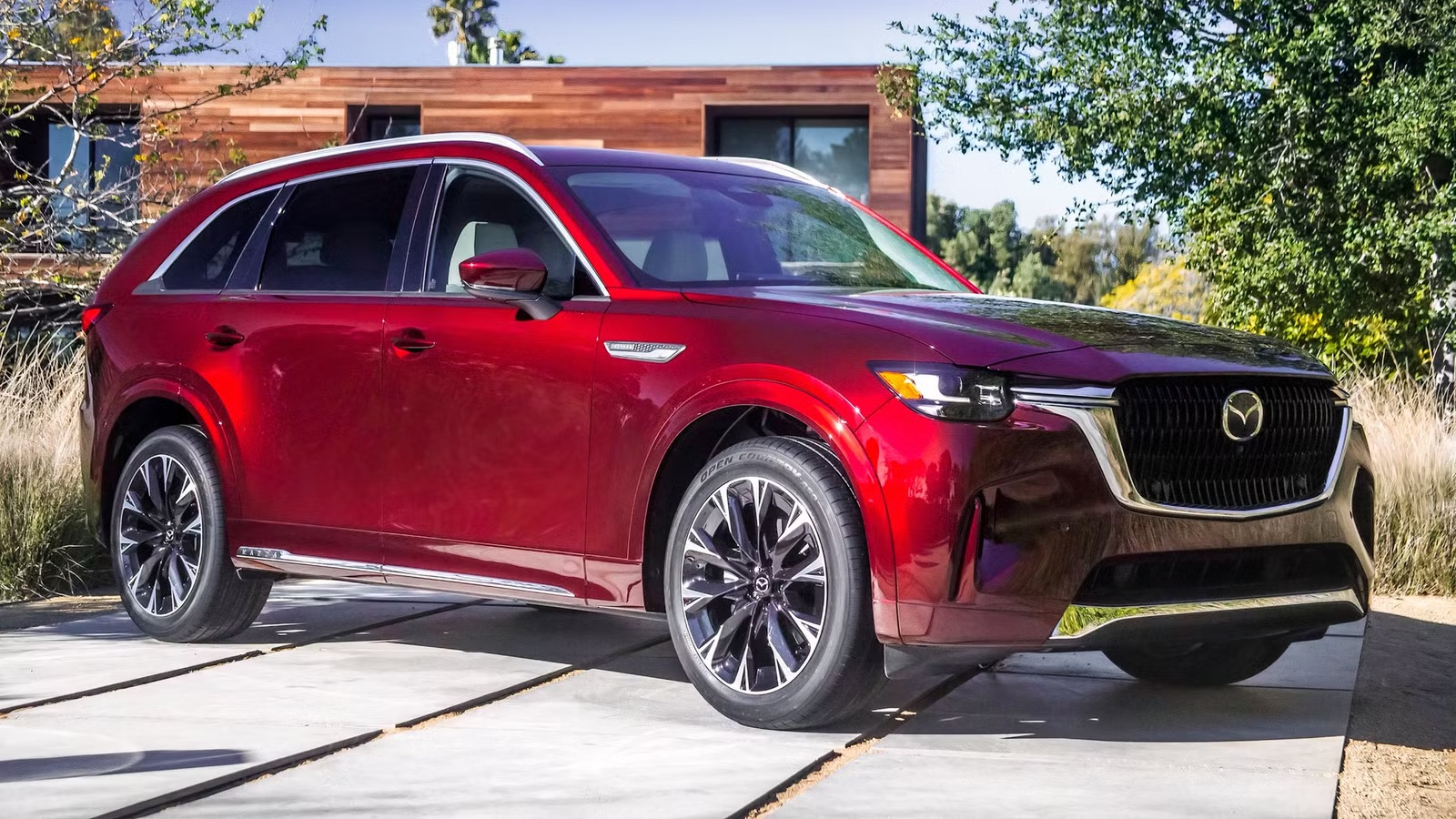
While Volvo, Genesis, and even BMW itself lean harder into electrification and downsized four-cylinders, Mazda went the other direction with its flagship SUV. The CX-90 pairs a turbocharged inline-six, an engine layout nearly extinct outside German luxury badges, with rear-biased all-wheel drive and three rows of seating starting around $40,000. It’s an unusual bet for Mazda, building a driver’s SUV in a segment that has largely stopped caring about driving. Whether that bet pays off depends on how the CX-90 actually performs against the X5, XC90, and Lincoln Aviator it’s chasing, and whether Mazda’s ownership experience can back up the engineering ambition.
Overview: Mazda’s Luxury Play in the Three-Row Segment

The Mazda CX-90 replaced the CX-9 in 2024 as Mazda’s largest and most expensive vehicle, and the jump in ambition is obvious the moment you look past the badge. This isn’t a stretched CX-5. It rides on a new longitudinal-engine, rear-wheel-drive-biased platform that Mazda developed specifically to support the inline-six and plug-in hybrid powertrains, a fundamentally different architecture from the transverse, front-wheel-drive-based layout most mainstream three-row SUVs use.
That platform decision matters more than it might seem. Longitudinal RWD architecture is what BMW, Genesis, and Land Rover use for weight distribution and handling reasons; it’s a luxury-segment engineering choice, not a mainstream one. Mazda’s “Craftsmanship” design philosophy—the same language the brand uses to describe the CX-5’s interior finishing—gets applied here with noticeably higher stakes: real aluminum trim, Nappa leather on upper trims, and a cabin that borrows more from Audi than from Mazda’s own CX-9.

Where it gets interesting from an engineering standpoint is the platform’s shared lineage. Mazda’s Large Platform architecture underpins the CX-90, CX-70, and the brand’s PHEV strategy going forward, and reporting on Mazda’s product roadmap has tied elements of this architecture to Jaguar Land Rover collaboration on future models. The upshot for buyers is that this isn’t a one-off experiment. Mazda built real infrastructure around the idea that it could compete a rung higher than it ever has before.

Engine and Powertrain: The Turbo I6 Story

Here’s the counterintuitive part. As competitors chase efficiency through hybridization and smaller displacement, Mazda’s base and mid-tier CX-90 engine is a 3.3-liter turbocharged inline-six making 280 horsepower on regular gas or 340 horsepower and 369 pound-feet of torque on premium fuel. That’s a lot of engine for a mainstream-badged SUV, and it’s a deliberate rejection of the four-cylinder-turbo-plus-hybrid formula nearly everyone else in this price bracket uses.
The reasoning comes down to character, not just numbers. Inline-six engines deliver inherently smoother power delivery than turbo-fours or V6s because of their natural primary and secondary balance; there’s a reason BMW has centered its identity on the layout for decades. Mazda is chasing that same refinement: linear torque delivery, minimal turbo lag thanks to a sequential twin-scroll turbocharger, and an exhaust note that’s noticeably more cultured than the four-cylinder-plus-CVT drone found in most three-row family haulers.

In practice, that translates to genuinely quick real-world acceleration: the 340-horsepower version gets to 60 mph in the mid-5-second range, quicker than a comparable inline-six BMW X5 xDrive40i in a straight line, though the Mazda’s eight-speed conventional automatic doesn’t hunt for gears with quite the same polish as ZF’s transmission in the BMW.

The PHEV variant tells a different story entirely. It pairs a smaller turbocharged four-cylinder with an electric motor for a combined 323 horsepower, and it’s the only CX-90 that qualifies for federal tax incentives in some configurations. EPA-estimated electric-only range sits around 26 miles, enough for most commuters to do daily errands without touching the gas engine, and the PHEV’s total system torque actually exceeds the base turbo-six’s output. The trade-off is character. The PHEV is quieter and more efficient around town, but it lacks the inline-six’s mechanical drama and Mazda dealers report it commands less market attention than the turbo-six variants despite the tax benefit. Real-world fuel economy on the turbo-six lands in the low-to-mid 20s combined, competitive with but not dramatically better than the BMW X5’s turbo-six, meaning efficiency isn’t really the CX-90’s selling point; engagement is.
Driving Dynamics and Chassis: Performance in Three Rows

Rear-wheel-drive bias changes how a three-row SUV behaves, and it’s the CX-90’s clearest point of differentiation from Japanese and Korean rivals. Most mainstream three-row SUVs—the Kia Telluride, Honda Pilot, Toyota Highlander—are transverse-engine, front-drive-based platforms with all-wheel drive bolted on as a secondary system. The CX-90 sends power rearward by default, with the front axle engaging as needed. That single architectural choice is why the CX-90 turns in with more precision and resists understeer better than its segment peers, even loaded with passengers.
Mazda tuned the suspension—double-wishbone front, multi-link rear—for body control over outright plushness, and the steering carries real weight and feedback, a rarity in this class. The trade-off is ride quality. On rough pavement, especially on the larger 21-inch wheel options, the CX-90 transmits more road texture into the cabin than the air-suspension-equipped X5 or the notably softer Aviator. It’s a firmer, more athletic ride than most three-row buyers are used to, and that’s by design, not oversight.

Towing capacity reaches 5,000 pounds on the turbo-six models (3,500 pounds on the PHEV), competitive with the segment, and payload capacity is respectable for the class. With seven passengers aboard, the chassis doesn’t feel overwhelmed the way some front-drive-based three-rows do under full load; body roll stays controlled, and the extra weight doesn’t blunt the steering response nearly as much as you’d expect.
Interior, Space, and Usability

Materials-wise, the CX-90’s cabin punches above its badge. Upper Premium Plus and Signature trims get genuine open-pore wood trim, Nappa leather, and metal-finish switchgear that would look at home in an Audi; Mazda’s fit and finish here consistently draws comparisons to vehicles costing $15,000-$20,000 more. Panel gaps are tight, and the switchgear has a damped, deliberate feel that undercuts the segment’s usual plastic-heavy execution.

Space is where the CX-90 is more mixed. Second-row legroom is generous with the standard captain’s chairs or optional bench, but the third row is tighter than the Aviator’s and noticeably tighter than the boxier Volvo XC90’s; it’s usable for kids or shorter adults on shorter trips, not a place adults want to sit for a road trip. Cargo space behind the third row is adequate but not class-leading; folding the third row down opens up a genuinely large, useful cargo area.
The infotainment system is a point of friction for some buyers. Mazda uses a rotary-controller-based interface rather than a touchscreen for most functions while driving (touch is enabled only when parked), a deliberate ergonomic and safety choice that BMW also employs with iDrive, but one that feels dated next to the fully touch-based systems in the Telluride or Grand Cherokee. Wireless Apple CarPlay and Android Auto are standard across the range, and a 12.3-inch driver display plus available head-up display keep the tech stack competitive, if not class-leading.
Trim Levels and Pricing Strategy

The CX-90 lineup runs from the Select trim in the high-$30,000s through Premium, Premium Plus, Preferred (PHEV-specific naming varies), Carbon Turbo, and top-spec Signature trims that push past $52,000. That’s a wide spread, and it puts the CX-90 in an unusual position. The base trims undercut the BMW X5 by a significant margin (the X5 starts in the mid-$60,000s), while the top Signature trim closes to within striking distance of a well-optioned Aviator or entry-level X5.

That’s the CX-90’s real pricing strategy. It isn’t trying to match the X5 dollar-for-dollar. It’s offering X5-adjacent materials and inline-six character at a starting price roughly $20,000 lower, then letting buyers option their way toward premium-badge money only if they want every feature. Standard equipment on mid-tier trims is generous: leatherette or leather upholstery, a full active-safety suite, and the turbocharged six-cylinder engine are included well before the top trims, unlike German rivals that gate performance engines behind pricier trim lines. Lease economics currently favor the PHEV variant in states with strong incentive programs, while purchase economics favor the turbo-six models, which hold their value more predictably and don’t carry the same battery-degradation uncertainty long-term.
Reliability, Ownership, and Resale Value

This is the section CX-90 shoppers most need to have answered honestly. Early CX-90 model years drew real owner complaints: posts on owner forums and Reddit threads point to transmission hesitation and rough shifting, some infotainment glitches, and a handful of reported engine and electrical issues in the first production year. Consumer Reports has rated recent CX-90 model years below average for predicted reliability, a notable gap from Mazda’s traditionally strong reliability reputation with vehicles like the CX-5 and Mazda3.

Mazda has issued software updates addressing some of the transmission complaints, and the severity of reported issues has trended down in subsequent model years, consistent with early-production teething problems rather than a fundamental design flaw. Still, prospective buyers should treat early build-year CX-90s with more scrutiny and lean toward later production dates where possible, or prioritize certified pre-owned coverage.

Warranty coverage is Mazda’s standard 3-year/36,000-mile basic and 5-year/60,000-mile powertrain policy, shorter than Genesis’s 10-year powertrain warranty but in line with BMW. On resale, the CX-90 is too new for robust long-term depreciation data, but early trends suggest it holds value better than the outgoing CX-9 did, while still depreciating faster than the segment-leading X5, which benefits from stronger badge-driven resale demand.
The Verdict: Who Should Buy the CX-90

The CX-90 makes the most sense for a buyer who wants a three-row SUV that actually rewards spirited driving, values real materials over badge prestige, and is willing to accept a firmer ride and Mazda’s shorter warranty and newer reliability track record in exchange for $15,000-$20,000 in savings versus a comparably equipped X5.

It’s the wrong choice for buyers who prioritize third-row space above all else (the Aviator or XC90 fit better), who want maximum cabin comfort over handling precision, or who need a fully proven reliability record rather than an improving one. Where the CX-90 wins outright is engine character, steering feel, and value-per-dollar of premium materials. Where the Germans still lead is dealer network depth, resale value in some cases, and a longer track record of ironing out platform-launch issues. Mazda’s premium ambition is real and mostly delivered, but it’s still a first-generation product from a brand new to this price bracket, and buyers should approach it with that point specifically in mind.
Sources: Mazda U.S., Consumer Reports, CarBuzz & Kelley Blue Book

Related posts


Latest Post


No Comments