
Solid-State Batteries Are Still Years Away: What That Means for Electric Motorcycle Buyers Right Now
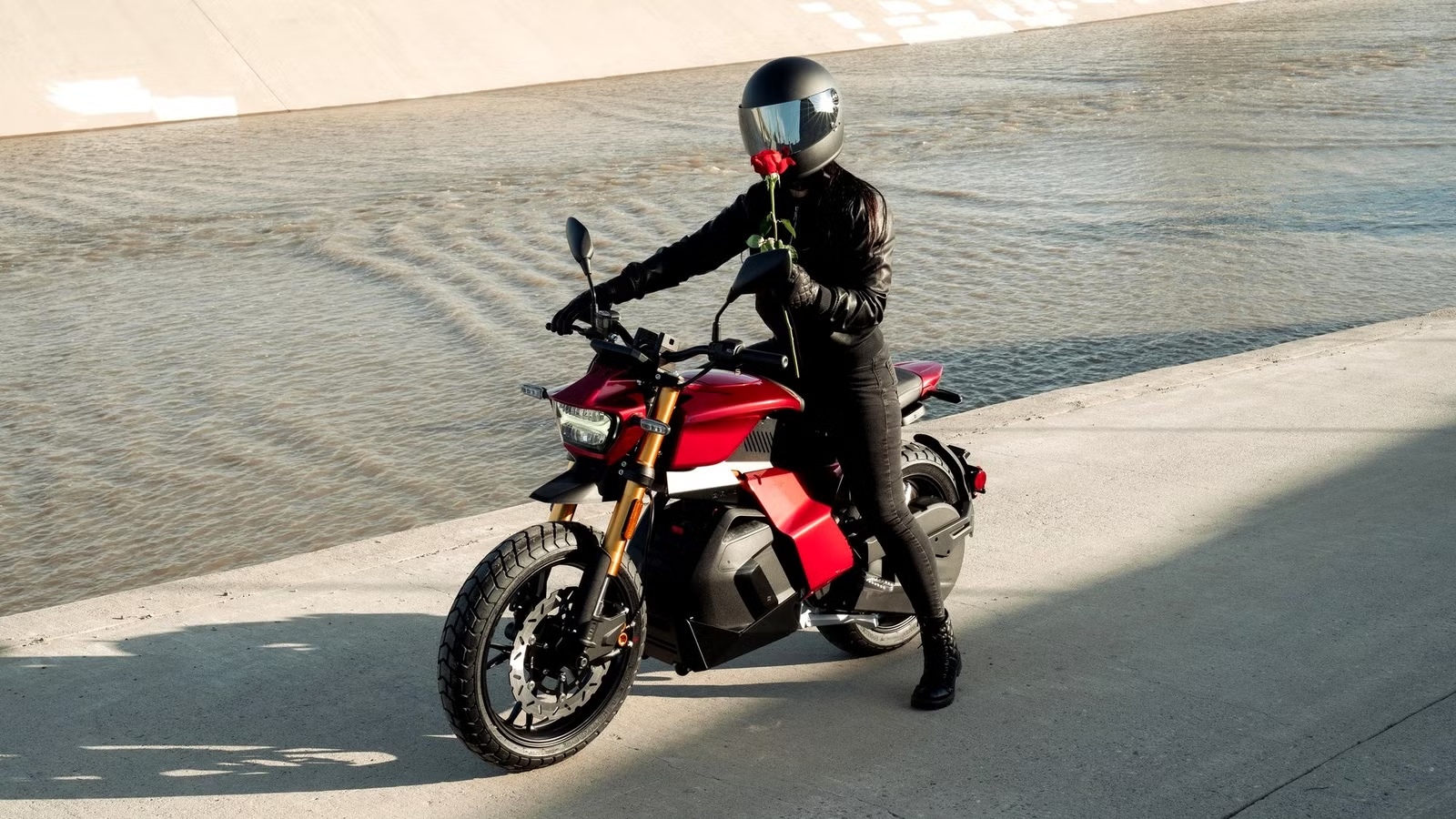
If you’ve been holding off on buying an electric motorcycle while waiting for solid-state battery technology to arrive, a senior executive at one of the world’s largest battery manufacturers just gave you a clear answer: stop waiting. LG Energy Solution’s North American president Robert Lee confirmed this week that solid-state batteries won’t reach electric vehicles for at least a decade — and even then, smartphones will get the technology first.

For riders on the fence about an e-bike purchase, that timeline reshapes the entire buying calculus. The lithium-ion packs powering today’s electric motorcycles — from the LiveWire One to the Zero SR/F — are not a stopgap. They are the technology the market will run on for the foreseeable future, and understanding what that means in practical terms is more useful than waiting for a breakthrough that remains years from the showroom floor.
Why Solid-State Batteries Keep Getting Pushed Back
The appeal of solid-state batteries is straightforward. Replace the liquid electrolyte in a conventional lithium-ion cell with a solid material, and you gain meaningful advantages: higher energy density, faster charging, reduced fire risk, and longer cycle life. In theory, that translates to electric motorcycles with 200-plus miles of real-world range and battery packs that hold their capacity far longer than current units.

The problem, as Lee explained at a recent LG manufacturing facility launch, is scaling. “The problem with solid-state is large-scale production. It has very good energy density, so if you’re making a small form factor, you should be able to get there. If you’re making very large form factors, most companies are struggling,” he said. A smartphone battery is a manageable engineering challenge. A motorcycle battery pack — let alone an automotive one — is a different problem entirely, and no manufacturer has cracked it at production scale.
Lee’s comments also carry weight because of who is saying them. LG Energy Solution is among the largest battery suppliers in the world, with substantial R&D investment in next-generation cell chemistry. If the company’s own North American president is tempering expectations this openly, smaller startups claiming imminent solid-state breakthroughs deserve serious skepticism.
What Today’s Lithium-Ion Bikes Actually Deliver

With solid-state off the table for the near term, the relevant question is what current electric motorcycles genuinely offer — and where their limitations still bite.
Range is the most discussed constraint. The LiveWire One is rated at roughly 146 miles in city riding, but that figure drops considerably at highway speeds; real-world mixed-use range sits closer to 70–100 miles for most riders. The Zero SR/F fares similarly, with a 161-mile city rating and a more modest highway figure. These are usable numbers for commuting and weekend riding, but they require planning on longer trips in a way a gas bike simply does not.
Charging infrastructure adds another layer. Most electric motorcycle owners charge at home overnight on Level 2, which works well as a daily routine. DC fast charging is available on select models, but the network of moto-compatible fast chargers remains thin compared to what four-wheel EV drivers have access to. A cross-country trip on an electric motorcycle today is possible — but it demands route planning that experienced riders may find more burden than adventure.
Battery degradation is the third variable worth understanding before buying. Lithium-ion packs lose capacity over time and charge cycles, though the rate varies by how the battery is managed, stored, and charged. Most manufacturers offer capacity warranties — Zero covers its packs for five years or a set number of miles — but degradation does affect resale value as packs age. A used electric motorcycle with an unknown charge history carries more uncertainty than a used gas bike with a known service record.
Should You Buy Now or Keep Waiting?

Given a confirmed decade-plus timeline for solid-state in EVs, waiting for the technology to arrive before buying an electric motorcycle is not a rational strategy for most riders. The more relevant question is whether today’s lithium-ion bikes fit your actual riding patterns.
For urban commuters and riders who cover under 80 miles in a typical day, current electric motorcycles are genuinely capable machines. The running costs are lower, the maintenance is simpler — no oil changes, no clutch, fewer moving parts overall — and the riding experience, particularly the instant torque delivery, is something many converts don’t want to give up.
For riders who regularly cover long distances or tour extensively, the honest answer is that the charging infrastructure isn’t there yet to make it seamless. That gap will narrow as the network expands, but it won’t close overnight. Waiting another year or two for incremental lithium-ion improvements — better thermal management, higher-density cells within the existing chemistry — is more realistic than waiting for solid-state to change the game.
The bottom line: if an electric motorcycle fits how you actually ride today, buy one. If your use case genuinely requires 200-plus miles of range and fast charging on par with gas station stops, you’ll be waiting considerably longer than the next model year — and probably longer than the next decade.

Related posts




Latest Post


No Comments