
The Underpriced Canyon Weapon Serious Riders Are Hoarding
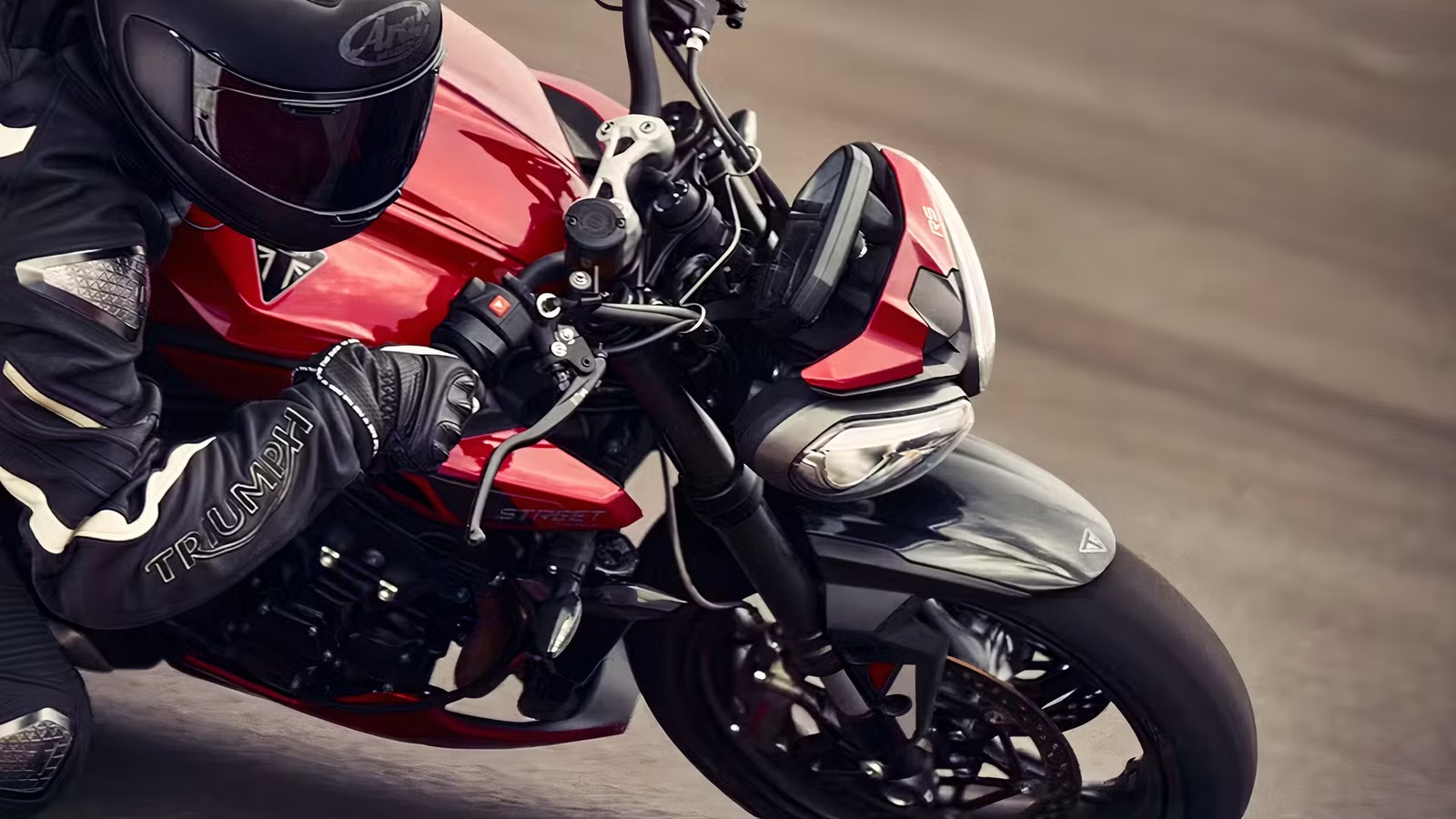
A 200 horsepower motorcycle down a racetrack’s main straight is going to be unbeatable against anything that makes less power. But if that straight follows corner after corner, twisting and tightening into the next section, that 200 horsepower is soon going to feel like a handful. On the road, it’s a similar situation. That bike on a straight highway will have no competition. Hit the canyons, and a smaller machine will overtake it in the first few corners.

Corner speed comes down to how little weight a chassis carries into each bend. Couple that with a potent motor, strong braking, and great suspension, and you get a little weapon of a bike that can easily take the fight up to much bigger, more powerful, thus expensive counterparts on tight roads. And that’s exactly what Triumph has made with its current naked bike, built around the high-revving 765cc triple that also supplies the Moto2 World Championship grid.
A Smaller Engine At The Heart Of Bigger Engineering Choices
The fight against bigger machinery starts with an engineering decision. Instead of designing a bespoke race engine from a blank sheet, Triumph built the Moto2 formula around pre-existing production hardware, and the reasoning behind that choice sits in basic chassis physics. A compact three-cylinder format keeps mass low and centralized, which ultimately distills into how quickly a bike can change direction. This is a trait that matters much more than outright power, especially on tight tracks with relatively slower corners.


This reasoning, in Triumph’s case, is what effectively birthed the middleweight street bike it powers in the first place. As with all streetfighters in real-world usage, handling, not power, is its ultimate weapon, and whatever else gets learned wringing the race engine out over a full championship season eventually filters back into the naked motorcycle it started life as. As most of its customers are riders who will never see a Moto2 grid, but can reap the benefits of everything that grid has proven since using the engine. The displacement of the engine hasn’t changed through the years, at 765cc, and an RS tag joins the nomenclature, so you can probably guess the bike by now.
The Triumph Street Triple 765 RS Is Proof That Weight Beats Horsepower On A Tight Road

No prizes for guessing then, the Triumph Street Triple 765 RS sits above the base R and below the newer RX and Moto2 Edition special editions. The platform with the original 765cc architecture remains the road-going base that the race engine actually builds from, albeit tuned here for daily durability instead of a single season. The engineering priority, as mentioned earlier, was chassis behavior, and on a road with more corners than straights, that is what decides who gets to the next town first.
The Suspension And Brakes Making Up Capable Underpinnings

One of the reasons that the Street Triple RS is so highly regarded is because it runs fully adjustable suspension, which is not really a given at this price point. A Showa 41mm Big Piston Fork handles the front, and an Öhlins STX40 piggyback shock controls the rear. Öhlins at this price point is a steal, and the kind of equipment that’s usually reserved for bikes that cost considerably more. A great suspension setup is key for optimizing traction around corners, which the Street Triple absolutely loves and demolishes.

Another piece of equipment that trumps adding more horsepower is quality braking components to maximize corner speed as much as cornering confidence. Braking comes from Brembo Stylema radial monobloc calipers biting twin 310mm discs up front, paired with a Brembo MCS radial master cylinder that lets a rider dial in exactly how much lever travel a corner needs before the brakes actually start biting. All of it is bolted to an aluminum twin-spar frame carrying a wet weight of 414 pounds, which is light enough that neither the suspension nor the brakes are ever working against the added mass of high-horsepower and weightier streetfighters.
The Electronics That Make The Chassis Advantage Usable

Any modern bike not taking advantage of the latest motorcycle electronics will quickly get left behind despite an able chassis. The Street Triple RS uses an IMU-based traction control system that dictates the power delivery in Road, Rain, Sport, and Track preset modes. Those familiar with these systems can take advantage of a fully configurable Rider setting that dials in how much of the electronic intervention is allowed. Be it a wet commute or a spirited run on back roads when conditions are dry, a rider who knows what they’re doing can effectively put down the power on corner exits.

The cornering ABS, too, makes use of the IMU, and that translates to a rider trail-braking too deep into a blind corner, getting caught and corrected by the electronics before a small mistake turns into a crash. This safety net is what actually lets someone who is not chasing lap times ride closer to what this chassis can do on the streets. There are other features to the system, like front wheel lift control that lets a rider get back on the throttle hard without the front end floating and the bike drifting off its intended line. All of it is controlled through a 5-inch TFT dash, simple enough to adjust between corners.
The 765cc Triple Is Built To Rev

Coming back to the component that the bike derives part of its name from, the 765cc 3-cylinder makes 128 hp at 12,000 rpm and 59 lb-ft of torque at 9,500 rpm. These output figures make for a peaky delivery as they’re made high up in the rev range, so the rider needs to work the engine to get the most out of it. This isn’t one to be lugged around and short-shifted to a higher gear, making it absolutely involving to ride.

A 13.25:1 compression ratio, high for a road-going triple, backs up the free-revving oversquare configuration using a 78mm bore and short 53.4 mm stroke. The combination of this engine and the chassis cradling it results in a unit that pulls hardest in the hands of a skilled rider who, on a technical road, can keep it in its high rev band corner after corner to make riders on bigger machinery regret their purchase.
The Pricey Rivals From KTM And Ducati That The RS Can Challenge On Tighter Roads

Which premium bikes can the 765 RS keep up with, you ask? Well, the flagship nakeds for sure. The KTM 1390 Super Duke R Evo is just more of everything. Its 1,350cc V-twin makes 187 hp and 107 lb-ft, both well beyond the docile Street Triple RS engine. It’s also equipped with WP Apex semi-active suspension that adjusts itself in real time. But the tech comes at a real cost, starting at $22,149, and the power is a lot scarier for even experienced riders to fully unleash on public roads. So, despite being incredibly more capable on paper, in the real world, the Super Duke is an intimidating beast.

It’s a similar story with the Ducati Streetfighter V4 that makes even more power from its 1,103cc V4, derived from the Panigale superbike. At a rated 205 hp and 88.3 lb-ft, more than half of the RS’ output, and weighing just 421 pounds dry, it is barely heavier than the RS. The higher price tag of $24,995 aside, the Streetfighter V4 isn’t for the faint of heart or a rider devoid of skill and experience. Taken to a tight canyon road, with equal riding skills, the rider on the Street Triple RS will not only find themselves ahead, but will possibly have a mile-wide grin against the sweaty, scared grimace on the face of the rider on the V4.
Source: Triumph

Related posts


Latest Post


No Comments