
We Checked Which BMWs Could Actually Fit A V10 Under The Hood
Article Summary
- The E39 M5 is the strongest fitment case because its engine bay was already built for the S62 V8, not a slim inline-six.
- The E46 M3 swap isn’t hypothetical anymore — Brintech, Manhart, and others have all built running versions.
- The 1M’s completed S85 swap proves it can be done, but owners admit the S65 V8 is the better-balanced choice for that chassis.
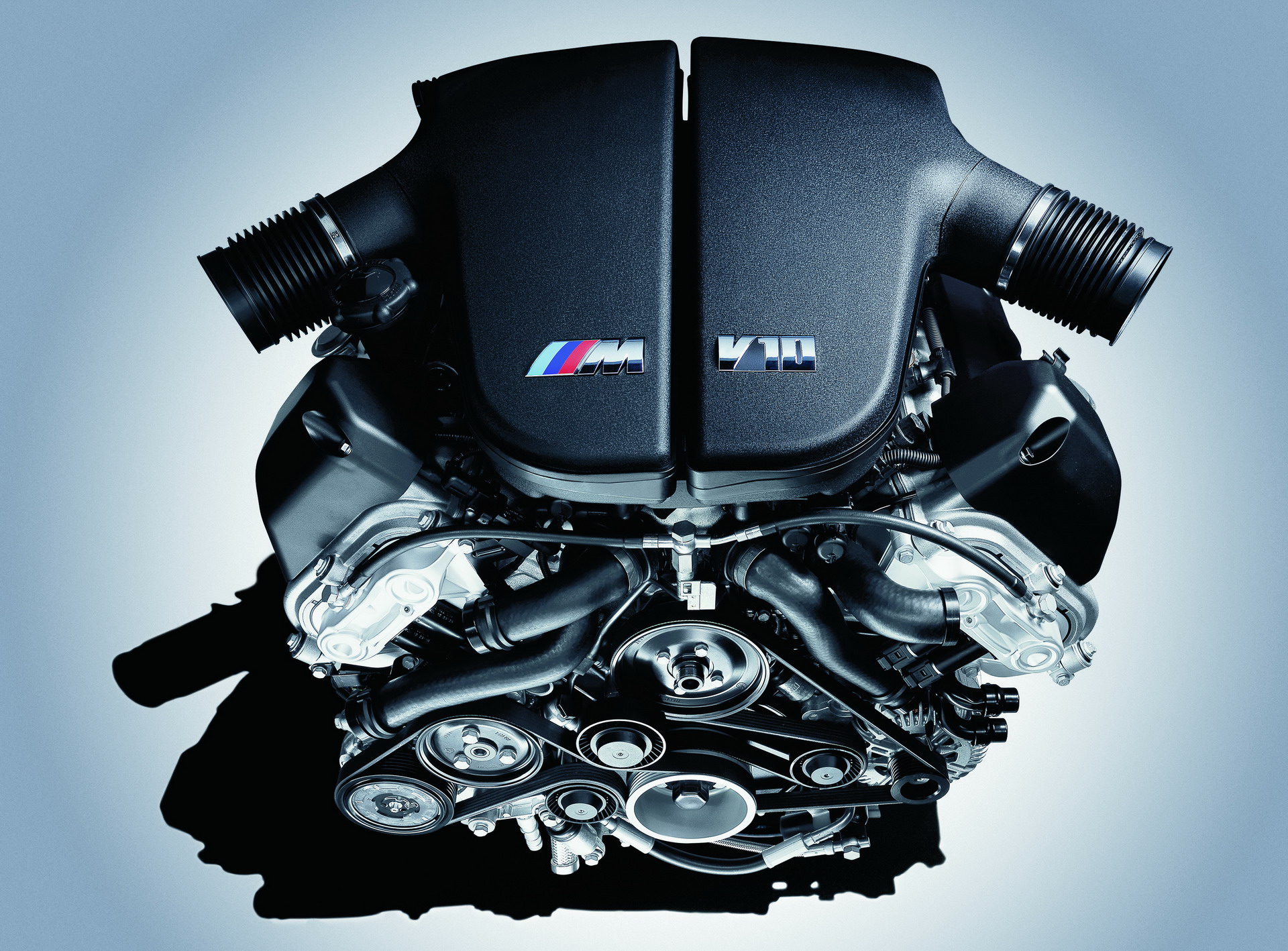
Watching Kith wedge a 500 horsepower S85 V10 into a 2000 X5 E53 got me thinking about a question that matters more than most people give it credit for: which other BMWs could actually take this engine, not just in spirit, but physically. The S85 has become the go-to transplant for shops chasing a factory-plus V10 BMW, and there’s now enough real-world swap history to say with some confidence which chassis handle it and which ones fight back the whole way.
What You’re Actually Trying To Fit

The S85B50 is a 90-degree, 5.0-liter V10, and its dimensions matter more than its horsepower figure when you’re talking about swaps. Owners who’ve measured one off the stand put it at roughly 29.5 inches long from the front accessories to the bellhousing mount, about 27 inches wide across the cylinder heads, and another 27 inches tall from the top of the intake to the bottom of the oil pan. It weighs somewhere around 240 kg, which sounds heavy until you compare it to what it usually replaces.
BMW built the S85 with a bedplate-design aluminum block specifically to keep that weight down relative to its output, and the 90-degree bank angle keeps the whole unit short and low. That geometry is why the E30 M3 swap crowd keeps saying the V10 sits lower in the chassis than the factory four-cylinder ever did, even though it weighs more overall.
The real obstacle isn’t usually the block itself. It’s everything wrapped around it: the wiring harness, the drive-by-wire throttle bodies, the SMG or manual gearbox pairing, and the sheer width of the thing relative to a factory six-cylinder engine bay. Every successful S85 swap on record has needed a reworked oil pan, a hood with additional clearance, and in most cases a custom ECU solution, because the factory electronics assume they’re talking to the rest of an M5 or M6, not whatever chassis they’ve been dropped into.
The E39 M5, Because The Bay Is Already Sized For A V-engine

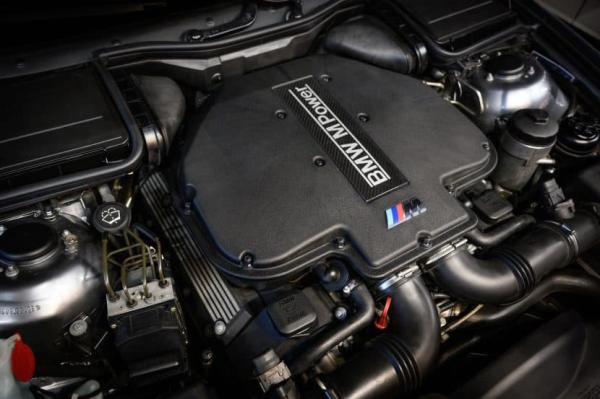
The strongest fitment case on this list is also the most obvious one in hindsight. The E39 M5 ran the S62 V8, which means its engine bay was already built to accommodate a wide, heavy V-configuration engine rather than a slim inline-six. That’s a meaningfully different starting point than any of the six-cylinder chassis on this list, and it’s why the E39 keeps coming up in swap forums as one of the more plausible candidates rather than a pure fantasy build.
Owners on forums have mapped out exactly this conversion, pairing the S85 with a GS6-53DZ six-speed manual, and the consensus is that the swap is expensive and involved but not fighting the chassis the way a four-cylinder donor car would. The E39 also has the advantage of coming from BMW’s last era of hydraulic steering and relatively light curb weights, which means the extra weight of the V10 up front doesn’t have to fight a car that was already compromised on balance.
The E46 M3, Because The Fitment Question Is Already Answered
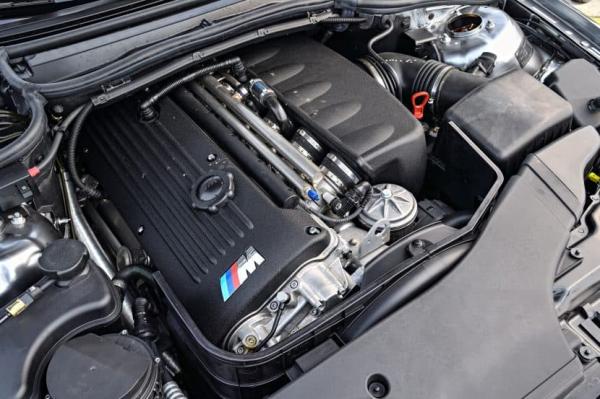
I’m including this one not because it’s a bold prediction but because it’s the closest thing to settled fact in the S85 swap world. Brintech Customs built one for a customer who wanted to daily drive it, retaining a manual gearbox and reporting a 52 percent front weight bias after the swap, which is heavier than stock but manageable.
Manhart went further, pushing output to 560 horsepower with a titanium exhaust and pairing the engine with the SMG-III seven-speed pulled from an E60 M5 itself. None of these were easy or cheap, and every builder who’s done it says the same thing: getting the engine physically into the bay is the least of your problems. But the fact that it’s been done more than once, by more than one shop, with more than one specification of the drivetrain, means this isn’t a fitment question anymore. It’s a cost question.
The 1M, Because The Swap Exists And The Tradeoff Is Well Documented
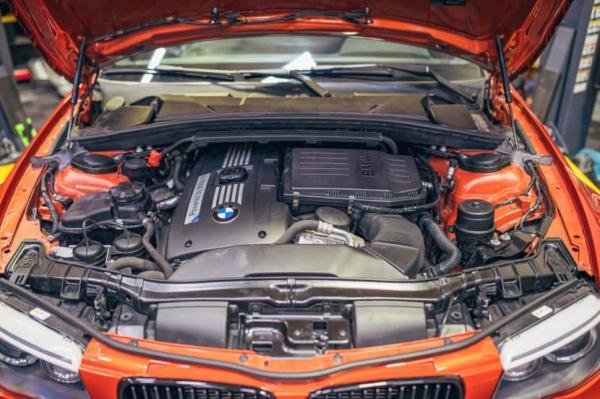
GNG Motorsport in the Netherlands built a 550 horsepower S85-swapped E82, starting from what began life as a diesel 118d, and paired it with an E92 M3 six-speed manual and a custom rear end. It runs, it drifts, and there’s video of it doing both. But the E82 is also where the fitment argument gets genuinely complicated.
Owners discussing the swap on BMW forums have pointed out that the S85 weighs around 240 kg sitting directly over the front axle of a car that’s noticeably smaller than an E46, while the S65 V8 from the E92 M3 is barely heavier than the factory turbocharged four-cylinder it would be replacing.
In other words, in this specific chassis, the V10 is the emotional choice and the V8 is the correct one. That doesn’t make the 1M swap a bad idea. It makes it an honest one: people who’ve built these know they’re trading handling balance for the sound and the redline, and they’re doing it anyway.
The Z4 M Coupe, Because The Platform Math Already Checks Out
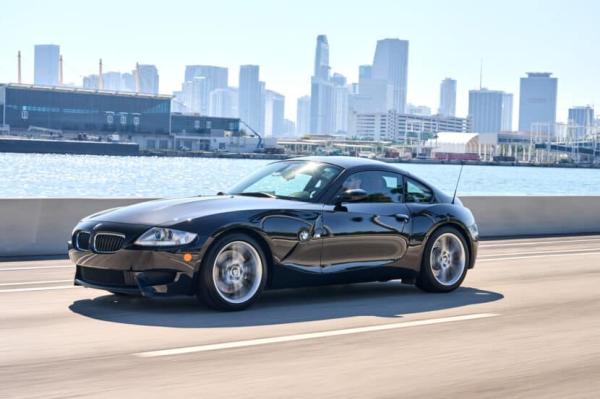
The E86 Z4 M Coupe shares enough underlying architecture with the E46 chassis family that the S85’s proven E46 fitment is a reasonable proxy for how it would behave here. It’s short, it’s rear-drive with no all-wheel-drive hardware to route around the way Kith had to on the X5, and the factory car already runs a variant of the S54 inline-six, which shares some of the same individual-throttle-body philosophy the S85 later built on.
Nobody appears to have publicly documented a completed S85 swap into a Z4 M Coupe the way the E46 and 1M builds have been chronicled step by step, which is closer to an oversight from the swap community than a verdict on the idea. Given how much attention the “clownshoe” already gets for lighter engine swaps, the absence of a serious V10 build here is the surprising part.
Which One Is The Best Fit?
Rank these by how much I’d trust the fitment claim and the E39 M5 comes out on top, mostly because it never should have needed heavy modification to accept a V-engine in the first place. The E46 M3 isn’t a prediction anymore, it’s a catalog of finished builds. The Z4 M Coupe is the one nobody’s actually tried at this scale despite having no obvious reason not to. And the 1M proves the same point from opposite directions: BMW’s V10 will go into almost anything if you’re determined enough, but “will fit” and “should fit” are two different questions, and the shops who’ve actually done this work are the ones being honest about which chassis answer yes to both.

Related posts


Latest Post


No Comments