
Autobots, roll out – meet the androids changing car factories for good
Autonomous features are turning cars into robots that nag you into paying attention, flash speed limit warnings and slam on the brakes if you’re about to hit something.
Fully autonomous taxis and delivery vehicles are on the way, and before long we may see fully autonomous private cars.

On top of all that, the way cars are produced is also becoming increasingly robotic.
Robots have been used to build cars for more than 40 years. In the past they didn’t resemble the two-armed, two-legged sci-fi variety, but that’s changing, and humanoid robots are already working alongside real people – and the drive to increase their cognitive ability is under way.
The Hyundai Group liked what pioneering robot manufacturer Boston Dynamics was doing so much that it bought the company. And Ford is using a Boston Dynamics Spot robot under the watchful eye of its handler at the Halewood plant. It’s fitted with thermal cameras and microphones for detecting heat changes and air leaks to prevent equipment failure and downtime. Spot uses lidar to help it navigate the factory, and it knows to give people the right of way and to stop should anyone get within two metres of it.

The use of those two-legged machines is on the rise. Boston Dynamics’ latest creation, Atlas, is a 6ft 2in, 90kg, ‘general purpose humanoid’, and Hyundai intends to mass produce it for use across industrial sites.
By 2028 Atlas will be deployed at the Hyundai Group Metaplant America, a new EV plant that makes the Ioniq 5, Ioniq 9 and Sportage Hybrid. The robot’s AI-driven ‘brain’ will be directed to perform ‘sequencing tasks’, which in manufacturing means selecting components and delivering them to a production line in the right sequence, at the right time.
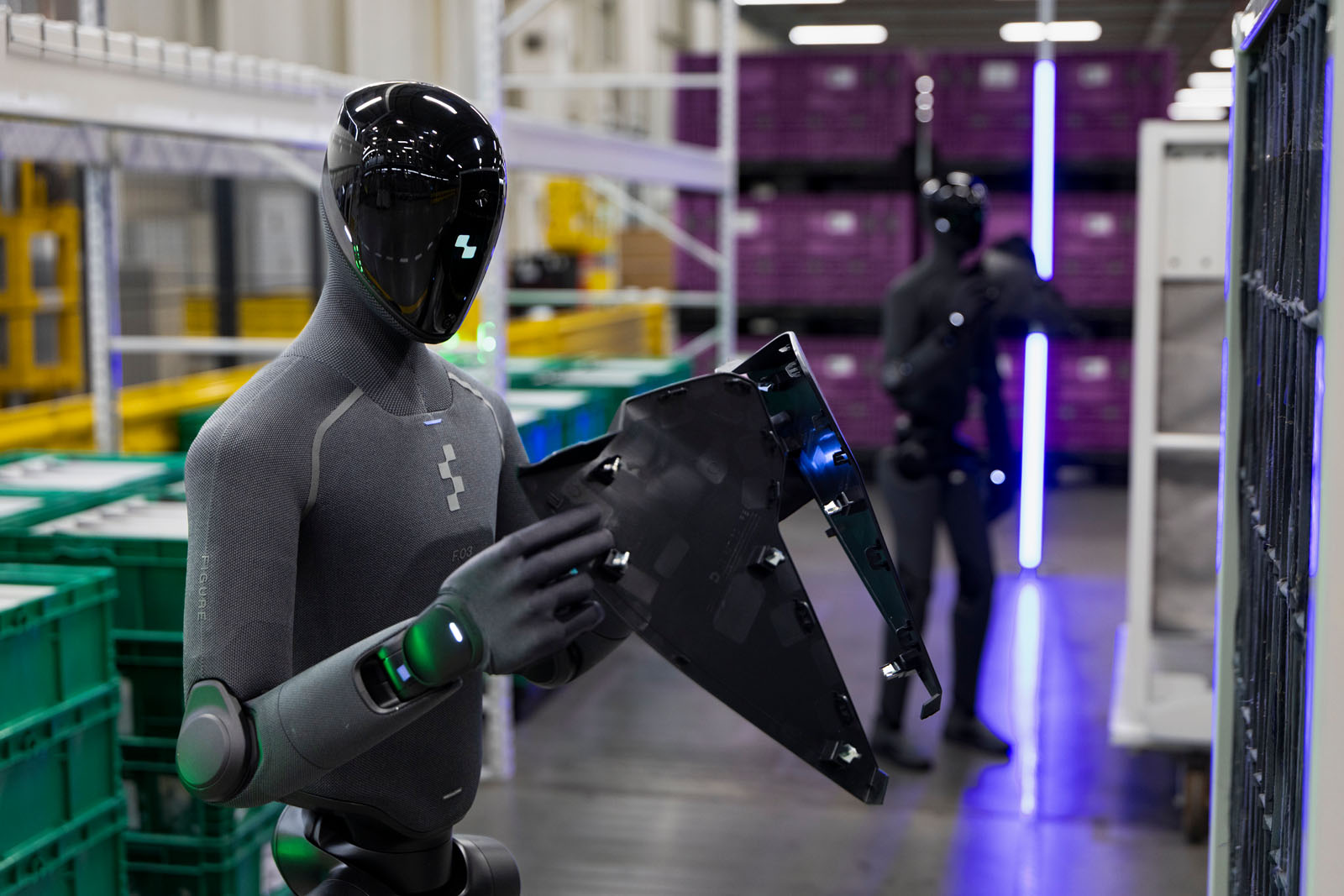
BMW introduced a humanoid robot, Figure 02, in collaboration with tech company Figure AI, at Plant Spartanburg in South Carolina last year. Figure 02 supported the manufacture of 30,000-plus BMW X3s over 10 months in the body shop, inserting sheet metal parts for welding. BMW is now moving to Figure 03, which has wireless charging, soft components for safety and speech-to-speech communication. It also has more human-like hands with tactile sensors and cameras to increase precision and dexterity.
Elsewhere, scientists at Queen Mary University, London, have come up with a new sensor that generates an array of different colours when pressure is applied. Mounted in robotic fingertips, along with a camera inside each finger, this will allow robotic hands to ‘see’ touch and respond with greater sensitivity. Applications for it could include prosthetics and surgery as well as precision manufacturing.

Related posts


Latest Post


No Comments