
Yamaha Is Bringing the XSR155 to the US for 2027 — A Sub-200cc Retro Bike That Breaks the American Market Mold
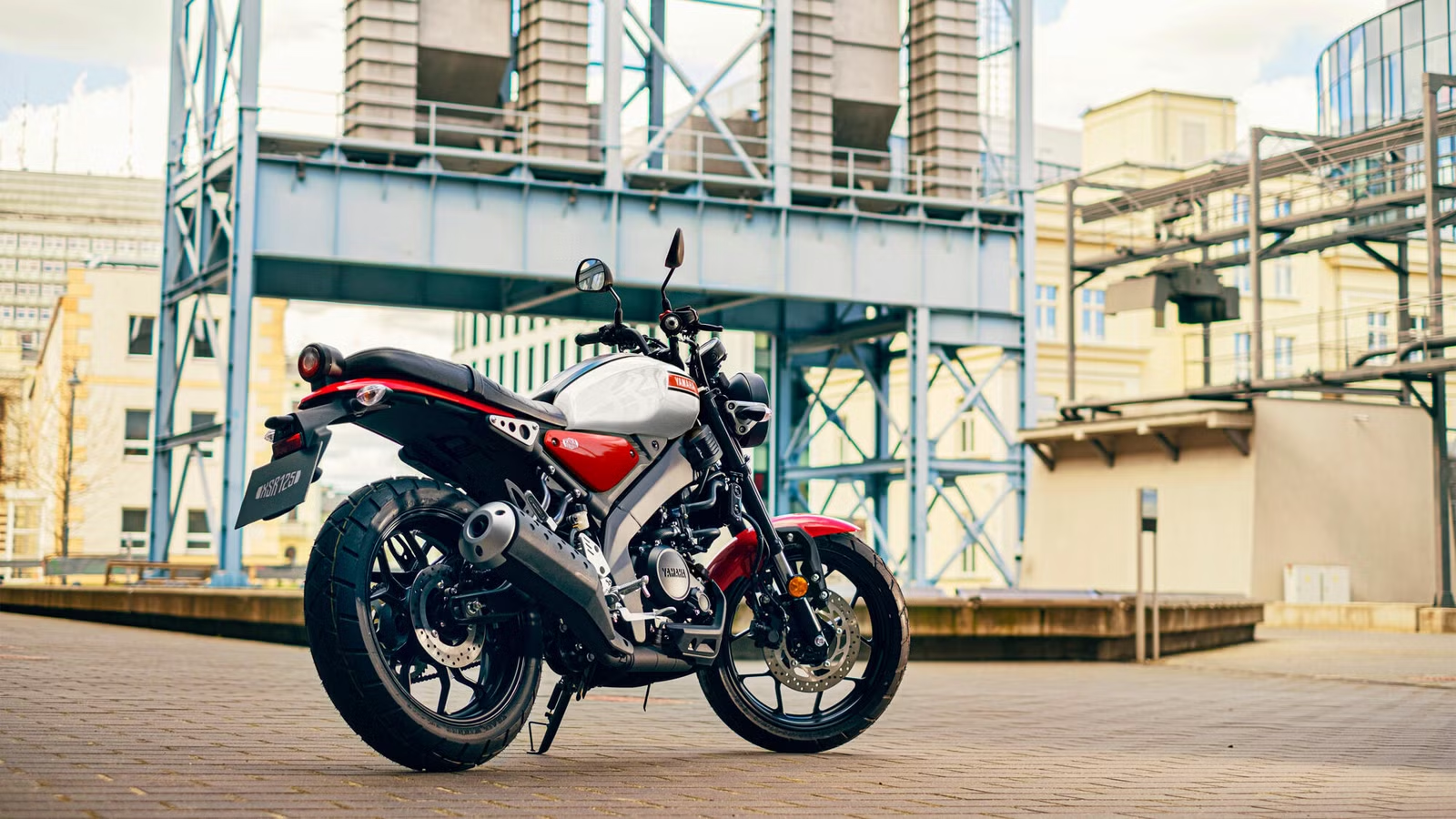
Yamaha is bringing the XSR155 to the United States for the 2027 model year, confirmed through VIN decoder data submitted to the National Highway Traffic Safety Administration. It’s a small bike by any traditional American measure — 155cc, 17.2 hp, a curb weight in the 295–302 pound range — but its arrival signals something larger: the assumption that sub-200cc motorcycles are too small for US buyers is quietly being retired.

The XSR155 has been available in India, the Philippines, and Indonesia for some time, wearing the same retro design language as the XSR700 and XSR900 — round LED headlight, sculpted 2.6-gallon fuel tank with knee cutouts, tuck-and-roll saddle with a slightly raised pillion seat. Now it’s headed stateside, and it looks like it’s coming as a direct replacement for the V-Star 250, which is conspicuously absent from Yamaha’s 2027 NHTSA filings.
What the XSR155 Actually Brings to the US Market
Under the classic bodywork sits a liquid-cooled 155cc SOHC four-valve single with variable valve actuation. Power figures vary slightly by market — Indonesian-spec bikes are rated at 19.0 hp, Indian models at 18.0 hp — but the US VIN decoder confirms 17.2 hp for the American version, along with 10.8 lb-ft of torque. That’s not a lot by highway standards, but it’s not meant to be.

The chassis is more sophisticated than the displacement might suggest. Yamaha built the XSR155 around a Deltabox frame — the same architecture underpinning its sportbike lineup — with a 37mm inverted fork up front and a linked monoshock at the rear. Braking comes from ByBre calipers with dual-channel ABS. Traction control, an Assist and Slipper clutch, and a circular LCD display round out the spec sheet. For a sub-200cc machine, that’s a genuinely complete package.
Replacing the V-Star 250 — And Repositioning What ‘Entry-Level’ Means

The V-Star 250 has held down Yamaha’s entry-level road slot in the US for years, carrying an MSRP of $4,799. Its absence from the 2027 NHTSA filings strongly suggests the XSR155 steps into that role — though with a very different personality. Where the V-Star 250 leaned on cruiser styling, the XSR155 pulls from Yamaha’s Sport Heritage line, offering new riders the same aesthetic DNA as the XSR700 and XSR900 at a fraction of the cost and complexity.
Pricing hasn’t been confirmed by Yamaha, but the competitive context is useful: Honda’s 150cc mini-moto lineup runs $3,599 to $4,399 in the US. If the XSR155 slots in near or below the V-Star 250’s $4,799 price point, it has a real opening. In markets like India, Yamaha also offers factory accessory kits — scrambler and cafe racer configurations — that transform the XSR155 into something more specialized. Whether those kits make it to the US is unknown, but the aftermarket potential is obvious.
Part of a Broader Shift in What Japanese Brands Will Sell Americans
The XSR155 doesn’t arrive in a vacuum. Honda broke the seal on sub-200cc full-sized bikes in the US with the XR150L in 2023. Kawasaki followed with the W175 LTD. Yamaha itself added the WR125R dual-sport to its US lineup. Each of those launches quietly tested whether American buyers would accept smaller displacement bikes that weren’t minimotos or novelty machines — and the answer has been yes, particularly among urban riders who have no need for interstate capability and every reason to want something nimble, light, and easy to park.
The XSR155 arrives alongside the XSR900 GP, Yamaha’s retro grand prix-styled flagship, which is also confirmed for the US in 2027. The two bikes sit at opposite ends of the Sport Heritage range, but together they suggest Yamaha is serious about building out that lineup in America rather than just skimming the top of it. For riders who want the XSR look without the XSR700’s weight and running costs, the 155 fills a gap that genuinely didn’t exist in the US market until now.
Yamaha hasn’t made an official announcement yet, and no on-sale date beyond the 2027 model year designation has been confirmed. But the NHTSA filing puts the XSR155’s US debut on solid ground. For urban riders, new riders, and anyone who’s wanted a proper retro naked without the commitment of a larger bike, it’s worth watching closely.

Related posts



Latest Post


No Comments