
Why German Drivers Are Ditching Gas Cars, Right as BMW’s EV Wave Hits
Article Summary
- A record 12% of German drivers who replaced a combustion car in Q2 2026 chose an EV, more than double January-February’s rate.
- Fuel prices topped €2/liter in Germany after the war on Iran began, the first time since 2022, driving the shift alongside existing EV subsidies.
- BMW’s Neue Klasse EV rollout — iX3, i3, iX4, iX5, iX7, i3 Touring, refreshed i7, and an electric M3 — lands squarely in this demand window through 2027.
A record 12% of German drivers who replaced a combustion-engine car in the second quarter chose an EV instead, according to a survey conducted for insurer Huk-Coburg and reported by Bloomberg. That is more than double the rate recorded in January and February, and the insurer points to a specific cause: the US-Israeli war on Iran and the fuel price spike that followed it.
High-mileage drivers, the ones covering more than 12,000 kilometers a year, switched to EVs at a noticeably higher rate than the average buyer, and nearly a quarter of respondents said fuel costs alone pushed them to consider or prioritize an EV for the first time. Diesel and petrol in Germany climbed above €2 a liter after the war began in late February, the first time prices had cleared that mark since 2022, and they were still comfortably above it as of last week, according to official data from Destatis.

None of this happened in a vacuum. Germany’s government had already rolled out a subsidy program in January offering purchase and leasing incentives for zero-emission vehicles, and that alone pushed EV conversion rates to a record in the first quarter. The war in Iran layered a second, sharper motive on top of it. Buyers who might have waited out an incentive program are now doing math on fuel bills instead, and the two pressures are reinforcing each other. The pattern is not confined to Germany, either. Europe-wide, new EV registrations drove the continent’s largest jump in new-car sales since late 2023 when June’s figures came in.
BMW’s timing here looks less like luck and more like a company that finally has the product to meet a market it spent years insisting was coming.
A Neue Klasse Lineup Arriving At Exactly The Right Moment

The BMW iX3 (NA5) kicked off the Neue Klasse era, and it is the car everything below owes its underlying architecture to: the 800V Gen6 eDrive motors, the cylindrical battery cells, the four-computer “Heart of Joy” setup, and the Panoramic iDrive interface all trace back to it. The i3 (NA0) followed as the electric answer to the 3 Series, wearing a narrower twin-kidney grille that nods more to the 2002 and 2500 than to the current i4, and it is the car most likely to pull German commuters directly out of diesel 320ds.
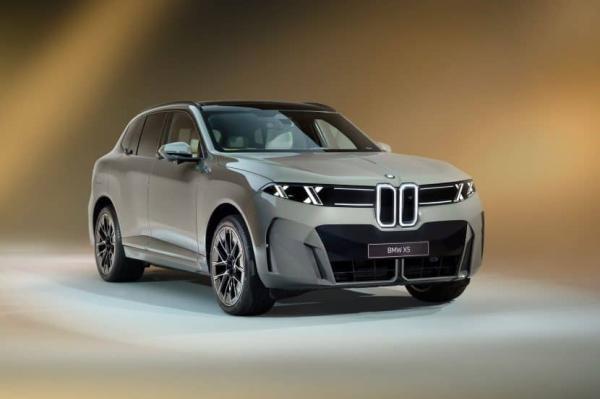
From there, the rollout accelerates rather than slows. The iX4 (NA7) arrives as a coupe-SUV take on the iX3, sharing its powertrain but trading headroom for roofline, with 40 xDrive and 50 xDrive versions due before an M60 xDrive follows in March 2027. The iX5, built alongside the next combustion X5 rather than as a standalone model, adds a 60 xDrive to the existing 40 sDrive for the 2027 model year. The iX7 sits above it as the electric version of BMW’s largest SUV, positioned against the Cadillac Vistiq and the Mercedes EQS SUV. An i3 Touring wagon has already been teased as the Neue Klasse era’s answer to buyers who still want a longroof, and a refreshed i7 brings the new architecture to the flagship sedan for the first time, with a 112.5 kWh pack and a claimed WLTP range up to 452 miles once EPA certification catches up.
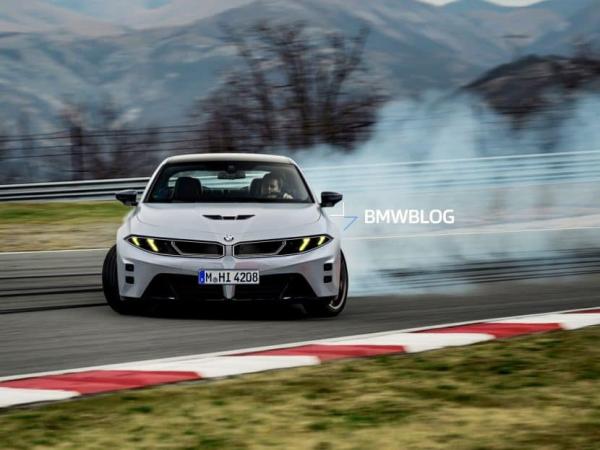
Then there is the electric M3, badged ZA0 and due in 2027, which will be BMW M’s first true electric performance car rather than a tuned-up i4 or iX wearing an M badge it did not earn. Franciscus van Meel, the head of BMW M, has already framed it as a car meant to set a new benchmark for the segment rather than split the difference between EV efficiency and M-car theater.
Add a refreshed i5 to the list for 2027 and the picture is a company launching roughly a car every few months into a market that just gave itself a very specific, very painful reason to buy one. BMW has said Neue Klasse technology will reach around 40 new or updated models by the end of 2027, and Germany’s fuel-price-driven EV surge is arriving in the middle of that rollout rather than before or after it.
Whether that timing holds up depends on things outside BMW’s control. The war in Iran could end tomorrow and fuel prices could retreat with it, and a subsidy program is not a permanent floor under demand. BMW spent years catching flak from analysts for moving slower on EVs than Tesla or BYD while it finished the Neue Klasse platform properly instead of rushing a half-measure to market. That approach only pays off if the cars show up while people are still angry about what they are paying at the pump, and right now, in Germany at least, that clock is running in BMW’s favor.

Related posts

Latest Post


No Comments