
This American Four-Cylinder Motorcycle Makes Harley-Davidsons Seem Tasteless
Premium retro motorcycles occupy a category all their own — machines that don’t ask you to scroll through ride modes or fiddle with traction control settings, but simply demand you twist the throttle and feel the road. They turn heads effortlessly, project a quiet confidence, and deliver an experience that no amount of modern electronics can fully replicate. For riders willing to pay for that kind of purity, celebrated American designer JT Nesbitt has answered with something genuinely extraordinary: the Magnolia 4. Drawing on design philosophy from the 1930s and fusing it with contemporary materials and engineering insight, the Magnolia 4 is a machine that makes almost everything else on the road feel ordinary. Here’s what makes it so special.
Distinctly American Aesthetic
With Unmatched Attention To Detail

Google “American motorcycle” and you’ll likely see a sea of cruiser/touring bikes with V-twin engines. But a century ago, the American motorcycle scene was far more experimental. Inline-four engines were a common sight, dropped into long, low chassis with minimal bodywork. That’s the spirit Nesbitt has set out to re-imagine in his latest project.
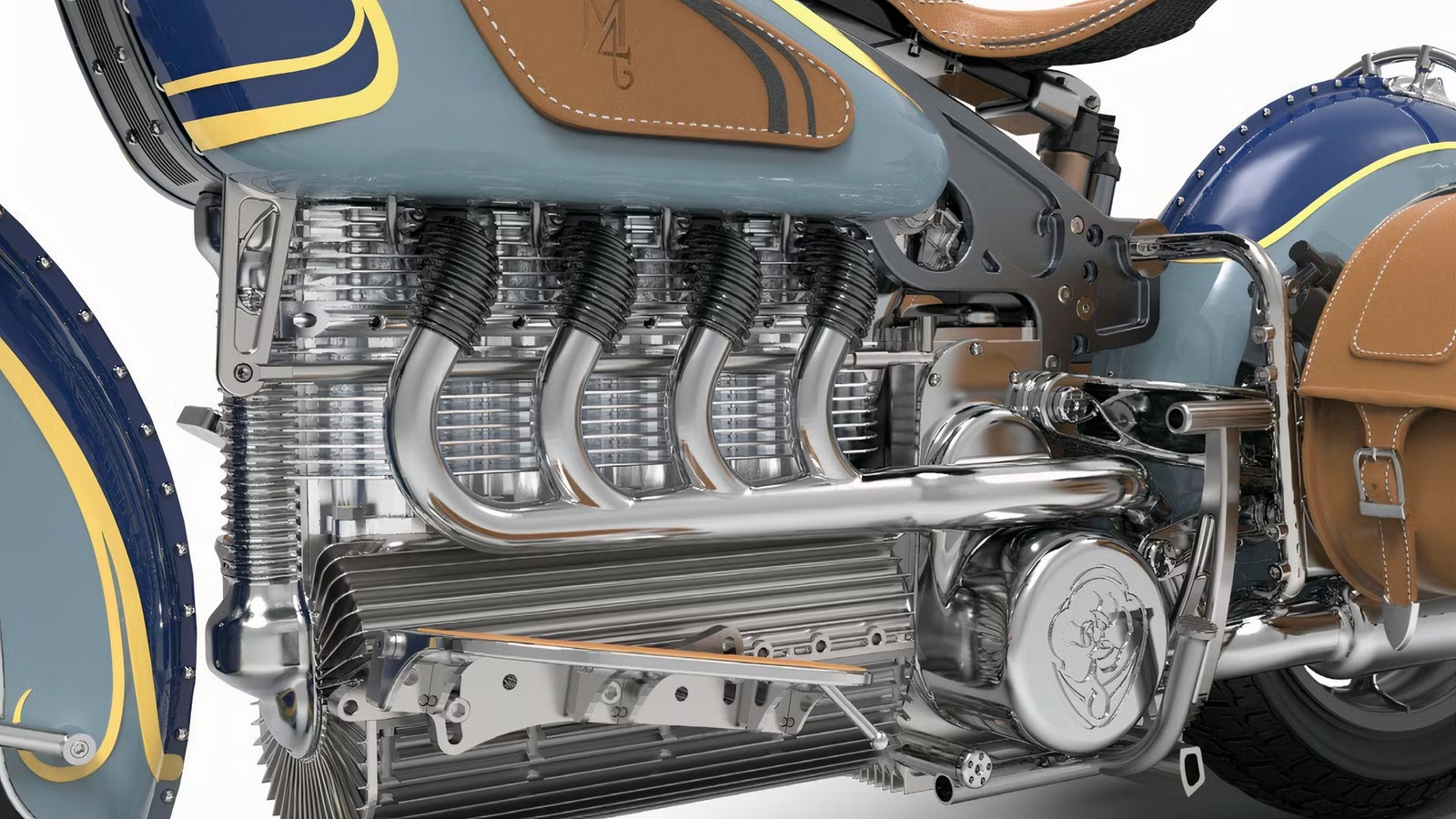
The Magnolia follows the silhouette of the iconic 1924 Ace Sport. Accordingly, it has a long and low profile, complete with minimalistic bodywork. In fact, the only “bodywork” beyond the fuel tank is the set of large, sweeping fenders front and rear. These are topped by two slash-cut exhausts at the rear, generous chrome detailing on the engine, and an independently sprung saddle.
That saddle pairs with wide floorboards and a swept-back handlebar — just like the Ace. The result is an upright and comfortable riding triangle that lets you soak up the attention as you cruise. The Magnolia is a solo machine, so there’s no room for a passenger.

As for colors, the company’s configurator offers four options: Noir, Blanc, Newcomb Pale Bleu, and Newcomb Vibrant Bleu. The first two are essentially black and white liveries, while the other two are shades of blue. All come with golden pinstripes and contrasting leather touches as standard. Overall, the motorcycle squarely meets its stated brief: “to create an elegant, timeless motorcycle with modern performance and comfort, that will look as good today as it will look in another century.”
Magnolia 4 Design Details
- Alloy wheels
- Large fenders with rivets in the middle
- Slash-cut exhausts
- Chrome touches
- Sprung saddle
- Four color options
A Work Of Art As The Powerhouse
Capacity: 1,750cc; Cylinders: Four
The Magnolia’s gorgeous design clearly sets it apart in the modern motorcycle market, and its engine follows the same philosophy. Rather than defaulting to the V-twin or an electric powertrain favored by American giants, Nesbitt opted for a four-cylinder setup. The engine displaces 1,750cc, with all four cylinders arranged vertically along the length of the bike and joined by a unified cylinder head. It’s machined from 6000-series aluminum alloy to minimize weight while taking full advantage of modern manufacturing processes.
Inside, there’s a bespoke crankshaft, a single overhead camshaft, and internal cooling that eliminates the need for external radiators. Completing the package is a hand-operated three-speed transmission. Though inspired by vintage practice, the setup uses a centrifugal clutch and two counter-rotating flywheels, sidestepping the complexity of a foot-operated clutch while promising smooth, precise hand shifts. Technology is deliberately minimal here, as underscored by the absence of electric start. Yes, it’s kick-start only.
Quirky Underpinnings
No Springs, Just Pneumatic Shocks

Another key highlight of the Magnolia 4 is the suspension system conceived by Nesbitt. The motorcycle is built around a unique single-spar chassis, suspended onto girder-type forks up front. These use pneumatic air shocks rather than conventional springs, keeping unsprung weight low while allowing a high degree of adjustability. At the rear, triangulated air shocks are paired with a bespoke swingarm to the same effect.
What makes the package even more compelling is the breadth of adjustability on offer. From the girder fork attachment points to the swingarm angle — and even the wheelbase itself — virtually every geometry parameter can be dialed in to suit the rider’s preference. Braking specifications, overall weight, wheel dimensions, and other key figures have not been publicly confirmed, but for anyone seriously considering ownership, those details are best discussed directly with Nesbitt.
Magnolia 4 Underpinnings
- Girder-type forks with pneumatic shocks
- Triangular pneumatic shocks at the rear
- Up-swept swingarm
- Single-spar chassis
- Adjustable wheelbase
Limited To Just 12 Pieces Worldwide
And Priced Out Of Your Grasp

Speaking of taking one home, the Magnolia is priced exactly as you’d expect for a work of art at this level. No fixed figure has been published, but Nesbitt told The Vintagent: “Our pricing structure is based on the value of original American four-cylinder motorcycles: original examples of the genre – an exceptional Henderson, Ace, or Indian Four – will cost you $200,000 or more.” Production is capped at just 12 units, three of which have already been claimed, leaving nine for the rest of the world. If the Magnolia 4 speaks to you, reaching out to JT Nesbitt sooner rather than later is strongly advised.
Source: Bienville Studios

Related posts




Latest Post


No Comments