Spend five minutes in any American suburb, and you will understand why compact SUVs refuse to go away. They fit in garages, fit in budgets, and fit into lives that do not follow a single template. Road trip one weekend, a Costco run the next. Kids in the back, kayaks on the roof. The segment sells because it solves a genuinely broad range of problems without asking buyers to compromise on too many of them at once.
What is changing, though, is what buyers expect under the hood. Hybrid sales grew from 9.8 percent of the market in the third quarter of 2024 to 12.8 percent in the third quarter of 2025, according to Cox Automotive. That is a meaningful jump in a short window, and the compact SUV segment is where it is playing out most visibly. The Subaru Forester, Mazda CX-50, Hyundai Tucson, Kia Sportage, and Honda CR-V have all added credible hybrid options in recent years. Going gas-only is not yet a deal-breaker for buyers, but it is starting to feel like a reason to keep looking.
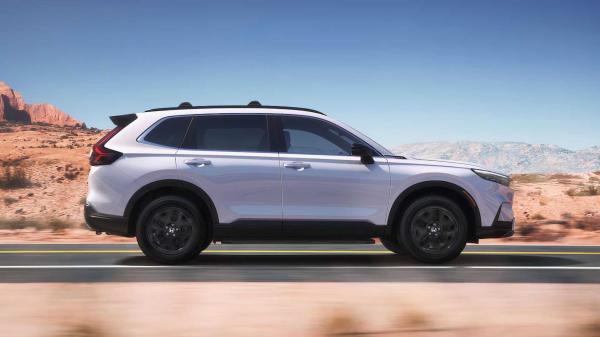
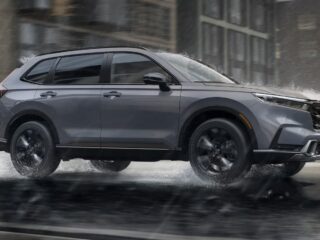
Front 3/4 shot of 2026 Honda CR-V Sport Touring Hybrid parkedHonda
Ask most people who follow this segment to name the two safest buys in the 2026 compact SUV class, and you will get the same two answers, in roughly the same order. The Honda CR-V is the segment’s default correct answer. It was America’s top-selling non-truck model through the first quarter of 2026, which tells you everything about how much trust it has built over three decades.
The CR-V is not particularly exciting. That is almost the point. It does cargo space better than most (39.3 cubic feet behind the rear seats, 76.5 with them folded), it rides and handles with the kind of composed competence that does not call attention to itself, and its reliability record means you are unlikely to think about it much once you own it. The CR-V Hybrid starts at $35,630. For many buyers, that is where the search ends.
2026 Hyundai Tucson Hybrid front 3/4 shotHyundai
The Hyundai Tucson is the one that makes you do a double-take at the window sticker. The Tucson Hybrid opens at $32,450 and comes standard with a 12.3-inch touchscreen across the range, with a twin-digital instrument cluster on most trims. Put the two interiors side by side, and the Tucson looks like it costs significantly more than it does. It is also the better driver of the two, with a traditional six-speed automatic instead of the CR-V’s CVT. For the money, it punches. Hard. Both of them are good enough that recommending either would not be wrong. The problem for both of them is what Toyota just did with the perennial star boy.
The Most Practical And Balanced Hybrid SUV For 2025
Despite fierce competition, one hybrid SUV stands out for its blend of efficiency, performance, and spaciousness.
The 2026 Toyota RAV4 Is The Obvious Choice Nobody Questions
A Starting Price That Makes Sense
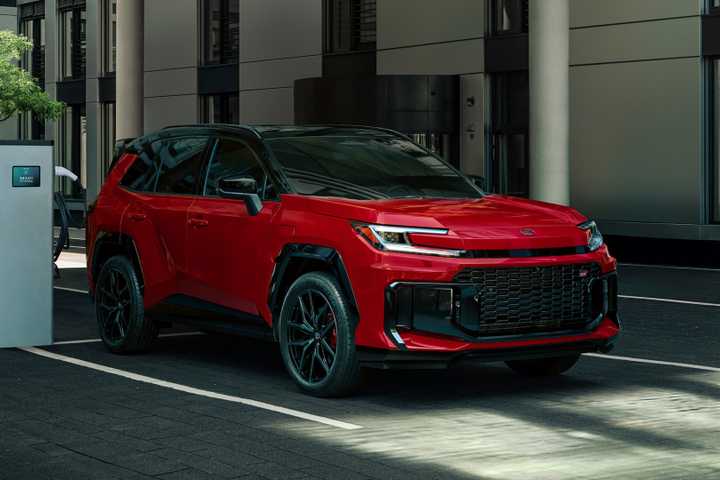
Front 3/4 shot of 2026 Toyota RAV4 in red parkedToyota
Toyota made a call with the 2026 RAV4 that most carmakers would have been too nervous to make. Every single model in the lineup is now a hybrid. Not the premium trims. Not the mid-spec grades. All of them, from the base LE upward, just as Toyota has already done with the Camry and the Sienna. If you want a 2026 RAV4, you are getting a hybrid powertrain. There is no opting out.
The price lands at $31,900 for the LE with front-wheel drive. On its face, that is $3,050 more than the gas-only 2025 RAV4 LE FWD. But comparing those two isn’t really like-for-like. The more honest comparison is against the 2025 RAV4 Hybrid LE, which matches the 2026 model’s starting price of $31,900. By that measure, the new hybrid-only 2026 model is no more expensive than its direct predecessor, with a full redesign, a new tech platform, and notably better efficiency. That eliminates the price penalty for going electric — something that we often see in lineups that have both ICE and hybrid variants.
The rest of the lineup runs SE at $34,700, XLE Premium at $36,100, Woodland at $39,900, XSE at $41,300, and Limited at $43,300, with all-wheel drive standard on the upper trims. Toyota has grouped them into Core, Rugged, and Sport Design families, giving the range clarity it did not always have before. There is a version of this car for the school-run buyer, the trail-curious buyer, and the buyer who wants something a little sharper to look at in the driveway.
An All-Hybrid Lineup That Earns Its Price
2027 Toyota RAV4 rear bagdeTopSpeed | Michael Frank
Here is where the 2026 RAV4 stops being a good story and starts being a strong argument. The FWD LE hybrid targets 47 mpg city and 40 mpg highway. A few years ago, those figures would have belonged to a dedicated hybrid sedan, not a full-size-feeling crossover with roof rails and a tow hitch. The AWD variants come in a touch lower, at around 46 mpg city and 39 mpg highway, which is still well ahead of the CR-V Hybrid and Tucson Hybrid.
Base Trim Engine
2.5L Inline 4 Hybrid
Base Trim Transmission
CVT
Base Trim Drivetrain
Front-Wheel Drive
Base Trim Horsepower
183 HP @6000 RPM
Base Trim Torque
163 lb.-ft. @ 3600 RPM
Make
Toyota
Model
RAV4
Segment
Compact SUV
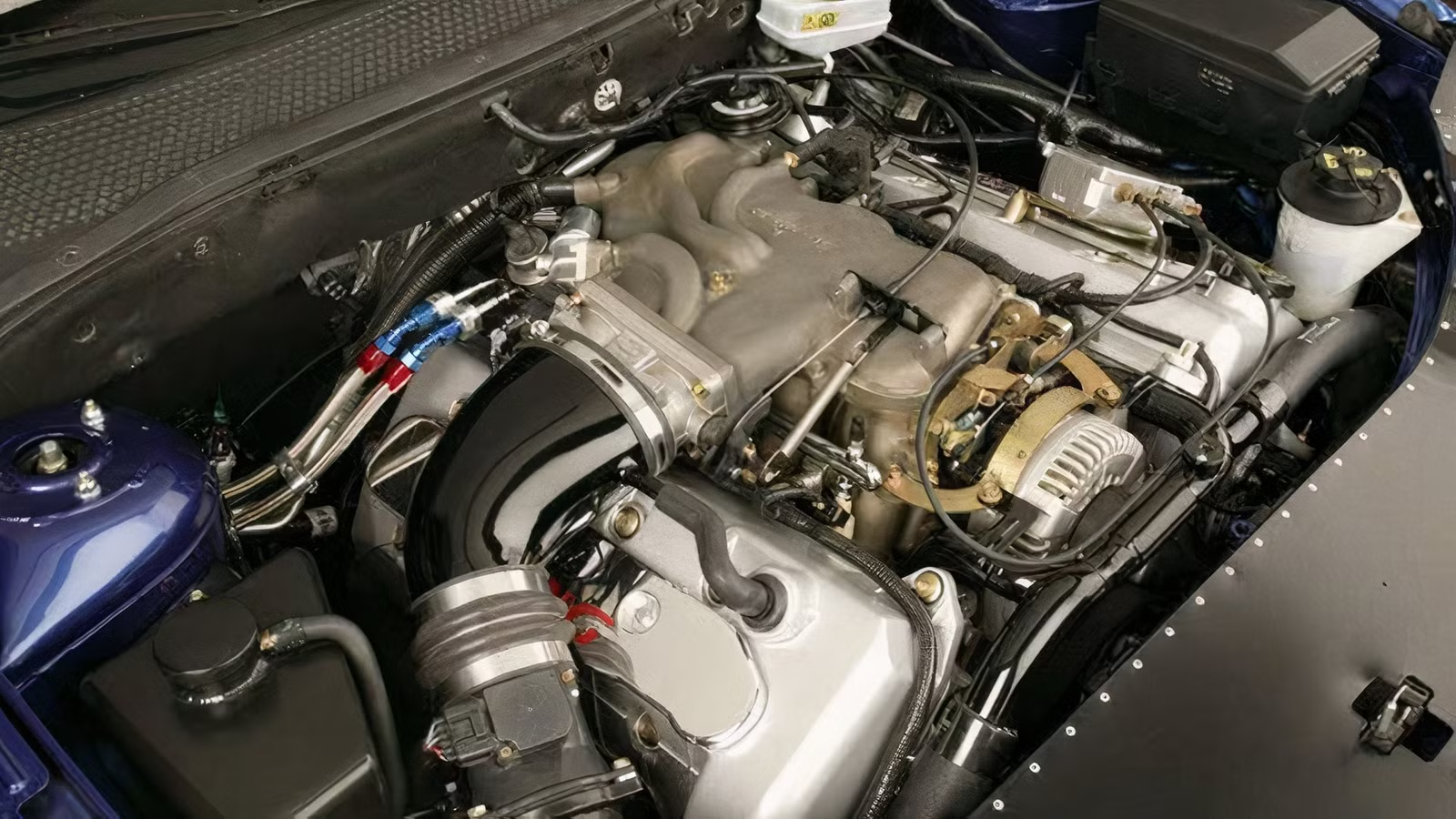
The outgoing 2025 RAV4 Hybrid, already a class leader, managed 41 mpg city and 38 mpg highway. Toyota did not just carry those numbers over into the new generation; it improved them while also adding power. AWD models now produce 236 net combined horsepower, up 11 percent from the old gas FWD model. More efficient and quicker. At the same time.
2026 Toyota RAV4 engineToyota
The plug-in hybrid version is its own conversation. The 2026 RAV4 PHEV delivers 324 horsepower, up from 302 in the 2025 model, with up to 54 miles of electric-only range, 12 more than before. And despite all of that, the PHEV SE starts at $41,500, which is $2,365 less than the equivalent 2025 trim. In a market that has been finding creative ways to charge buyers more for less, that price drop lands differently.
The Technology Story Runs Alongside All Of This
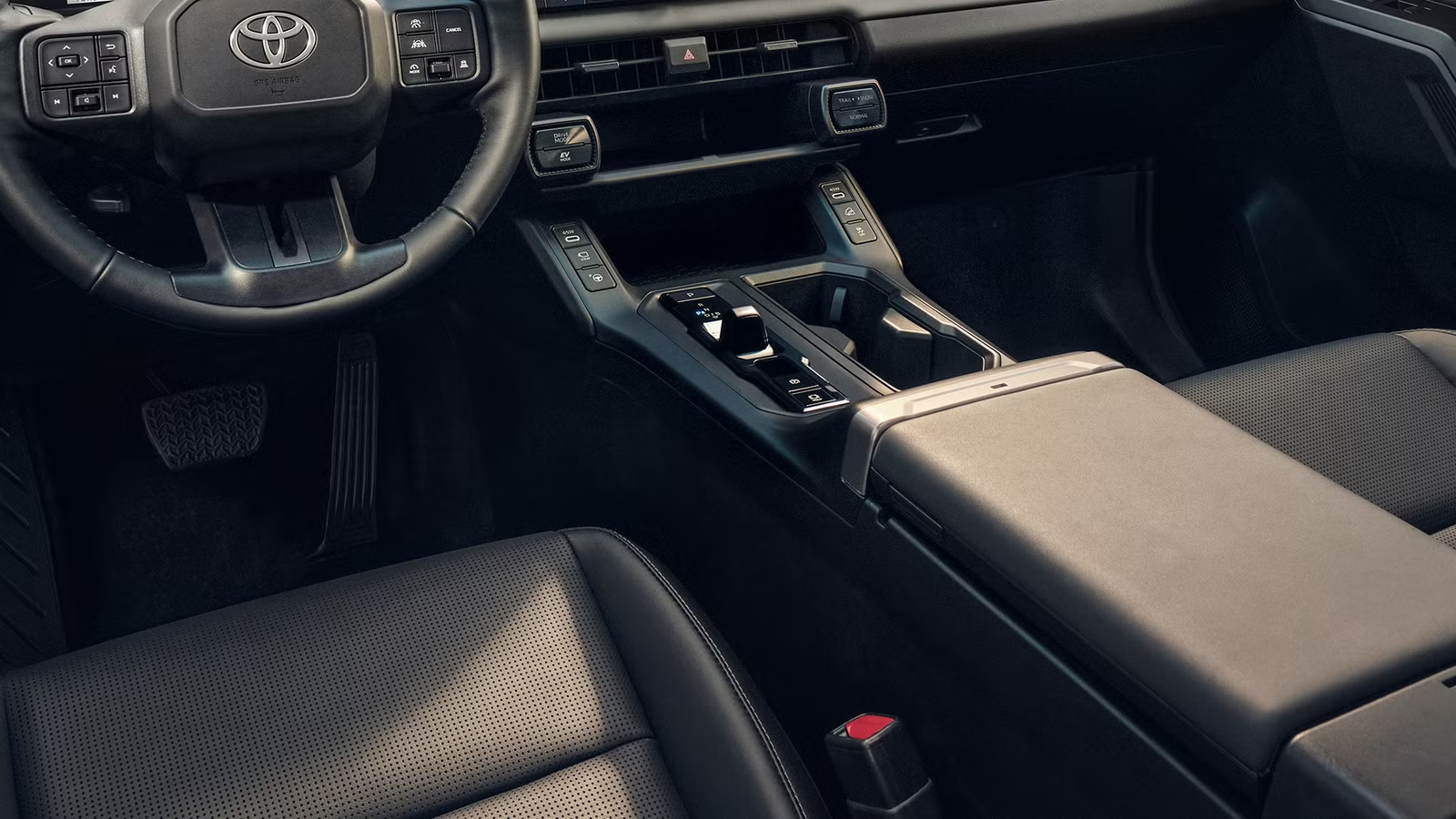
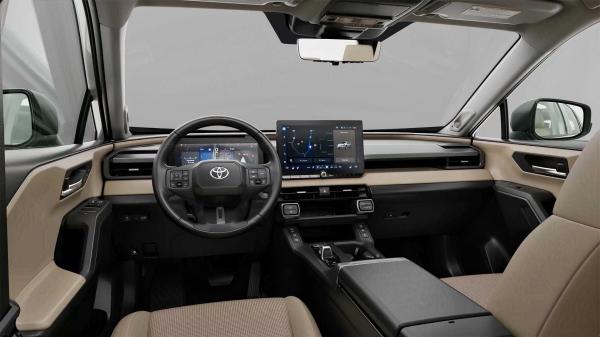
Toyota Safety Sense 4.0 is standard across every trim, bringing updated pre-collision detection, lane tracing assist, adaptive cruise control, and blind-spot monitoring with rear cross-traffic alert. A 12.3-inch digital gauge cluster is standard at every level too, paired with a new Audio Multimedia system featuring onboard 5G and Toyota’s Arene software platform. These are not features you unlock by spending more. They come with the base car.
And then there is the 10-year, 150,000-mile hybrid battery warranty. That is a number that matters to real buyers considering a five or seven-year ownership window. It changes the long-term cost calculation in Toyota’s favor in a way that no rival currently matches.
The SUV That Feels Like A Tech Upgrade, Not A Compromise
This popular Japanese SUV takes technological refinements to the next level.
The RAV4 Was Always Good. Now It’s The One To Beat.
2027 Toyota RAV4 rear 3/4 shot parked on the roadTopSpeed | Michael Frank
The CR-V will keep selling because it is deeply reliable, almost boringly so. The Tucson Hybrid will keep winning on interior quality per dollar. Neither of them is going anywhere. But the 2026 RAV4 has changed the terms of the comparison by stripping out the old objections one by one.
It used to cost more to get hybrid efficiency. It used to mean giving something up. The 2026 RAV4 does not ask for that trade. It just starts at $31,900, runs 43 mpg combined, backs it with a decade-long battery warranty, and invites you to make a case for spending your money elsewhere.
2026 Toyota RAV4 GR front seatsToyota
Toyota’s reliability reputation has always been the RAV4’s backstop, the thing that made borderline decisions easier. The 2026 generation does not lean on that backstop the way previous ones did. It does not need to. The specs are doing the work now. When a carmaker takes its best-selling model, makes every version of it a hybrid, improves the efficiency, improves the power, holds the price, and then drops the PHEV by over three grand, that is not a model update. That is a move. And right now, the rest of the segment is figuring out how to respond.
Sources: Toyota, Hyundai, Honda, JD Power, The EPA, Cox Automotive














No Comments