
The Motorcycle That Was Born for America’s Open Highways
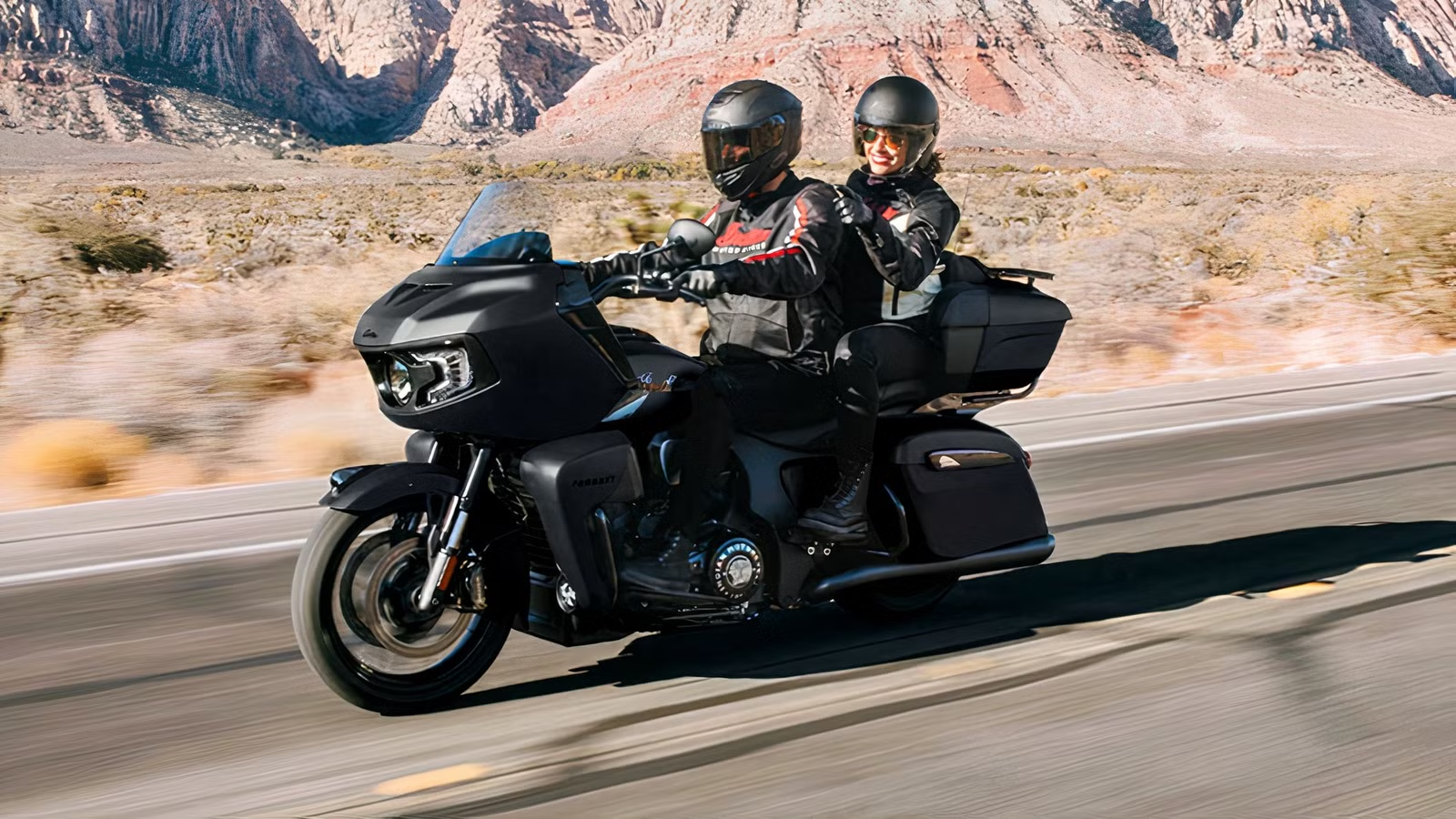
American roads tend to create a peculiar problem for motorcycles. Distances are enormous, highways are fast, and a machine that seems perfectly comfortable during a Sunday ride can become exhausting after several hours of interstate cruising. Long-distance touring here demands more than soft suspension and a big windshield. The motorcycle needs stability, effortless passing power, weather protection, luggage capacity, and enough comfort to make another hundred miles sound reasonable.
America Basically Invented Giant Touring Motorcycles

The American highway network practically encourages motorcycles to become enormous. Crossing a single state can consume most of a day, while interstate speeds turn wind blast, vibration, and cramped ergonomics from minor annoyances into genuine fatigue. Add a passenger and enough luggage for several nights away, and suddenly a motorcycle weighing north of 800 pounds starts making more sense than something designed primarily for carving up back roads.
That environment helped shape the American luxury tourer into a category of its own. These bikes grew big fairings, substantial seats, floorboards, generous fuel tanks, hard luggage, and lazy ergonomics because their owners weren’t necessarily trying to find the shortest route home. They were trying to cross Nevada, Texas, Montana, or several states in one trip while arriving with enough energy left to actually enjoy the destination.
Comfort Matters More When The Next Exit Is 80 Miles Away

Touring comfort also goes far beyond cushioning. Proper wind protection reduces the constant pressure on your chest and helmet. A relaxed riding position lets your knees and hips survive long stints in the saddle, while passenger accommodations matter when two people are sharing the miles. Cruise control takes tension out of your right wrist, heated equipment stretches the riding season, and usable luggage means you don’t have to wear half your belongings.

Fuel capacity matters for the same reason. A big tank doesn’t sound exciting in a showroom, but it starts looking brilliant when gas stations become scarce. Heat management matters too, especially when a large engine sits between your legs in summer traffic. On a genuine cross-country tourer, the features that seem excessive during a 20-mile test ride often become the exact things you’ll appreciate most somewhere around hour six.
Traditional American Tourers Have Always Had One Big Compromise

The downside is that American touring motorcycles traditionally earned their comfort by giving something up elsewhere. Big-displacement V-twins delivered huge low-rpm torque, but many were air-cooled and relatively reluctant to chase revs. Fork-mounted fairings added weight directly to the steering. Long wheelbases and relaxed geometry made the bikes wonderfully stable in a straight line, yet substantially less eager when a highway exit suddenly turned into a sequence of bends.
None of that made them bad motorcycles. It simply reflected their priorities. These machines were built to settle into a rhythm and stay there for hours, not chase sport bikes through mountain roads. But modern engineering has made that trade-off increasingly difficult to justify. If liquid cooling, sophisticated electronics, stronger chassis components, and better suspension already exist, there’s no reason a full-dress American tourer can’t keep the comfort while gaining considerably more performance.
The Indian Pursuit Was Born For America’s Open Highways

That’s where the Indian Pursuit range enters the picture. Indian lists the Pursuit family from $32,499 in the U.S., and its basic recipe reads almost like someone reverse-engineered the American road trip. There’s a chassis-mounted fairing, integrated saddlebags and trunk, lower fairings, a 6-gallon tank, a low 26.5-inch seat, and a riding position designed around spending serious time behind the bars rather than merely surviving it.
The PowerPlus Engine Changes What A Big American Tourer Can Do

In standard 108-cubic-inch form, the PowerPlus engine produces 122 horsepower and 128 pound-feet. Step up to the available 112, and output rises to 126 horsepower and 133 pound-feet. Indian uses a liquid-cooled, overhead-cam V-twin rather than relying on the traditional air-cooled layout, and that difference matters because this engine isn’t designed solely to thump along at low rpm. It’s willing to carry its performance farther up the rev range.
That extra breathing room is useful in exactly the situations a touring rider encounters. Passing a line of trucks doesn’t require a long negotiation with the throttle, and adding a passenger plus a few days’ worth of luggage doesn’t suddenly make the engine seem overwhelmed. There are faster motorcycles, obviously, but the Pursuit’s trick is delivering serious acceleration without asking its rider to sacrifice the relaxed character that makes a big tourer pleasant at sustained interstate speeds.
Nearly 1,000 Pounds Makes A Lot More Sense At 80 MPH Than In A Parking Lot

Lots of horsepower and tons of torque are one thing, but there’s no hiding the other number. Depending on specification, a Pursuit weighs around 937 pounds ready to ride, and physics doesn’t care how expensive your motorcycle is. Maneuvering something this large into a tight parking spot demands attention, and a poorly judged U-turn can become a very expensive reminder that motorcycles don’t magically lose weight just because they have premium suspension and polished controls.
Braking is handled by Brembo hardware, and the chassis offers as much as 33 degrees of lean angle depending on configuration. That’s hardly sport bike territory, but it’s enough to make the Pursuit more capable once the road gets interesting than its proportions suggest. Indian didn’t try to disguise a touring chassis as a supersport. It simply gave a huge motorcycle enough chassis sophistication that the fun doesn’t immediately end when the highway starts curving.
Boasts Enough Tech To Embarrass Some Cars

The Pursuit’s electronics are similarly focused on making long days easier. A 7-inch Ride Command display handles navigation and infotainment, with Apple CarPlay compatibility for riders using an iPhone. There’s cruise control, keyless ignition, an electronically adjustable windshield, heated grips, a heated seat, remote-locking luggage, selectable ride modes, and a substantial factory audio system depending on the trim and package.
Higher-spec versions add even more, including available rider-assistance technology and upgraded PowerBand audio. None of this transforms the basic job the Pursuit has to do, but that’s exactly why the tech works here. Lowering the windshield as temperatures rise, adjusting preload after a passenger climbs aboard, or getting navigation without bolting another screen to the handlebar all remove small annoyances that become much bigger over hundreds of miles.
The Pursuit Makes The Most Sense When The Road Seems To Never End
The Pursuit is easy to criticize when judged outside its natural environment. It’s huge, heavy, expensive, and equipped with more hardware than many riders will ever need on a Sunday morning. A lighter motorcycle will be easier in town. A sport-tourer will carve corners with less effort. Plenty of machines will accelerate harder for less money. None of those observations are particularly useful if the actual mission is crossing several states with a passenger and luggage.
That’s why its excess starts looking different once the road stretches toward the horizon. The big fairing blocks wind because it has to. The trunk and saddlebags exist because riders actually use them. The huge engine provides effortless speed because overtaking at highway pace is part of the job. Even the weight contributes to the planted character that makes a long interstate haul less demanding.

In a city parking garage, nearly 1,000 pounds of motorcycle can seem absurd. On a thousand-mile ride through the American West, the proportions suddenly make much more sense. The Pursuit wasn’t designed to shrink America into something smaller. It was designed to make America’s enormous roads, enormous distances, and enormous appetite for road trips seem a little easier to handle.
Source: Indian Motorcycle

Related posts



Latest Post



No Comments