
The Affordable Sports Car That Feels Like A Porsche
The Porsche 911 has occupied a specific position in the driver’s car conversation for sixty years. Not because it is the fastest thing on four wheels, and not because it is the most technically complex. It earns its reputation the old-fashioned way: through what it communicates back to the driver on a challenging road, the way the steering tells you exactly what the front tires are doing, the way the chassis builds trust progressively and rewards commitment. That experience has a price. A new 718 Cayman GTS 4.0, Porsche’s most driver-focused mid-engine offering, starts at $99,700. Lotus, a small British manufacturer with a philosophy built entirely around the idea that less is more, decided to see what happened if you chased the same experience rather than the same badge. The answer has been sitting in classifieds at a fraction of the cost ever since.
What a Porsche Actually Sells You

The 911 Carrera is not fast in a straight line relative to its price. A new Corvette will embarrass it at the drag strip for considerably less money, and a tuned Japanese sports car can do the same for even less. What the 911 offers instead is a quality of driver connection that very few cars at any price manage to deliver consistently. The steering is communicative without being nervous. The chassis balance rewards the driver who pushes past the comfort zone with progressive, readable feedback rather than a sudden, punishing snap. It is a car that makes a good driver feel better and gives an inexperienced driver a wide enough margin to learn.
That combination is harder to engineer than raw power. It requires a specific approach to weight distribution, suspension geometry, and steering calibration that most manufacturers either cannot afford to prioritize or simply do not bother with. The 911 has it because Porsche has spent sixty years refining a single platform toward that specific goal. The Cayman and Boxster carry the same philosophy in a mid-engine layout. The question is not whether you can buy a faster car for less money. You can. The question is whether you can buy a car that delivers the same quality of driving conversation for less money. That answer is more interesting.
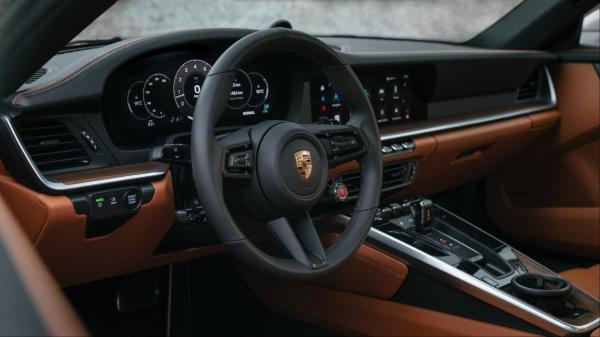

10 Ridiculously Reliable Porsches On The Used Market
These Porsches have been topping reliability charts over the years and represent some of the best used performance cars to buy in 2025.
The Formula That Makes It Possible Without the Price Tag

The shortest path to a Porsche-like driving experience without a Porsche budget runs through one engineering principle: take weight out. A lighter car needs less power to feel fast, less braking force to feel composed, and less chassis sophistication to feel balanced. Every kilogram removed from a car’s total weight improves acceleration, braking, and cornering simultaneously, which means weight reduction is the most efficient performance upgrade available. Manufacturers who understand this principle and build to it produce cars that punch far above what their specification sheets suggest.
The other ingredient is unfiltered steering. Electric power steering, while convenient and fuel-efficient, removes information from the driver’s hands. A well-set-up unassisted rack tells the driver what the front tires are doing in real time, which is the same quality that makes the 911 feel alive even when it is not being driven hard. Put those two principles together, weight reduction and honest steering, in a car with a mid-engine layout, and the Porsche experience becomes achievable at a price that does not require a second mortgage.
The Lotus Elise S2: A Porsche Experience at a Quarter of the Price

|
Model |
Engine |
Power |
Torque |
0-60 mph |
Top Speed |
|---|---|---|---|---|---|
|
Lotus Elise S2 (2005-09) |
1.8-liter inline-4 |
189 hp |
133 lb-ft |
4.9 sec |
150 mph |
|
Porsche Boxster S 987 (2005-08) |
3.2-liter flat-6 |
280 hp |
236 lb-ft |
5.3 sec |
167 mph |
|
Porsche Cayman S 987 (2006-08) |
3.4-liter flat-6 |
295 hp |
251 lb-ft |
5.1 sec |
171 mph |
The car is the Lotus Elise S2 111R, the first Elise to reach American showrooms when it arrived in 2005. Sold in Europe as the 111R, the US-market car used the same Toyota 2ZZ-GE engine and identical specification. It is mid-engined, rear-wheel drive, and weighs 1,973 lbs with fluids in US Federal specification. To put that in context, it is roughly half the weight of a modern performance SUV and around 1,000 lbs less than a Porsche Boxster S or Cayman S of the same era. The steering is unassisted rack and pinion. There is no electric assistance filtering out what the road is telling you. It costs, in today’s used market, somewhere between $13,000 and $44,000 depending on condition and specification.
The Elise reaches 60 mph in 4.9 seconds, quicker than both the Boxster S and the Cayman S despite producing 91 and 106 fewer horsepower respectively. The reason is the same one it always is with a Lotus: weight. At 1,973 lbs, the Elise weighed over 1,000 lbs less than either Porsche. On a road with genuine corners, that weight advantage is the only number that matters, and it is the reason the Elise delivered the Porsche experience at a fraction of the Porsche price. A clean Elise S2 in excellent condition costs $43,699 today. A new Porsche 718 Cayman GTS 4.0 starts at $99,700. The conversation writes itself.
The Lightweight Formula Colin Chapman Never Stopped Believing In

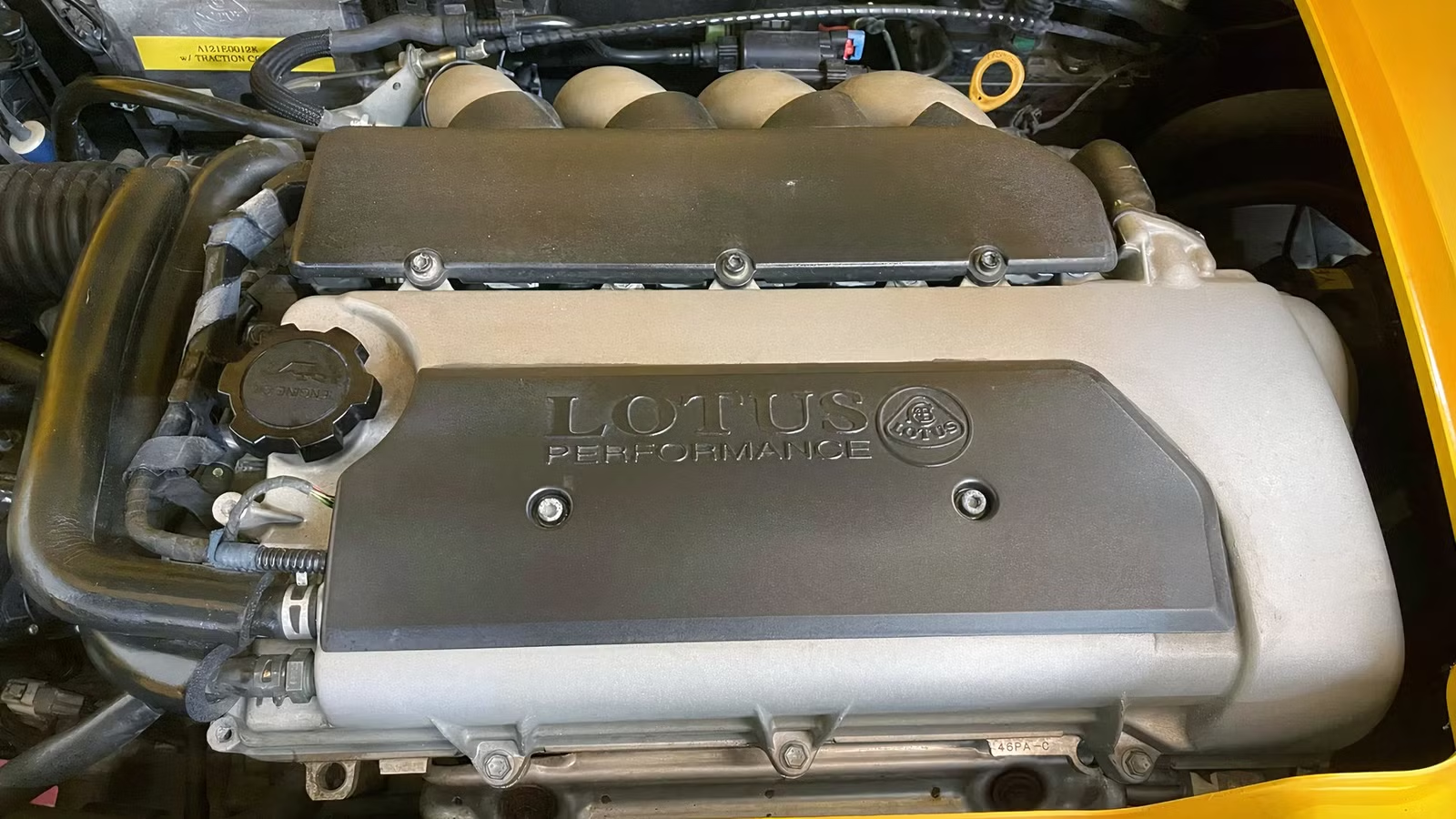
The Elise’s chassis is an extruded and bonded aluminum structure, a manufacturing technique Lotus developed specifically to produce a rigid, lightweight platform without the cost of carbon fiber. The complete structure weighs around 68 kg, less than some alloy wheels. On top of that sits a 1.8-liter Toyota 2ZZ-GE engine producing 189 hp at 7,800 rpm, the same unit fitted to the European 111R, chosen specifically because its VVTL-i variable valve timing delivers a step-change in power delivery at higher revs. At low speeds it is tractable and manageable. Above 6,200 rpm it becomes something else entirely, which is exactly the kind of engine personality a lightweight sports car rewards.
Why the Elise Drives Like a 911 Without a Rear Engine

The 911’s rear-engine layout creates a specific handling dynamic: the weight over the rear wheels generates grip and traction under power, while the car’s tendency toward oversteer at the limit rewards experienced drivers who understand how to use it. The Elise achieves a comparable result through different means. Its mid-engine layout and 38:62 front-to-rear weight distribution put the majority of the car’s mass over the rear axle, generating the same traction bias and the same willingness to rotate that 911 drivers pay a significant premium for. The unassisted steering delivers real-time road information with nothing filtered out. Period road tests were consistent on this point. Evo Magazine praised the Elise’s handling as delivering a quality of driver communication that put it above cars costing considerably more. That is not a throwaway line. It is what happens when a manufacturer builds a car around the driving experience rather than the specification sheet.
What a Lotus Elise S2 Costs Today

|
Model |
Fair |
Good |
Excellent |
New/Current MSRP |
|---|---|---|---|---|
|
Lotus Elise S2 (2005-09) |
$13,000 |
$33,500 |
$43,699 |
N/A (discontinued) |
|
Porsche 718 Cayman GTS 4.0 (2025) |
N/A |
N/A |
N/A |
$99,700 |
|
Porsche Boxster S 987 (used, 2005-08) |
$14,000 |
$22,000 |
$35,000 |
N/A |
An excellent Elise S2 costs roughly $43,000 today against $99,700 for the nearest new Porsche that delivers a comparable driving brief. That is a $56,000 gap for what is, on a canyon road, a largely comparable quality of engagement. If you want a same-era Porsche specifically, a 987.1 Boxster S in good condition is available from around $18,000, which undercuts the Elise on purchase price. The trade-off is the IMS bearing risk that affects pre-2009 M97 engines, specialist service intervals, and insurance costs that reflect the Porsche badge rather than what the car looks like. Total cost of ownership over three to five years consistently favors the Lotus.
Why the Elise Is the Smarter Driver’s Choice

The Lotus Elise S2 111R makes an argument that is easy to dismiss and hard to counter once you have driven one. It has almost no luggage space, it will not impress anyone at a valet stand, and it demands more from its driver than a Cayman GTS asks of theirs. What it delivers in return, on a road with real corners and real commitment required, is the same quality of driver connection that Porsche charges $99,700 to provide in 2025, from a car that weighs under 2,000 lbs and costs less than half the price in today’s market. Colin Chapman spent his career proving that the best way to go faster was to remove weight rather than add power. The Elise S2 is that philosophy at its most distilled. The 911 is the benchmark. The Elise is the answer to the question of whether the benchmark is the only way to get there.
Sources: Evo Magazine, Classic.com, Bring a Trailer.

Related posts
Latest Post


No Comments