
KTM’s 790 RC Could Shake Up the Middleweight Sportbike Segment That Kawasaki and Yamaha Have Owned for Years
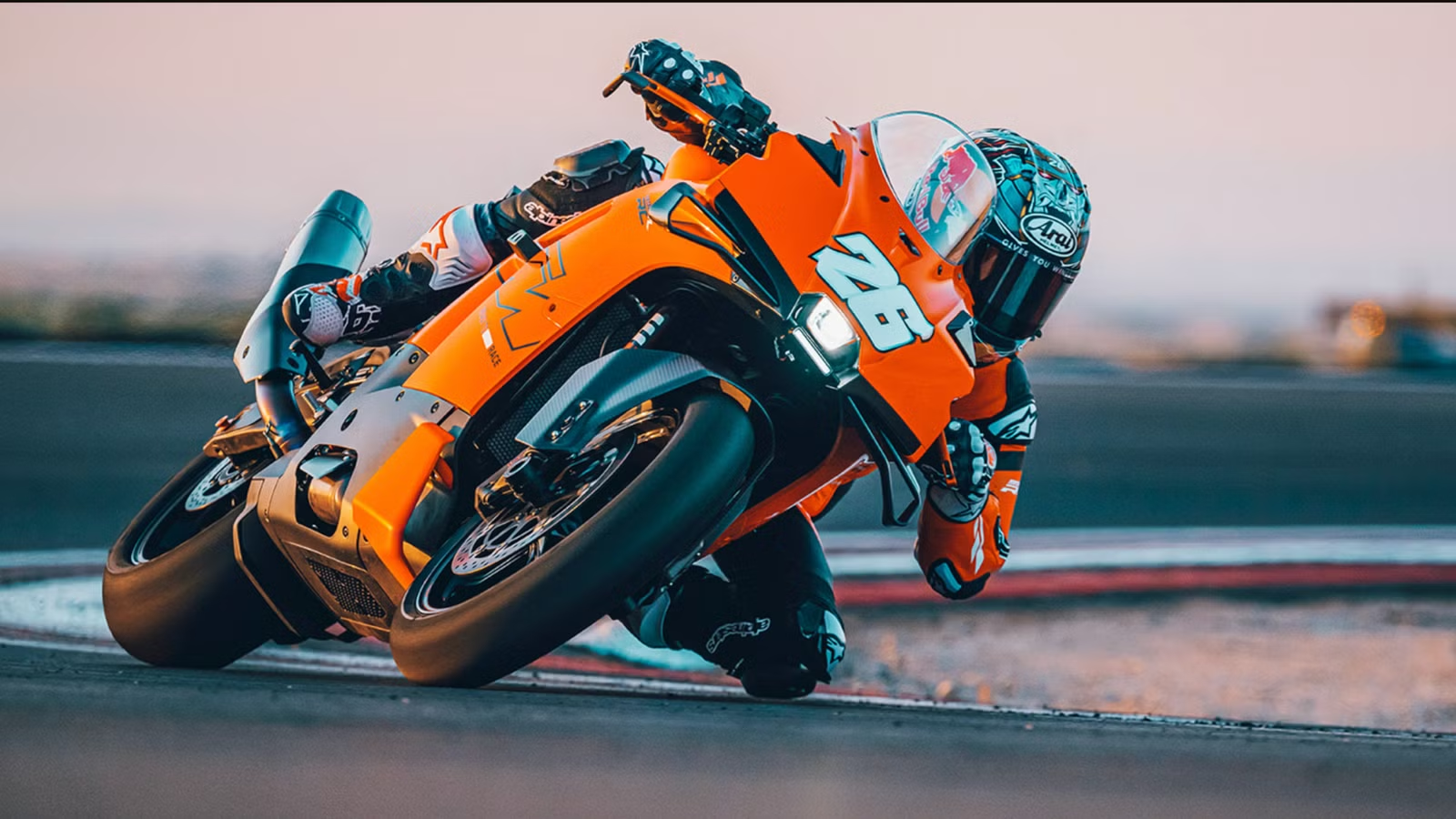
KTM CEO Gottfried Neumeister officially confirmed this week that the brand is developing the 790 RC, a fully faired middleweight sportbike that will slot between the incoming 490 RC and the existing 990 RC. It’s the first time KTM has committed to a bike in this class, and the announcement lands directly in the territory that Kawasaki and Yamaha have controlled for years.

The 790 RC is expected to draw from the recently updated 790 Duke, sharing its 799cc LC8c parallel-twin platform. That engine produces around 105 hp in the naked Duke, and a sportbike-specific tune could sharpen its high-rpm character without dramatically changing the output ceiling. No launch timeline or confirmed pricing has been announced, but the confirmation alone signals that KTM is serious about reclaiming relevance in a segment it has never properly entered.
What KTM’s CEO Actually Said
Neumeister’s words were direct. “We definitely want to extend our RC supersport line-up; the 990 was first, and we’ll have a 790 and a 490, like other brands with mid- and lower-class presence and in a segment that is growing.” That framing — referencing competitors’ multi-tier sportbike strategies — makes clear this isn’t a one-off project. KTM is building a full RC ladder.

The 490 RC, confirmed alongside the 790, is a separate development. It’s expected to be a twin-cylinder bike co-developed with Bajaj, likely derived from the 390 LC4c platform. The 790 RC is a different proposition entirely — a European-developed middleweight built on hardware KTM already sells in volume.
The 790 Duke Platform and What It Brings to a Sportbike

The 790 Duke’s LC8c parallel-twin is the obvious starting point for the RC version. In Duke trim, it makes approximately 105 hp and 87 Nm of torque — numbers that are competitive with the Yamaha YZF-R7’s 689cc CP2 twin (around 73 hp) and the Kawasaki Ninja 650’s 649cc parallel-twin (67 hp). Even against the Kawasaki ZX-6R, which sits higher in the segment at 636cc and around 128 hp in supersport trim, the 790 RC’s displacement gives it a torque advantage in real-world riding.
Beyond the engine, reports point to a steel twin-spar chassis tuned specifically for the RC, with WP Apex inverted forks, an asymmetric swingarm, and radial ByBre brake calipers with lean-angle-sensitive ABS. Electronics are expected to carry over the 790 Duke’s color TFT display and riding modes, with a Track mode adding disconnectable traction control and anti-wheelie. The riding position will shift significantly from the Duke — low clip-ons, rear-set pegs, and aggressive bodywork styled after the 990 RC R.
Why This Segment Has Been Ripe for Disruption
The middleweight fully faired class has seen renewed energy in recent years. Aprilia’s RS 660 proved that a twin-cylinder sportbike with real chassis credentials could find buyers, and the Triumph Daytona 660’s return confirmed the appetite was still there. Yet Kawasaki and Yamaha have held the volume end of the market largely unchallenged — the Ninja 650 on accessibility and value, the YZF-R7 on purity and track credibility.
KTM’s angle is different from both. The Duke platform brings more displacement and more power than the R7 or Ninja 650, and KTM’s racing program — including its MotoGP presence and the track-focused 990 RC R Cup — gives the brand a genuine performance narrative to sell. Speedweek noted that Aprilia’s RS 660 served as a benchmark during the 790 RC’s early development, which suggests KTM is targeting the premium end of the segment rather than undercutting on price alone.
Pricing will matter, though. The R7 starts around $8,999 in the US, and the Ninja 650 sits below that. If KTM can land the 790 RC near or under $10,000 — which Bajaj’s manufacturing involvement could help enable — it enters the conversation immediately.
KTM’s Sportbike History Makes This More Than a Catalog Exercise

KTM’s RC8 generated genuine excitement when it arrived in 2008 — a V-twin superbike from an Austrian brand that had no business building one, and yet it worked. KTM discontinued it after seven years, leaving a gap that wasn’t filled until the 990 RC arrived and reestablished the brand’s fully faired credentials. The 990 RC R and its Cup variant followed, pushing KTM back toward track-day relevance at the top of its lineup.
The 790 RC completes a structure that the 990 RC started. For riders who want KTM’s chassis philosophy and racing DNA but can’t justify — or don’t need — a 130 hp flagship, the 790 RC offers a logical step down without stepping out of the RC family entirely.
No specs, pricing, or launch date have been officially confirmed beyond Neumeister’s interview. What’s confirmed is the intent, and for a segment that has been waiting for a credible new challenger, that’s enough to watch closely.

Related posts



Latest Post


No Comments