
The Cruiser That Makes Every Ride Feel Special
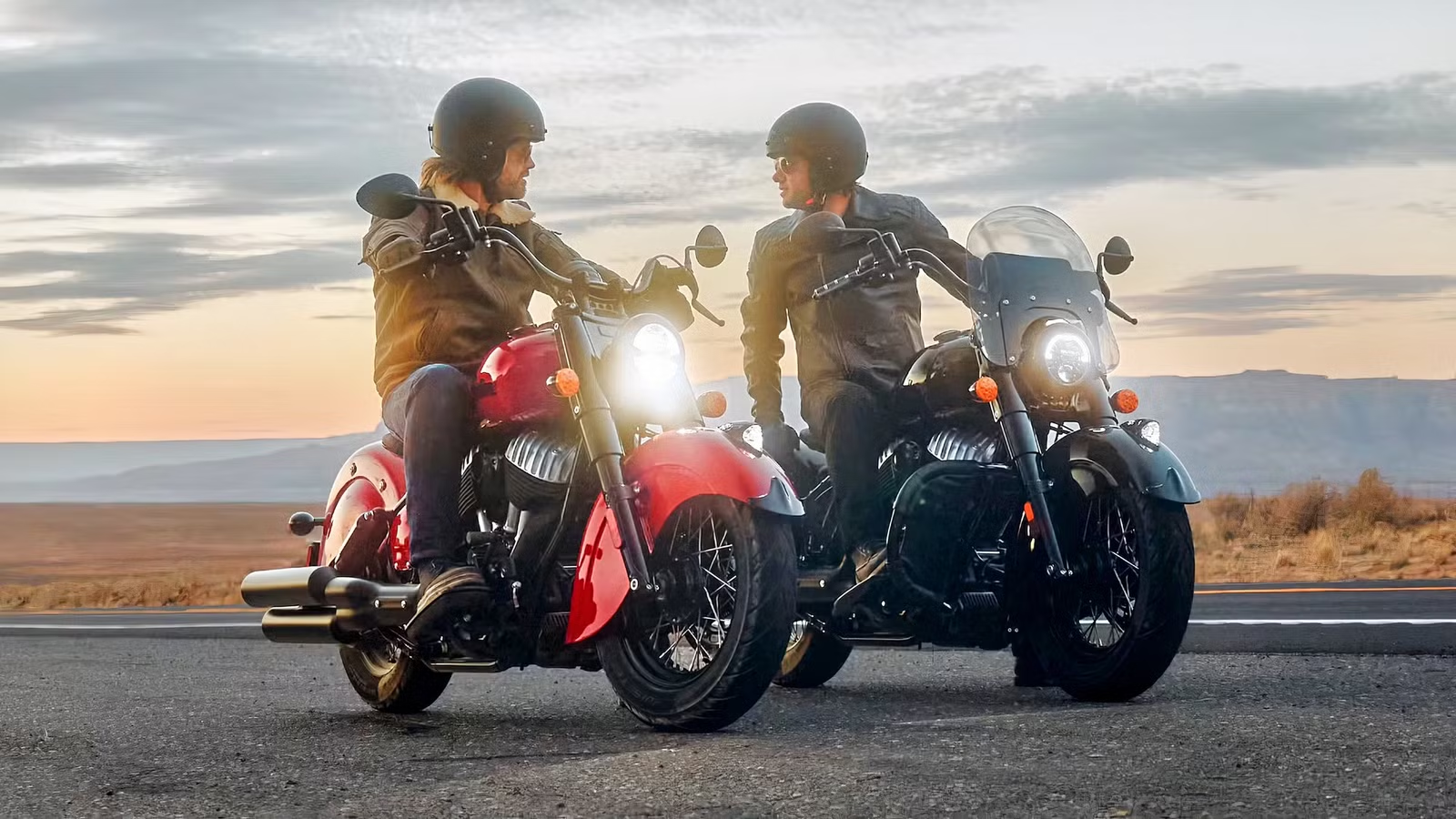
Ever find yourself out on an errand, two miles out to the nearest Target, but what was supposed to be a 15-minute turnaround, takes you two hours? A good motorcycle is the catalyst for a detour like that when the sun is out and the day is just perfect for a carefree ride about town on a national holiday. A good-looking cruiser makes this even more of a possibility. After all, easy-going is synonymous with a cruiser’s whole being in the motorcycling world. The character, the sound, the way the bars sit in your hands, the stance, just about everything will make you take that unscheduled ride out to a café.
Indian Motorcycles Wants You To Take Detours

Plenty of cruisers make sense for the American rider, but they only feel worth having once there’s a plan behind them. The temptation to get one usually peaks if you’re attending a motorcycling festival, or have drawn an itinerary for a weekend round trip with friends and fellow enthusiasts. The charm is an opportunity to enjoy the feelings of that short ride multiplied into hours in the saddle, and the fact that you get to show it off to others is an added bonus. That’s a big reason for getting that beautiful cruiser in the first place, right?

The rest of the time, that bike is, well, just another bike to get you somewhere, no different from anything else with two wheels. What actually separates a great cruiser or even a bagger worth keeping from one that’s just adequate is whether it makes a rider want to be on it time and again. That has less to do with what’s bolted on as accessories and more to do with the bike’s own presence.

It’s the attention to detail beyond the already gorgeous aesthetics. It’s in the thumping pulses of the V-twin, the relatability of its character through the vibrations from the bars and floorboards. It’s even in how it makes you look and feel when you’re on it. And also, in the way it makes you forget the phone buzzing in your pocket the whole time with someone wondering about your whereabouts. Indian Motorcycles has been engineering that very feeling for over a century, so quite obviously, they’ve now perfected it. But which one should you get?

The Indian Chief Vintage Makes Every Ride Feel Special

Indian introduced the Chief Vintage for 2026, timed to the brand’s 125th anniversary year, and it dressed up for the occasion well. The Chief Vintage borrows its silhouette straight from the original 1940s Chief, complete with valance fenders swept over both wheels, and a lit headdress ornament riding up front. A blacked-out V-twin and wire-spoke wheels finish the look underneath. Starting at $19,999, it isn’t the cheapest Chief in the lineup, but it’s also not trying to be one.
The Thunderstroke 116 Engine Sets The Tone For The Ride

The Thunderstroke 116’s reliability is unquestionable. That alone is a big reason why this cruiser will sit pretty in your garage, making for years of riding experiences, but it’s the character of it that comes through with every ride. An 11.0:1 compression ratio and a 4.063 x 4.449-inch bore and stroke put the emphasis on a long-stroke nature that makes for a long-legged, easy-going feel.

It unashamedly favors low-rpm shove to keep rolling mile after mile, enjoying the serenity that any length of a ride on it can bring, and it’s the very reason why big American cruisers favor the V-twin. A closed-loop fuel injection through a 54mm throttle body keeps the mixture consistent at low rpm, because it’s exactly where this engine spends most of its life.
Low-RPM Torque Offers The Feel Of Pure Muscle

The 1,890cc V-twin makes 120 lb-ft of torque at a lazy 2,900 rpm, so it’s available at the gentlest twist of the throttle wrist. The Chief Vintage doesn’t need constant downshifts or a rev heavy throttle work to get moving with authority, be it off a standing start or an overtake on the interstate. The power is always there, and the way it’s tuned, it matches the character that the styling already hints at. The six-speed gearbox and belt final drive keep that shove quiet and consistent gear to gear.
Old-School Air-Cooled Character Meets 21st Century Tech

Every other engine family in Indian’s current lineup runs liquid cooling, from the SpeedPlus 1250 in the Scout to the PowerPlus in the FTR and the touring baggers. The Thunderstroke 116 is the one holdout, still moving heat with fins and airflow instead of a radiator and a pump. That trade-off surfaces as sound and feel more than as a downside, with visible cylinder fins and a more vintage-sounding exhaust note through the dual pipes that are otherwise smoothened away with modern liquid-cooled counterparts.
Even then, the Thunderstroke 116 doesn’t skip on modern tech. By employing rear cylinder deactivation, fuel to the rear cylinder gets cut off at a stop once the engine is warm, taking the worst of the heat off a rider’s leg in traffic. This little but technologically substantial detail is what makes you take the Chief Vintage out on the shorter Sunday spins as much as a long tour even on a hot summer’s day.
Ergonomics That Make You Yearn For Another Ride

At a 27-inch seat height, the floating solo seat and pulled-back handlebars put the rider in a low, relaxed reach that simply feels comfortable every time, irrespective of the distance. Floorboards present a wider surface area for the feet to rest, further improving comfort, especially if you’re over 40.

The Chief Vintage exudes retro-cool with its solo seating, but the person continuously calling while you’re on the two-hour errand run, would probably want to come along the next time around. So Indian will happily sell you passenger-friendly accessories alongside a windshield and leather saddlebags as quick-release optional extras.
Same Price As A Harley But A Different Cruiser Altogether

The closest rival to the Chief Vintage is the Harley-Davidson Heritage Classic, and the two share the exact same $19,999 starting price. Weight lands within two pounds of each other too, 721 for the Chief Vintage against 719 for the Heritage Classic. That’s not a coincidence Indian is likely thrilled about, since Harley’s version features lockable saddlebags as standard. Even the torque outputs are shared at 120 lb-ft, which the Heritage Classic makes just 400 rpm higher up at 2,900 rpm from its Milwaukee-Eight 117 instead of the Thunderstroke’s 2,500.

Where the two really part ways is in what a rider is buying into. The Heritage Classic hands a two-up-ready factory custom with the bags and windshield already bolted on to the rider. It’s closer in spirit to a touring bike wearing a cruiser’s clothes and, for those with purely that functionality in mind, it’s the wiser choice. The Chief Vintage is a bike that’ll make the Harley rider look twice, because of its period-correct styling. It also keeps the base bike solo and stripped down, for the rider who’d rather add pieces as they rack up the miles and smiles, making not just the ride but the whole ownership experience special.
Source: Indian Motorcycles

Related posts




Latest Post


No Comments