
The Cruiser That Combines Muscle-Bike Power With Touring Comfort
Today’s muscle cruisers are essentially sportbikes disguised as cruisers. Examples include the Ducati Diavel V4 RS (engine derived from the Ducati Panigale V4) and the new Buell Super Cruiser (sharing its engine with the Buell Hammerhead 1190). While the performance is eye-popping, it doesn’t quite evoke a cruiser-bike feel, as the underpinnings and engine character have remnants of the quick-revving donor sport bikes.

This is also why the touring comfort of the most powerful 2026 power cruisers is not as relaxed as one would expect, since the stretched-out, laid-back ergonomics are replaced by a more upright, neutral rider triangle. However, there is one exception from Triumph that manages to cover both bases: be frighteningly fast and offer touring-grade comfort and ergonomics. It also packs an engine larger than most bread-and-butter cars today.
Cruisers Are The Most Comfortable Motorcycles
Cruiser bikes are considered the most comfortable motorcycles, primarily because of their laid-back, stretched-out riding stance. The footpegs or footboards are forward-set, the seat is low (typically under 28 inches), and the handlebar is tall and wide. This translates to a rider triangle that is as cozy and relaxed as it gets.

Further complementing the “comfortable” character is a linear performance curve with punchy low-end torque and a gradual power curve that peaks under 6,000 RPM. This helps the engine (mostly V-twins) remain as stress-free as possible, allowing riders to maintain comfortable highway speeds without much drama. Heavy-duty underpinnings and a chunky suspension setup also help with that by keeping cruisers stable at all times.
Why The VMax And Diavel V4 RS Got The Formula Wrong

The loss of comfort in power cruisers is unintentional and a side effect of adding more muscle and aggressive dynamics to the mix. Take, for example, the legendary Yamaha VMax. It is a bold creation that fuses a sophisticated V4 engine with a cruiser platform. However, to maximize its adrenaline appeal, Yamaha had to fiddle with the relaxed riding dynamics of a cruiser bike. The footpegs are neutral set, and the handlebar is short and positioned away from the rider. This is done to help the rider balance the VMax’s aggressive dynamics and performance. This translates into a rider triangle that requires one to lean far forward.
In fact, its ergonomics are similar to those of a performance naked bike, like the Ducati Streetfighter V4 or the Yamaha MT-10. While Yamaha did try to compensate with a very plush seat, the VMax still didn’t make the cut as a comfortable tourer due to its limited luggage capacity. You can use rackless saddlebags and a tank bag, but that requires extra effort to fit and secure them.

The Ducati Diavel V4 RS also follows a similar formula. In fact, it is much more aggressive and less comfortable than the standard Diavel V4 in terms of riding dynamics and touring potential. The only examples we feel do offer a balance include the Harley-Davidson Low Rider S and the Indian 101 Scout. While touring potential is solid, the performance is somewhat lacking on these cruisers. But Triumph has managed to do what even the iconic American duo haven’t yet.
The Triumph Rocket 3 Storm GT Is An Exception, Combining Muscle Power And Touring Comfort
Starting Price: $27,495

The Triumph Rocket 3 Storm R, priced at $26,695, aligns with the way power cruisers sacrifice comfort to elevate their performance appeal. However, it is the more practical Rocket 3 Storm GT that deserves all the attention, with subtle tweaks and a focus on touring comfort. The Storm GT differs from the Storm R with more comfortable ergonomics and touring-focused features. Notable ones include forward-set footpegs with horizontal adjustability and a pulled-back handlebar (by five inches). This translates to a more upright riding stance.
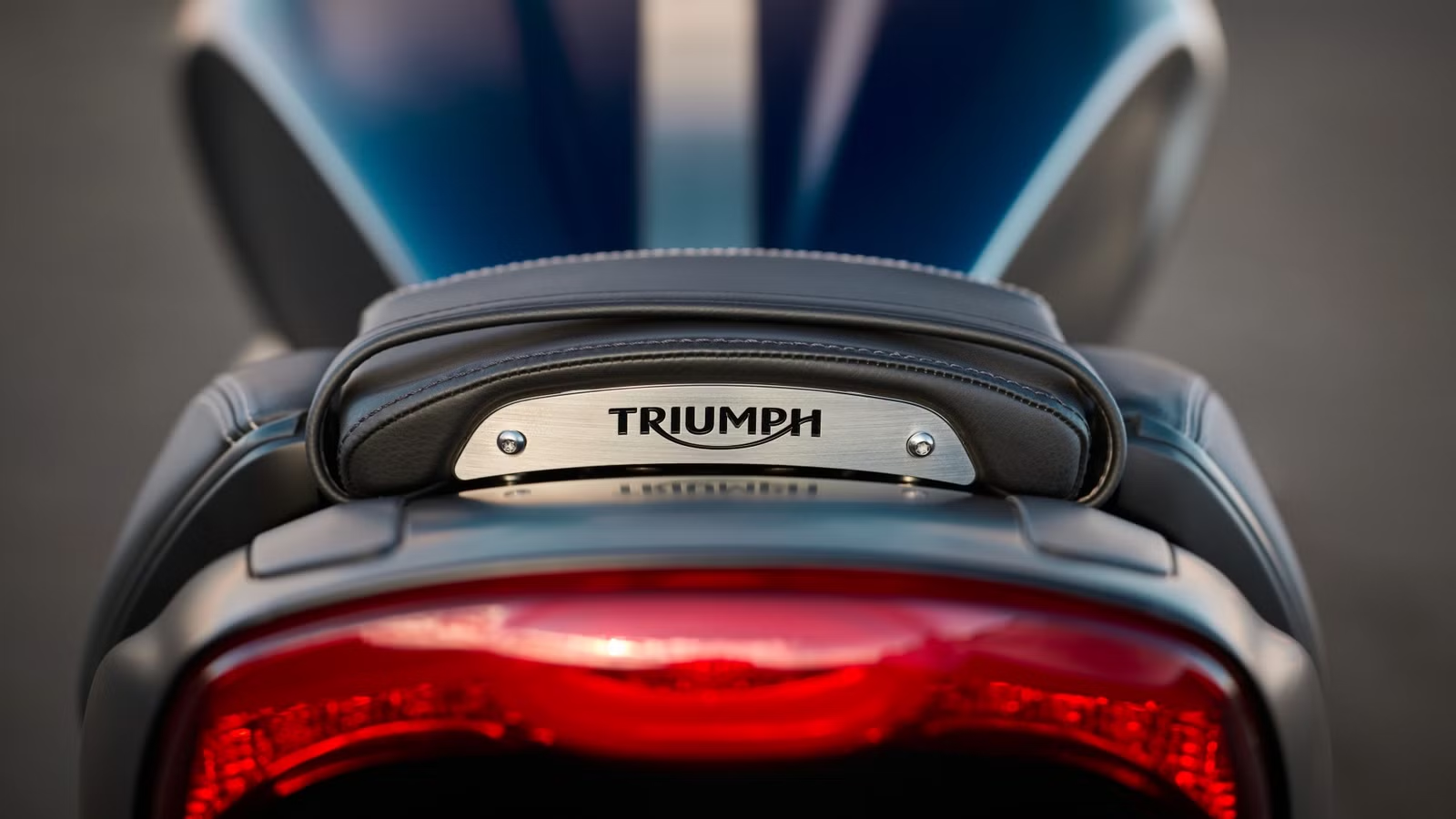
The seat height is also lower with more padding. Furthermore, the pillion gets a standard adjustable backrest too. Many of the optional accessories on the Rocket 3 Storm R are standard on the GT. Its monstrous performance and dynamic underpinnings remain unchanged between the two models. Not only does the Storm GT offer an impressive balance of performance and comfort, but it also flaunts a distinctive, minimal design language.
Powered By The Biggest Production Motorcycle Engine Ever

This is the crowning jewel of this power cruiser. The biggest production motorcycle engine powers the Rocket 3 GT. Its 2,458 cc inline-three behemoth even outclasses many bread-and-butter car engines. The engine size helps Triumph deliver segment-defining performance while remaining reliable. It produces 180 horsepower at 7,000 RPM and 166 pound-feet of torque at 4,000 RPM. The bore and stroke sizes are huge, at 110.2 mm and 3.4 mm, respectively.
Its low compression ratio of 10.8:1 lends this mighty Triumph a chilled-out character, which also boosts its reliability quotient. Triumph claims a 10,000-mile service interval, which is, interestingly, twice that of Harley’s more popular muscle cruiser—the Low Rider ST. The fuel efficiency is understandably low at around 35 miles per gallon, owing to its torque-heavy engine, heft, and the fact that it does 0-60 mph in just 2.79 seconds, quicker than many liter-class sportbikes. Power is sent to the rear wheel via a six-speed manual gearbox and a final shaft drive system.
How Triumph’s Aluminum Chassis And Showa Suspension Keep 2,458 cc Manageable

To balance out the heavy triple engine, Triumph keeps the underpinnings light by using an all-aluminum chassis, with the engine serving as a stressed member. Furthermore, it gets a single-sided swingarm that helps make the gigantic rear wheel visually striking. Suspension duties are taken care of by heavy-duty Showa components. It gets 47 mm inverted front forks with adjustable compression and rebound damping and 4.72 inches of travel. The rear gets an RSU monoshock with hydraulic preload adjustability and 4.21 inches of travel.
Braking hardware is heavy-duty, with twin 310 mm discs coupled to Brembo M4.32 Stylema four-piston monobloc calipers up front. The rear gets a single 300 mm disc coupled to a Brembo M4.32 four-piston monobloc caliper. Complementing its muscular looks, and handling the crucial task of putting its immense torque onto the road, are huge tires. The 17-inch front and 16-inch rear cast aluminum alloy wheels are wrapped with 150/80 front and 240/50 rear tubeless tires.
Further Complemented By Advanced Electronics To Make This An Accessible Behemoth

Triumph offers a host of rider-focused technology on the Rocket 3 Storm GT. On the safety and assistive front, it gets a comprehensive suite of features, including lean-angle-sensitive ABS and traction control, a six-axis IMU, wheelie control, Hill Hold, keyless ignition and lock, and electronic cruise control. Ride-enhancing features include ride-by-wire, Torque Assist clutch, an optional quickshifter, and four riding modes (Road, Rain, Sport, and user-defined). The cockpit gets a distinctive full-color TFT that can be easily controlled via a five-way backlit joystick on the handlebar. There’s also a USB charging port hidden under the seat with a dedicated charging compartment.
Touring-Focused Ergonomics Help It Stand Out

The major differences between the Rocket 3 Storm R and the Storm GT are confined to modifications made to the latter to make it a comfortable long-distance tourer. The rider-biased handlebar, forward-set footpegs, and a plush saddle help with touring comfort. The Storm GT also comes as standard with a windscreen.
It also has a lower and more accessible seat height of 29.3 inches. Furthermore, its pillion seat has more generous padding and an adjustable backrest. The rider triangle is adjustable thanks to the forward-set footpegs, which have three horizontal settings offering nearly two inches of range.
Blacked-Out Styling And A Full Touring Accessories Package Seal The Deal

Triumph offers blacked-out styling on the Rocket 3 GT. This elevates its custom-inspired looks and highlights the muscular fuel tank design. The swingarm guard, rear frame forging, fork lowers, yokes, risers and handlebar clamps, RSU Rocker, footrests, brake and gear pedals, levers, and side stand are finished in anodized black.
The dark theme is further complemented with powder-coated intake covers and hydro-formed exhaust headers. The front fascia is highlighted by distinctive twin circular LED headlamps with Triumph’s signature triangle-shaped DRLs. For 2026, the Triumph Rocket 3 Storm GT is offered in two dual-tone shades: Sapphire Black/Carnival Red and Granite/Sapphire Black.

Triumph also offers a slew of comfort, practical, and even ride-enhancing accessories to dial up the Storm GT’s appeal. With touring in mind, it features 25-liter panniers, a magnetic tank bag, and a tail pack with supporting racks and mounts. Comfort can further be dialed up with options like a comfort seat. Electrical add-ons include a Tire Pressure Monitoring System, an auxiliary power socket, and a shift assist system.
The Rocket 3 Storm GT Offers A Balance That No Other Comparative Muscle Cruiser Can Match

There is truly no match for the Triumph Rocket 3 Storm GT. The only rival that comes close to challenging this Triumph’s versatility is the Ducati Diavel V4. But then again, it lacks the cruiser-bike experience of mid-mounted footpegs and is less suited to transforming into a capable touring bike.
Among American icons, the 2026 Harley-Davidson CVO Road Glide ST does pack a punch with 127 horsepower and 145 pound-feet of torque. Its shark-fin fairing and hard-case saddlebags also help with touring. But this Harley is significantly more expensive at $44,999; as such, the Triumph Rocket 3 Storm GT offers solid value by comparison.
Source: Triumph Motorcycles

Related posts



Latest Post


No Comments