
The Manual Transmission Is Nearly Gone From New Cars — And Now Even The Miata Has An Electric Countdown
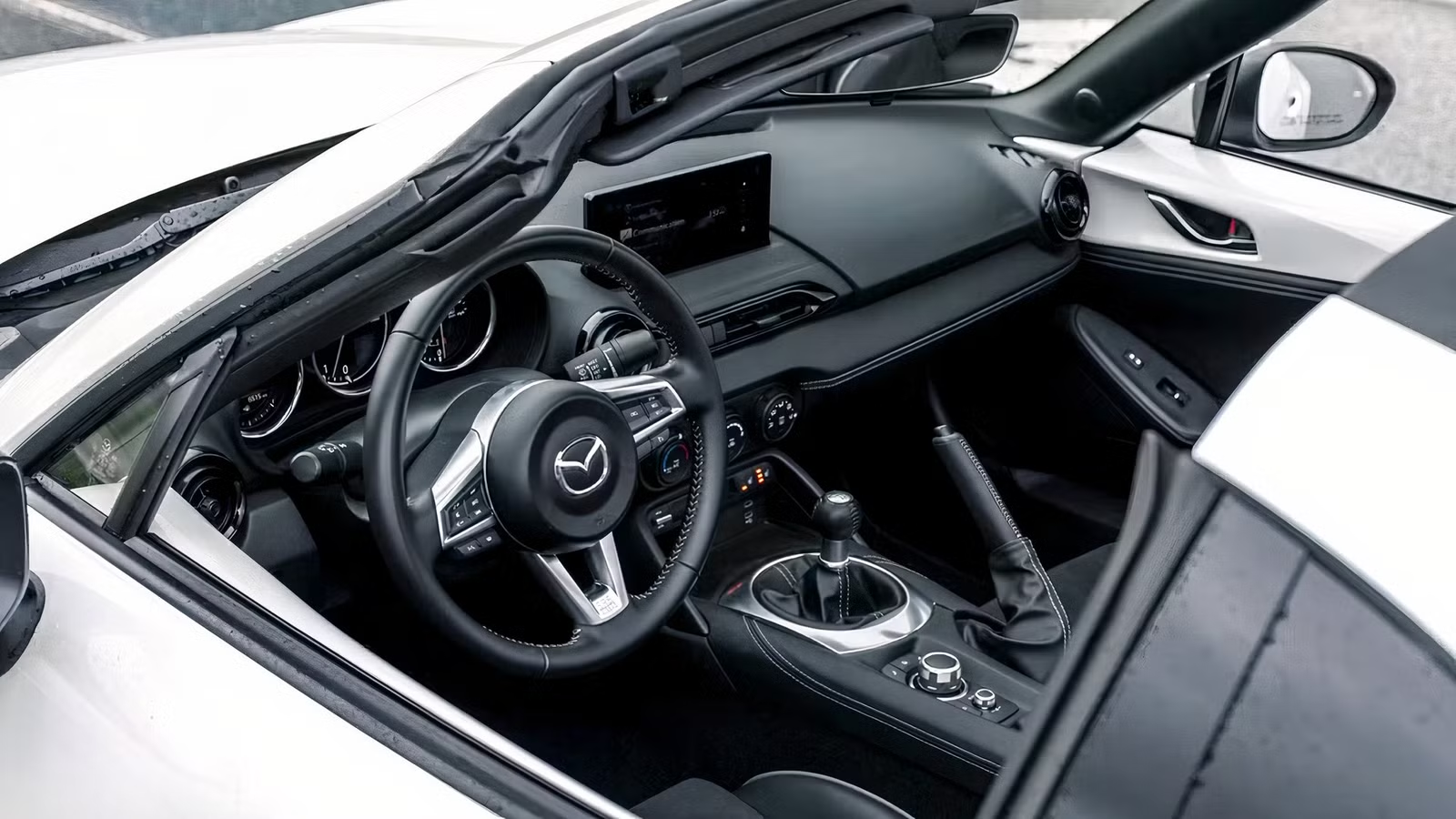
The car that has done more than any other to keep the manual transmission alive just got a countdown clock. Mazda CEO Masahiro Moro confirmed this week that the next-generation MX-5 is being engineered to run “without a combustion engine” — meaning the platform underpinning the world’s best-selling roadster is being built EV-ready from the ground up. The current ND-generation Miata has been on sale since 2016, offering 181 horsepower, rear-wheel drive, and a six-speed manual from around $30,000. Whatever comes next will be built to accommodate a future where none of those things are guaranteed.

The timing lands hard. Honda recently paused Civic Si manual production, with the stick-shift variant not expected to return until 2028 — a move that left just two affordable manual-transmission sedans on the market. The Miata’s EV-ready future doesn’t mean the manual disappears tomorrow, but it does mean enthusiasts are no longer asking whether the stick shift will survive. They’re asking how many years are left.
What Mazda’s CEO Actually Said — And What It Means
Moro’s statement, reported on July 29, was careful not to declare the Miata’s combustion engine dead. The next MX-5 will likely launch with a gasoline engine, he indicated, but the platform will be engineered to operate without one. That’s a meaningful distinction. It means Mazda is designing the architecture — battery packaging space, motor mounting points, power delivery systems — so that an electric drivetrain can slot in without a ground-up redesign.

The practical consequence for the manual transmission is straightforward: electric motors don’t use them. A single-speed reduction gear handles the job instead. If the next Miata’s platform is purpose-built to accept an EV powertrain, then any manual gearbox in the gas-powered version is essentially a transitional feature — present at launch, absent in whatever electrified variant follows. Moro also mentioned interest in a halo sports car positioned above the MX-5, which suggests Mazda is thinking about its sports car lineup in tiers. The Miata’s role as the entry point may be shifting.
The Shrinking List of New Cars That Still Offer a Manual

The Miata’s situation doesn’t exist in isolation. The manual transmission has been losing ground across every segment for years, but 2026 has accelerated the attrition. The Civic Si’s pause until 2028 is the most recent casualty in the affordable performance sedan space. The Acura Integra A-Spec still offers a six-speed, but it shares a platform with the Civic and faces the same long-term electrification pressures.
At the performance end, the picture is slightly more stable — for now. The Ford Mustang still offers a manual across multiple trims, including the GT and the Dark Horse. The Chevrolet Corvette offers a seven-speed manual on the base Stingray, though the Z06 and higher variants have moved to the dual-clutch. The Dodge Challenger and Charger, now running on the Hurricane inline-six in their current form, still list a manual option. The Subaru BRZ remains one of the cleaner manual-transmission stories in the segment, though a revised short-throw shifter recently announced for the Japanese market has not been confirmed for the U.S. — a detail that stings a little.
What’s notable about that list is how top-heavy it is. Most of the remaining manual options cluster around $30,000-and-under entry cars or $50,000-plus performance vehicles. The middle — the enthusiast sedan, the sport compact, the affordable roadster — is nearly empty.
Why the Miata’s Loss Would Hit Differently

The Miata has occupied a specific and irreplaceable role in the manual-transmission story. It has never been the most powerful car in its price range, and it has never needed to be. What it offered was a lightweight, rear-wheel-drive platform with a slick-shifting six-speed, a sub-$32,000 entry price, and a driving experience that made the case for the manual transmission on every single drive. For a generation of enthusiasts priced out of Porsches and uninterested in muscle cars, it was the answer.
Honda’s S+ Shift system — debuting on the new Prelude hybrid — offers a glimpse of where the industry is heading instead. The system simulates gear changes through software, creating the sensation of a transmission that doesn’t physically exist. It’s technically impressive. It is not a manual. The gap between simulated engagement and the real mechanical connection of a clutch pedal and a gear lever is exactly what Miata buyers have been paying for, and it’s a gap that no amount of software calibration has closed yet.
The current ND Miata will keep its manual for whatever production life remains in this generation. But Moro’s statement makes clear that the next chapter is being written with electrification in mind — and in that chapter, the manual transmission is not a guaranteed plot point.
For drivers who still reach for a clutch pedal by instinct, the window isn’t closed. But it is closing. The Miata’s EV-ready platform is the clearest signal yet that the manual transmission’s last chapter is being written now — and the cars still offering one deserve a closer look before the list gets any shorter.

Related posts
Latest Post


No Comments