
The Electric Motorcycle Startup That Dreamed Bigger Than It Could Build
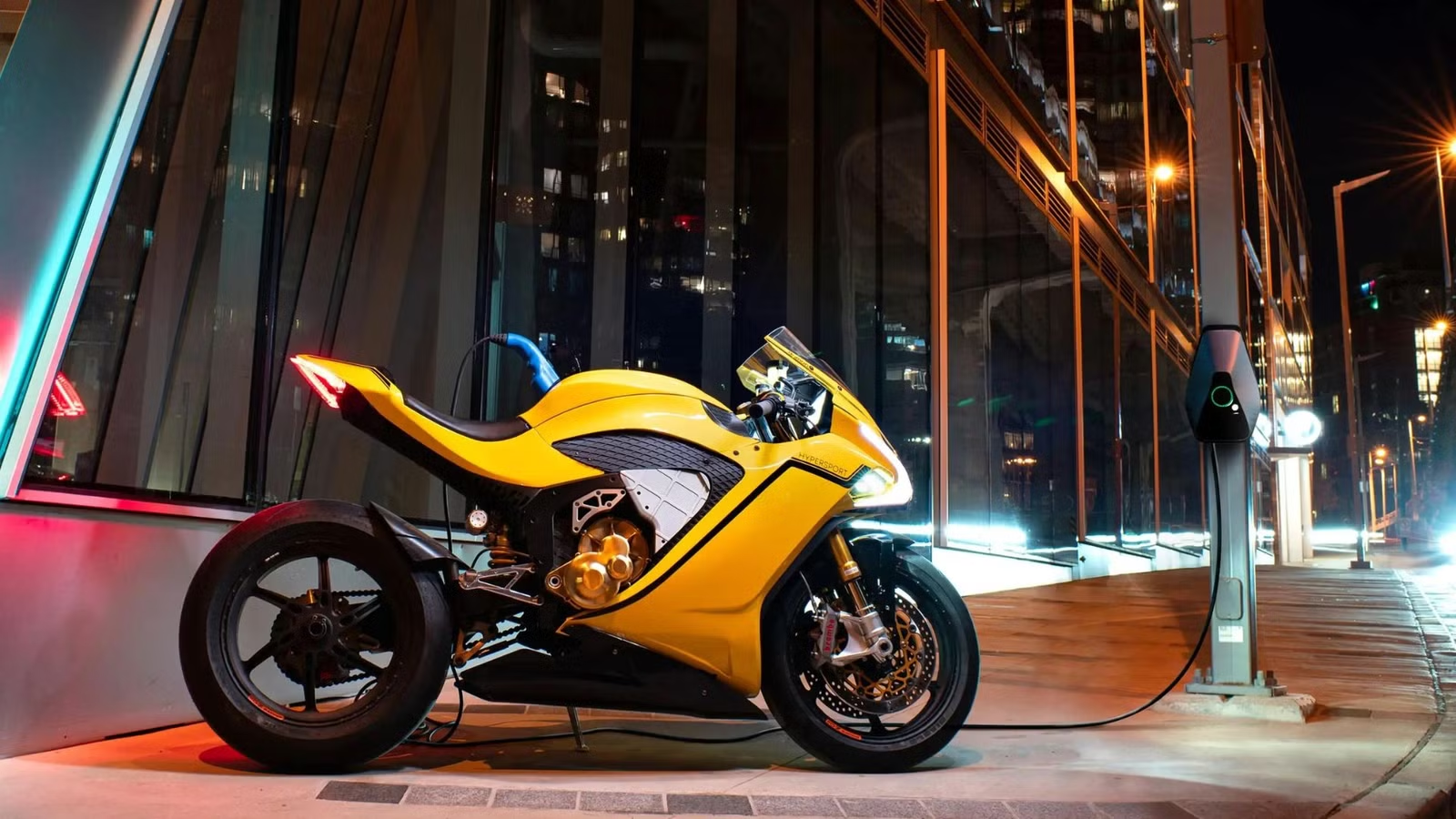
The EV startup boom wasn’t only about replacing gasoline engines with batteries. For a brief period, it became a contest to reinvent the motorcycle from the ground up. New companies promised connected technology, artificial intelligence, adjustable ergonomics, advanced rider aids, and performance that could embarrass gasoline-powered superbikes. Investors poured in money, riders placed deposits, and the future of motorcycling appeared to be arriving ahead of schedule.
The Startup That Promised To Reinvent Motorcycling

Most electric motorcycle startups followed a familiar formula: replace the engine with a motor and battery, add attractive bodywork, and compete on range, charging speed, price, or acceleration. One Canadian company thought that wasn’t ambitious enough. It wanted to make motorcycling safer, smarter, faster, and more adaptable through software, sensors, and electronically adjustable hardware, then launch all of it in its very first model instead of introducing those ideas gradually over several generations.
More Than Just Another Electric Motorcycle

Central to the concept was CoPilot, a camera and radar-based safety system designed to monitor traffic around the rider and provide collision, blind-spot, and forward hazard warnings. Shift promised to electronically reposition parts such as the handlebars and footpegs, allowing the motorcycle to transition between aggressive and more relaxed ergonomics. HyperDrive combined the battery, motor, and supporting structure into a compact platform intended to underpin several models.
Then there was the wonderfully simple “200-200-200” promise: 200 horsepower, 200 miles of range, and a 200 miles per hour top speed. Those figures made the proposed motorcycle sound like an electric superbike without the usual electric compromises. Any one of its major technologies would have been an ambitious centerpiece for a new company. Developing all of them simultaneously, while also establishing manufacturing from scratch, turned the project into something far more complicated.

CES Made It Look Like The Future Had Already Arrived

When the motorcycle debuted at CES in January 2020, its polished styling, safety technology, and adjustable ergonomics made it look far closer to production than it really was. Reservations, funding, partnerships, and glowing coverage quickly followed, with the company later claiming more than 3,000 reservations worth over 100 million Canadian dollars. Plans for a 110,000-square-foot factory in British Columbia only strengthened the impression that a genuine industry disruptor was about to enter production. Then, the ship slowly tanked.
Damon Motorcycles Dreamed Way Bigger Than It Could Build
The startup was Damon Motors, founded in Vancouver in 2017 by Jay Giraud and Dominique Kwong. Its headline motorcycle was the HyperSport, a fully faired electric superbike that appeared capable of giving the established industry its Tesla moment. Damon later expanded the proposed family with the naked HyperFighter, even though it had yet to deliver the motorcycle that had created all the original attention.
The HyperSport’s final advertised specifications remained remarkable. Damon claimed 200 horsepower and 147 pound-feet of torque, a 200 miles per hour top speed, and up to 200 miles of combined range from the top version. Other proposed equipment included DC fast charging, Brembo brakes, Öhlins suspension on higher trims, a large connected display, over-the-air updates, CoPilot safety technology, and Shift adjustable ergonomics. Lower-priced versions were also planned with reduced output, range, and equipment.

Had Damon delivered those figures in a reliable production motorcycle, the HyperSport would have been one of the most technologically sophisticated bikes ever sold. That possibility explains why people were willing to wait through repeated delays. The problem was that the company’s proposed specifications weren’t merely a list of components sourced from an established supply chain. Many depended on Damon successfully developing several interconnected systems while simultaneously creating the organization needed to manufacture, certify, sell, and support them.
The Moment Ambition Became A Liability

Damon didn’t commit to solving one difficult problem. It took on a proprietary battery platform, structural packaging, advanced software, radar and camera systems, adjustable ergonomics, superbike performance, and an entirely new manufacturing operation at the same time. COVID-19 and supply disruptions made matters worse, but the deeper issue was that delays kept costs climbing while product revenue never arrived. The planned British Columbia factory never materialized, the Nasdaq listing consumed more time and resources, and Damon became increasingly dependent on fundraising as the HyperSport remained out of reach.
Why Building A Prototype Is The Easy Part

A prototype only needs to demonstrate that an idea can work under controlled conditions. A production motorcycle must work repeatedly, survive heat, cold, vibration, rain, abuse, poor maintenance, and thousands of charging cycles. It must also comply with regulations, arrive with replacement parts, and be supported when something goes wrong. Producing one visually convincing motorcycle is an achievement, but producing thousands of identical ones at a sustainable cost is another discipline entirely.
Established manufacturers already have suppliers, test facilities, homologation teams, factories, dealerships, logistics networks, and warranty support in place. Damon had to build all of that while developing technology that had never been combined on a production motorcycle. Its late-2024 Nasdaq debut didn’t solve the problem. Shares struggled, leadership changed, and the bikes remained undelivered. By then, Damon was no longer racing established brands toward the future.
Damon Didn’t Fail Because It Dreamed Too Big
By early 2026, Damon’s difficulties culminated in something far more serious than another delayed production target. CFO Bal Bhullar resigned in February and was briefly replaced by interim CFO Dino Mariutti. Board member Karan Sodhi followed. On February 27, Damon announced that its entire remaining board of directors, including CEO Dominique Kwong and its interim CFO, had also resigned.
Damon may continue to exist as a registered corporate entity, but that’s very different from being an operational motorcycle manufacturer. With no customer motorcycles delivered, no functioning board publicly identified, and no clear leadership, the HyperSport’s prospects now appear effectively exhausted. There was no dramatic factory closure because the promised factory was never built. Instead, Damon reached its apparent end through delays and dwindling resources.
The Lesson Every Motorcycle Startup Should Learn

The problem wasn’t simply that Damon dreamed too big. Motorcycle history needs ambitious companies willing to question assumptions and propose technology established manufacturers may consider too risky. CoPilot, Shift, and HyperDrive addressed genuine opportunities in safety, packaging, and adaptability. The tragedy is that Damon tried to turn every ambitious idea into a launch requirement rather than deciding which one could form the foundation of a motorcycle it was actually capable of building.
A simpler first model might not have delivered 200 horsepower, 200 miles of range, and a 200 miles per hour top speed. It might have lacked moving ergonomics or arrived with a pared-back safety system. However, it could have generated revenue, established supplier relationships, and proved that Damon knew how to deliver motorcycles rather than presentations. Those more ambitious features could then have arrived gradually.
Damon tried to fly on its first attempt with every piece of technology it could carry. The resulting motorcycle captured imaginations, attracted deposits, and briefly appeared capable of transforming the industry. It just never reached the people who believed in it. In the end, Damon didn’t merely dream bigger than it could build. It made the dream so complicated that building anything at all became nearly impossible.
Source: Damon Motorcycles

Related posts



Latest Post


No Comments