
The Cruiser That Makes Long-Term Ownership Surprisingly Affordable
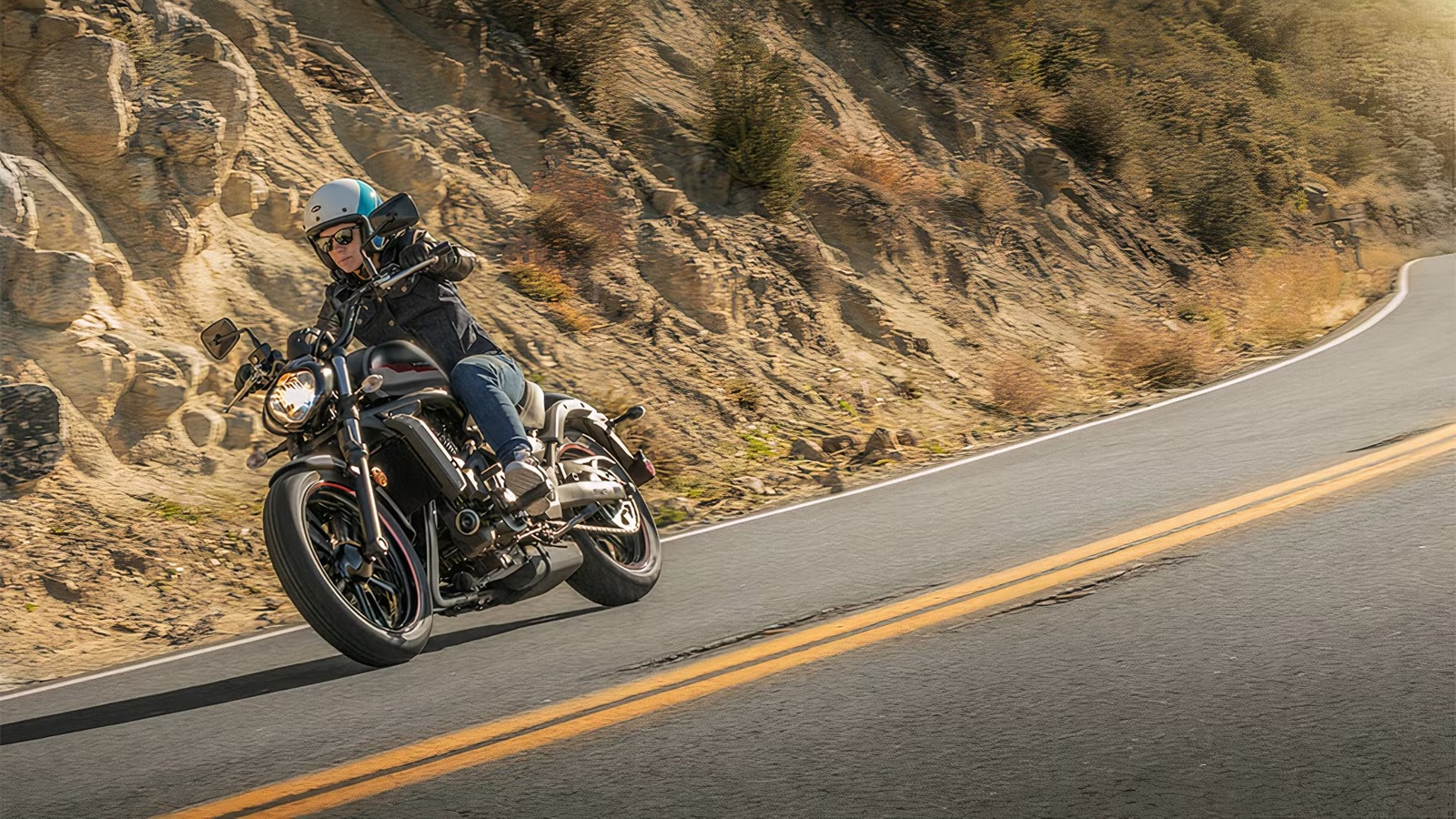
Cruisers are a misunderstood class of motorcycles today. Some motorcyclists think cruisers are only for those who prefer something slow and heavy, while others see cruisers as a waste of money because they can be expensive and not exactly a good value. That, however, isn’t always the case.

Cruisers have come a long way today, and there is a cruiser for every kind of rider out there, including those who like to carve corners. Some cruisers also balance ample performance with an affordable price tag and maintenance costs. Here’s one of the finest examples of one such cruiser that won’t give you a reason to upgrade to another.
Cruisers Are Either Cheap And Slow Or Powerful And Expensive
The cruiser segment can be divided into three price and performance brackets, starting with the small-displacement models. These bikes are affordable but have just enough performance to keep up with highway traffic. On the other hand, big twin models and power cruisers offer immense power, but they are also very expensive, especially those with the Bar and Shield badge.


Fortunately, there’s the middleweight segment between the two, which offers a balance of affordability and adequate performance. However, that adequate performance might still feel low for modern motorcyclists. For example, the Royal Enfield Super Meteor 650 only makes 46 horsepower, while the Kawasaki Vulcan 900 makes just over 52 horsepower. And these are large, lumbering cruisers with their heft negating a bit of that performance.
There Are Exceptions, Though

Like all things in life, there are exceptions, and the middleweight segment is no different. There is one cruiser that delivers sporty performance, thanks to a sports bike-derived engine and underpinnings, and balances that formula with an affordable price tag and bulletproof reliability. Mind you, this is not a cruiser for those looking for something traditional. It’s a parallel-twin, modern cruiser that prioritizes comfort and performance over character and riding feel. But for the right kind of buyer, it’s the only cruiser they will ever need.
The Kawasaki Vulcan S Is A Sporty And Affordable Cruiser

The Kawasaki Vulcan S is a unique cruiser in the middleweight segment. Instead of taking design cues from yesteryears or tuning the engine for character, Kawasaki has taken a completely different route with this bike. Instead, the bike takes its engine and underpinnings from the Ninja 650 sports bike and tunes them for everyday use. It also offers a unique Ergo-Fit sizing system, letting you fine-tune the bike’s ergonomics to suit your height. All of this makes the Vulcan S a cruiser you can either cruise relaxedly on the highway or push hard on mountain roads.
And the best part is that this package is sporty yet affordable. The Vulcan S starts at $7,649 for the non-ABS version, though the extra $500 for the Vulcan S ABS is well worth considering. Kawasaki also offers the Vulcan S Café ABS trim for $8,749, which adds two-tone paint, signature tank badging, sport striping, and a dark-tinted wind deflector. If performance is a priority in your cruiser, the Vulcan S is among the best value-for-money performance-first middleweight cruisers out there.
Ninja 650-Derived Performance And Equally Good Ownership Costs

At the heart of the Vulcan S sits the familiar 649cc parallel-twin borrowed from the Ninja 650. On this cruiser, the engine produces 60 horsepower and 46.5 pound-feet of torque, arriving at 7,500 RPM and 6,600 RPM, respectively. Kawasaki says the engine is tuned to deliver ample low- to mid-range torque for predictable roll-on acceleration without compromising the engine’s high-RPM surge. It’s mated to a six-speed manual with a positive neutral finder. The result is an engine character that is versatile, predictable, and sporty for a variety of riding conditions.
Sports Bike-Derived Underpinnings Support That Performance

Like the engine, the Vulcan S also takes the chassis and suspension from the Ninja 650 and tunes it for cruiser duties. The setup comprises a high-tensile steel diamond frame, a 41mm fork up front, and a monoshock with preload adjustability at the rear. Unlike many other middleweight cruisers, this entire package only weighs 498.3 pounds (ABS model), which should result in alight handling feel and confident ride quality.
Legendary Durability With Low Ownership Costs

The Ninja 650 has been around for a long time and is well-regarded for its durability, and the Vulcan S benefits from the same. The engine is tried-and-tested and virtually bulletproof, and owners report that major mechanical issues are rare. As a result, major repairs are rarely a concern. As long as you stick to routine maintenance, the engine should keep running for years to come.
Another benefit of this cruiser over its rivals is liquid cooling. While it adds complexity to the powerplant, it compensates with better thermal stability compared to an air-cooled engine. The bike also lacks electronics, so there’s little to go wrong on that front. Plus, you have the benefit of Kawasaki’s high fit and finish. All of this is further enhanced by affordable ownership costs.

It’s hard to put a number to this because maintenance costs vary depending on dealership labor rates and the parts you use. However, owners report a general maintenance cost of $150 to $400 per year, with major services (valve clearance check and brake fluid and coolant flushes) costing between $500 and $800. That comes to around $1,000 to $1,500 over five years, which is pretty good for the riding experience this bike offers.
Ergonomics That Suit Your Height And A Distraction-Free Experience

One of the Vulcan S’ greatest strengths is the exclusive Ergo-Fit sizing system, which lets you create the perfect fit as per your height. This system allows you to adjust the seat height, footpegs, and handlebars across 18 possible configurations, helping create a riding position that is more comfortable and confidence-inspiring. Once you purchase the bike, Ergo-Fit adjustments are included at no extra cost.

The 18 possible configurations are divided into three approaches, starting with Short Reach for smaller riders. Here, the handlebar is pushed closer to the rider while the sculpted seat is tapered, moving the rider closer to the tank. The pegs are also placed farther rearward for easier reach. The Mid Reach and Extended Reach configurations further open up the riding position for average-height and taller riders. None of the Vulcan S’ competitors offer this Ergo-Fit benefit.
Lack Of Features Means Lack Of Distractions

One area where the Vulcan S sticks to middleweight cruiser tradition is its sheer lack of features. All you get is ABS and an Economical Riding Indicator. Yes, the latter is highlighted by Kawasaki as a notable feature of the bike! Whether this is good or bad depends on you, but what the lack of features guarantees is a distraction-free riding experience. You don’t have to worry about navigating through various menu options on a TFT display or constantly adjusting the electronics to suit your riding preference.
Instead, the Kawasaki Vulcan S offers a different kind of approach. It wants you to start the bike and head out for the ride. In a way, it offers a purer riding experience than other middleweight motorcycles. You don’t have to worry about complex technology, lack of power, or an expensive service interval. That is what makes the Kawasaki Vulcan S special in our view.
Source: Kawasaki

Related posts



Latest Post


No Comments